RU
RU

Вопросы и ответы
Aston Martin has indicated a possible window between 2033 and 2035, but no fixed date has been announced. The company says the EV will not launch before 2033.
The company plans to rely primarily on internal-combustion vehicles until its EV launches, with limited use of hybrids. The V8 remains central to models such as the Vantage, DB12, and DBX707, while the V12 remains the flagship engine for the limited-production Vanquish.
Aston Martin retains its technology agreement with Lucid, but the EV’s name, body style, specifications, price, production location, sales markets, and exact presentation and delivery dates have not been revealed.
Aston Martin will not launch its first production electric vehicle before 2033. Company chairman Adrian Hallmark has indicated a possible window between 2033 and 2035, but declined to give a fixed date. Until then, the British marque plans to rely primarily on internal-combustion vehicles, with limited use of hybrid systems.
This is the latest change to the schedule. Over the years, Aston Martin’s first battery-electric model was expected in 2025, then 2026, and later closer to 2030. The new timeline suggests that the company does not want to commit its main investment to a production EV until demand in the high-end sports-car segment and the final shape of post-2030 emissions requirements become clearer.
In brief
2033 is not a confirmed launch date, but the earliest point in the new timing window.
Aston Martin has not abandoned its EV plans and retains its technology agreement with Lucid.
The V8 and V12 will remain central to the model range at least through the first half of the 2030s.
The specifications, body style, name, and production location of the first production EV have not yet been revealed.
How Aston Martin’s first EV timeline has changed
The project’s history explains why the latest statement should not be read as a promise to launch the car precisely in 2033. The company has already revised its plans several times as the market and its own product strategy have evolved.
Date or period | What was reported | Status |
|---|---|---|
June 26, 2023 | Aston Martin announced its agreement with Lucid and set 2025 as the target for launching its first model on the new electric platform. | Official company announcement |
2023 annual report | The target moved to 2026; the company attributed the revision to changes in the market and regulation. | Corporate reporting |
October 29, 2025 | Adrian Hallmark told investors that battery-electric models would arrive in the first half of the 2030s and account for only a small share of sales before 2035. | Quarterly-results transcript |
October 2, 2026 | Hallmark indicated a window between 2033 and 2035 and specifically clarified that this did not mean 2031. | Executive statement to specialist publications |
The most significant change came after the technology partnership with Lucid was announced. In its official announcement on June 26, 2023, Aston Martin described a modular platform for electric hypercars, sports cars, grand tourers, and SUVs. Lucid was expected to supply selected powertrain components and battery technology, while Mercedes-Benz would remain the supplier of other powertrain systems and the electronic architecture.
2033 is not on the production calendar
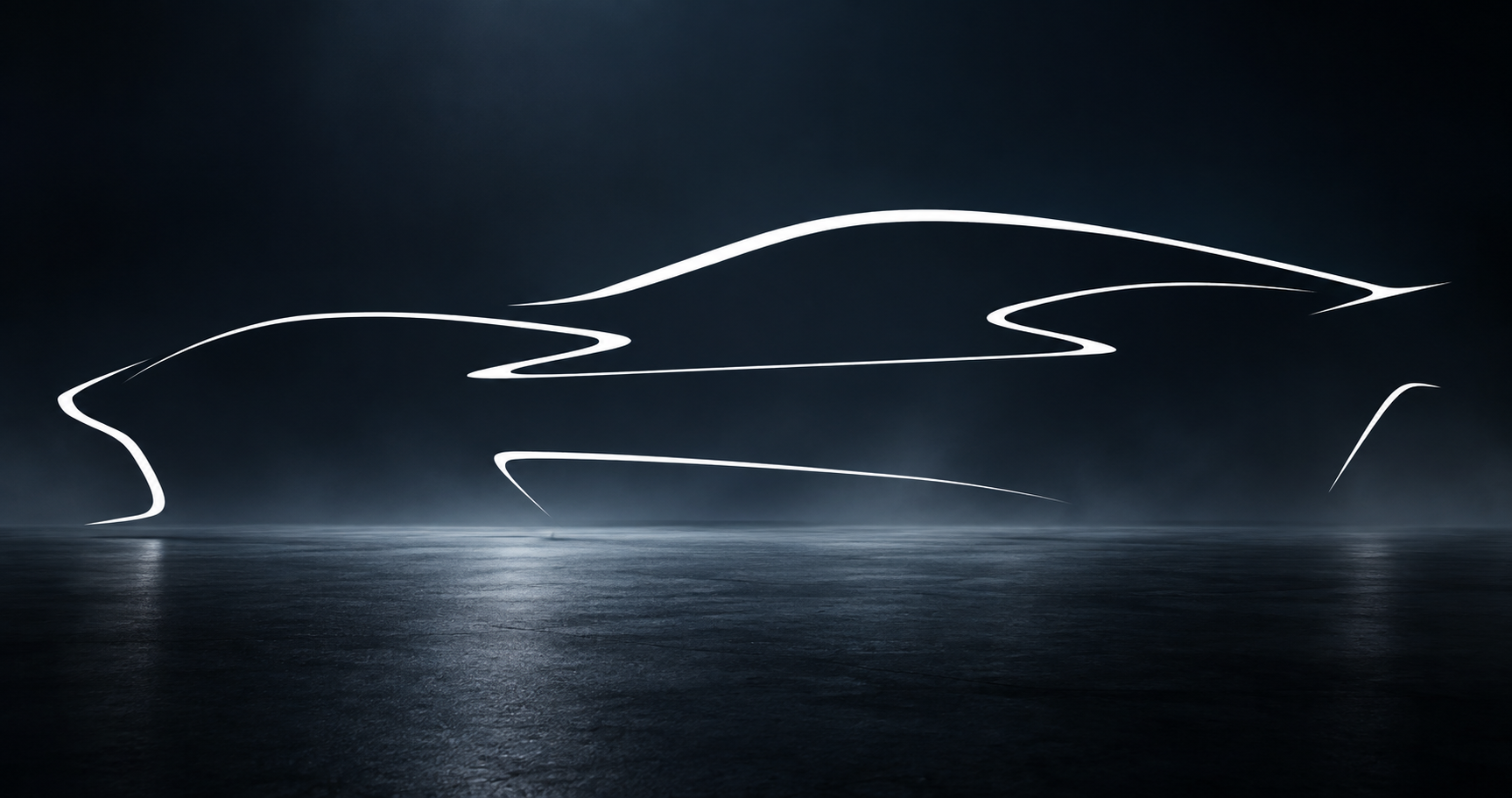
The accurate wording is “not before 2033.” Aston Martin has not announced a presentation date, start of production, or sales launch. The 2033–2035 window describes the management team’s current investment approach, not a finalized schedule for a specific model.
Why Aston Martin is taking its time with a production EV
Demand in the luxury segment is harder to predict
Hallmark links the delay to demand for expensive electric vehicles and rapidly changing rules in different countries. For a mass-market manufacturer, one new platform can be spread across hundreds of thousands of vehicles. Aston Martin operates at much lower volumes, so choosing the wrong timing or specifications carries a higher cost per vehicle.
The company is not claiming that there is no interest in electric sports cars. Its position is more practical: until such a vehicle is needed to meet requirements in key markets and can generate sufficient demand, major investment can be postponed. Research and development work is continuing.
2035 rules are still influencing product decisions
Under the current version of EU Regulation 2023/851, the target level for CO₂ emissions from the fleet of new passenger cars and light commercial vehicles is set to be reduced by 100% from January 1, 2035, compared with the 2021 baseline. The European Commission has already proposed changing part of the mechanism after 2035. Until that proposal is adopted, it cannot be treated as an active rule.
The UK is also maintaining the broad objective that new passenger cars and vans should be zero-emission by 2035. However, on August 14, 2026, the government began a new review of the pathway to the ZEV Mandate. Changes and discussions of this kind make it difficult for a low-volume manufacturer to commit in advance to one technology and a single schedule across all markets.
The 2035 requirements apply to new vehicles and manufacturers’ targets. They do not automatically ban the use of an existing V8 or V12, nor do they require owners to replace such a car with an electric vehicle.
The company already has an updated engine lineup
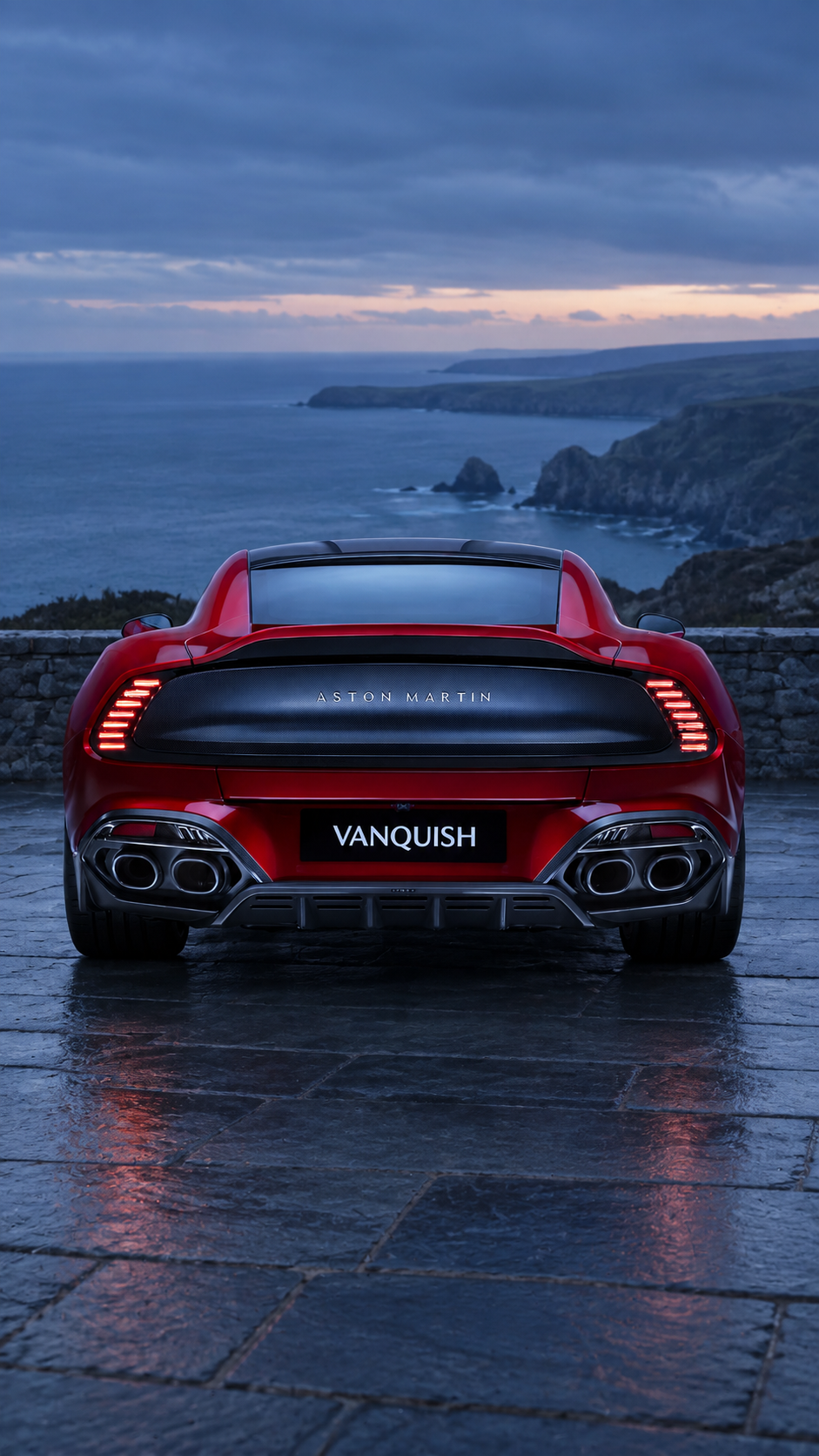
Keeping internal-combustion engines does not mean extending the life of old models without upgrades. On September 2, 2024, Aston Martin unveiled the Vanquish with a new 5.2-liter V12. The manufacturer specifically stated that the engine had been revised to meet current emissions requirements in global markets.
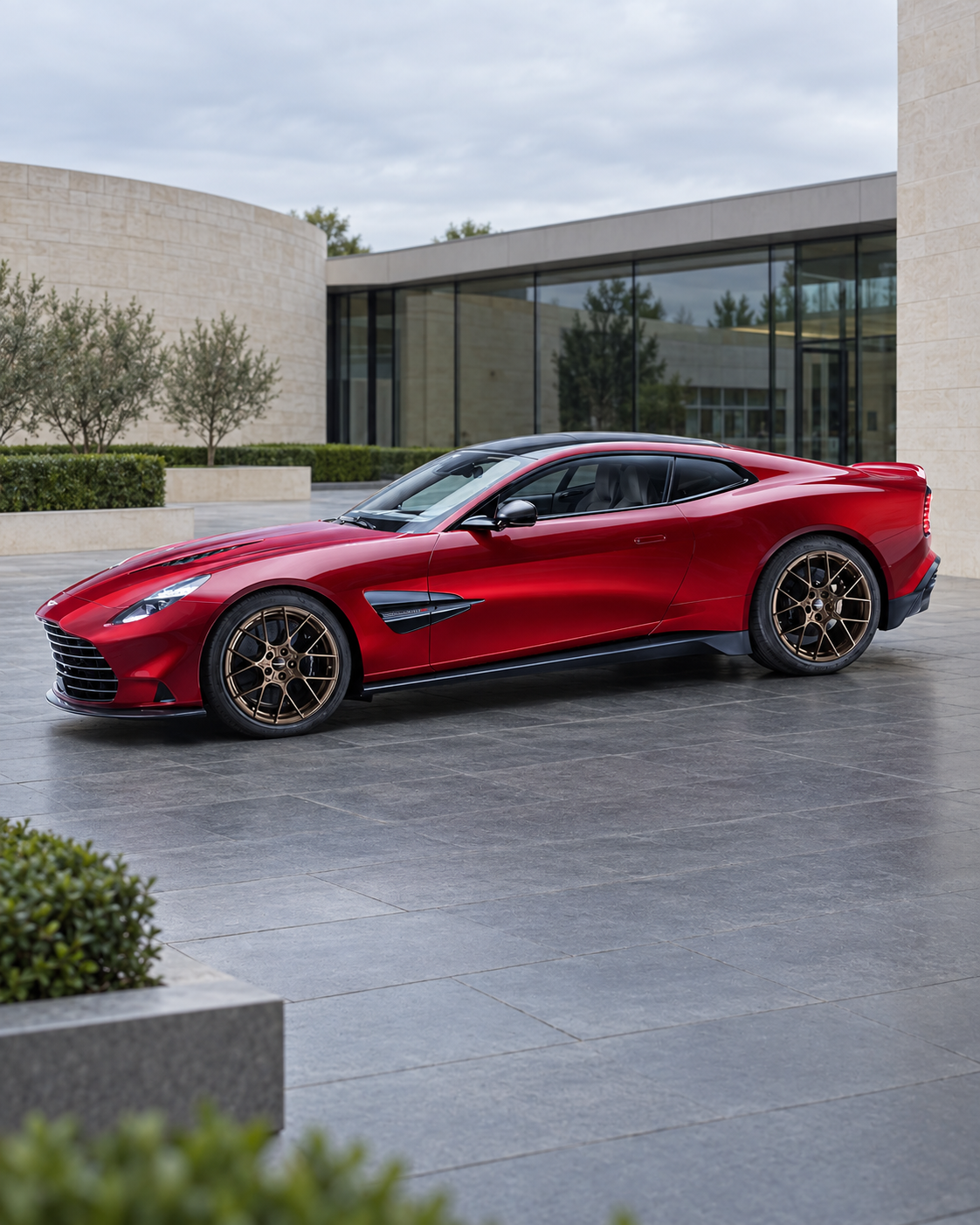
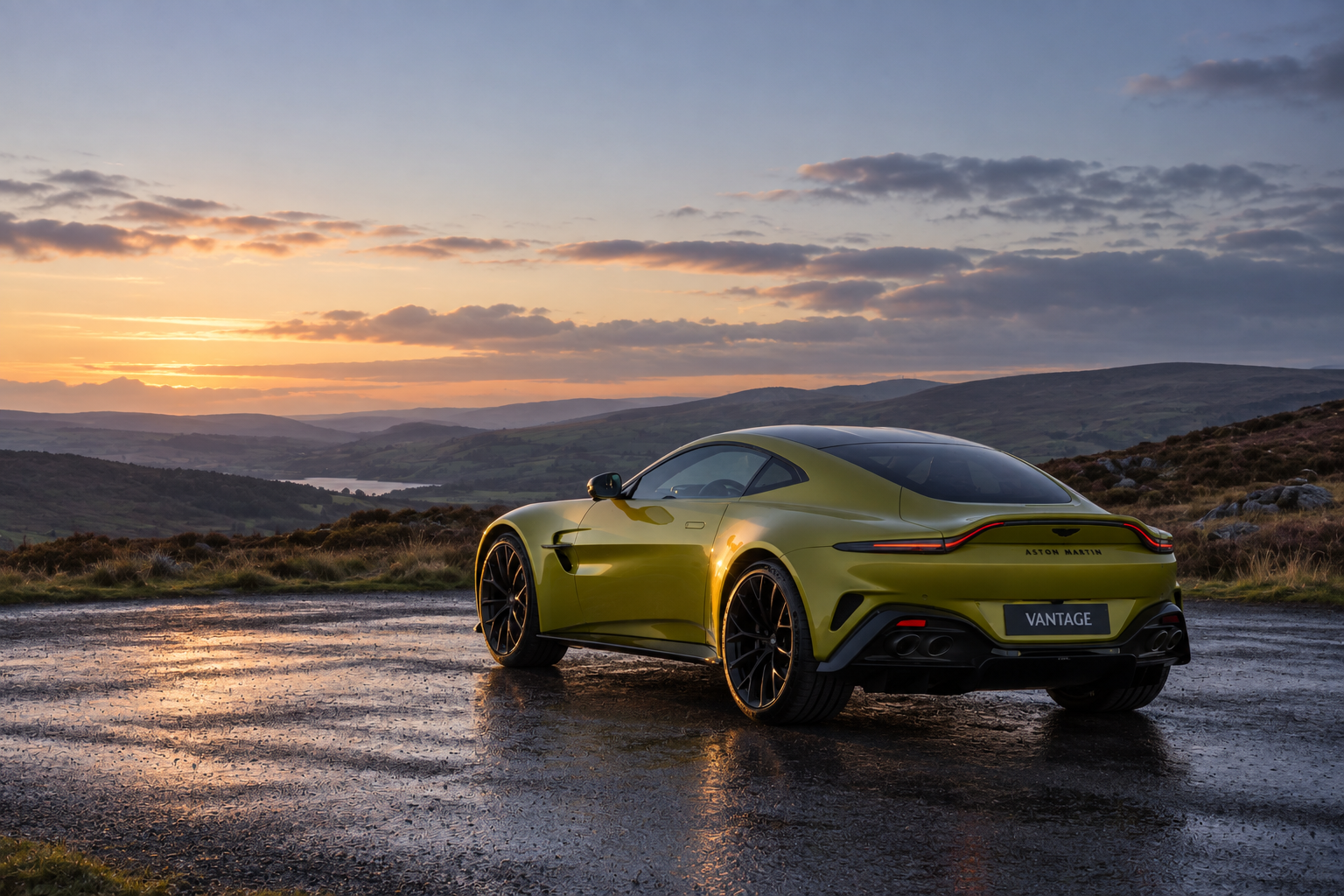
The V8 is used in the marque’s key models, including the Vantage, DB12, and DBX707. This commonality allows Aston Martin to develop an established powertrain, transmission systems, and electronic systems without creating a complete electric range before the market requires one.
The V8, V12, and hybrid each serve a different purpose
Powertrain type | Example | Role in the strategy |
|---|---|---|
V8 | Vantage, DB12, DBX707 | Main engine for the sports car, grand tourer, and SUV |
V12 | Vanquish | Flagship engine for a limited-production model |
V8 plug-in hybrid | Valhalla | A separate high-performance project and the marque’s first production PHEV |
Fully electric powertrain | Model not announced | Future platform for several body types; launch no earlier than 2033 |
The Valhalla shows that Aston Martin’s electrification has already begun, although not with a battery-electric vehicle. On March 31, 2025, the company reported that the model was in the final stage of testing, with a powertrain combining a 4.0-liter V8, three electric motors, and a traction battery. First customer deliveries began in 2025.
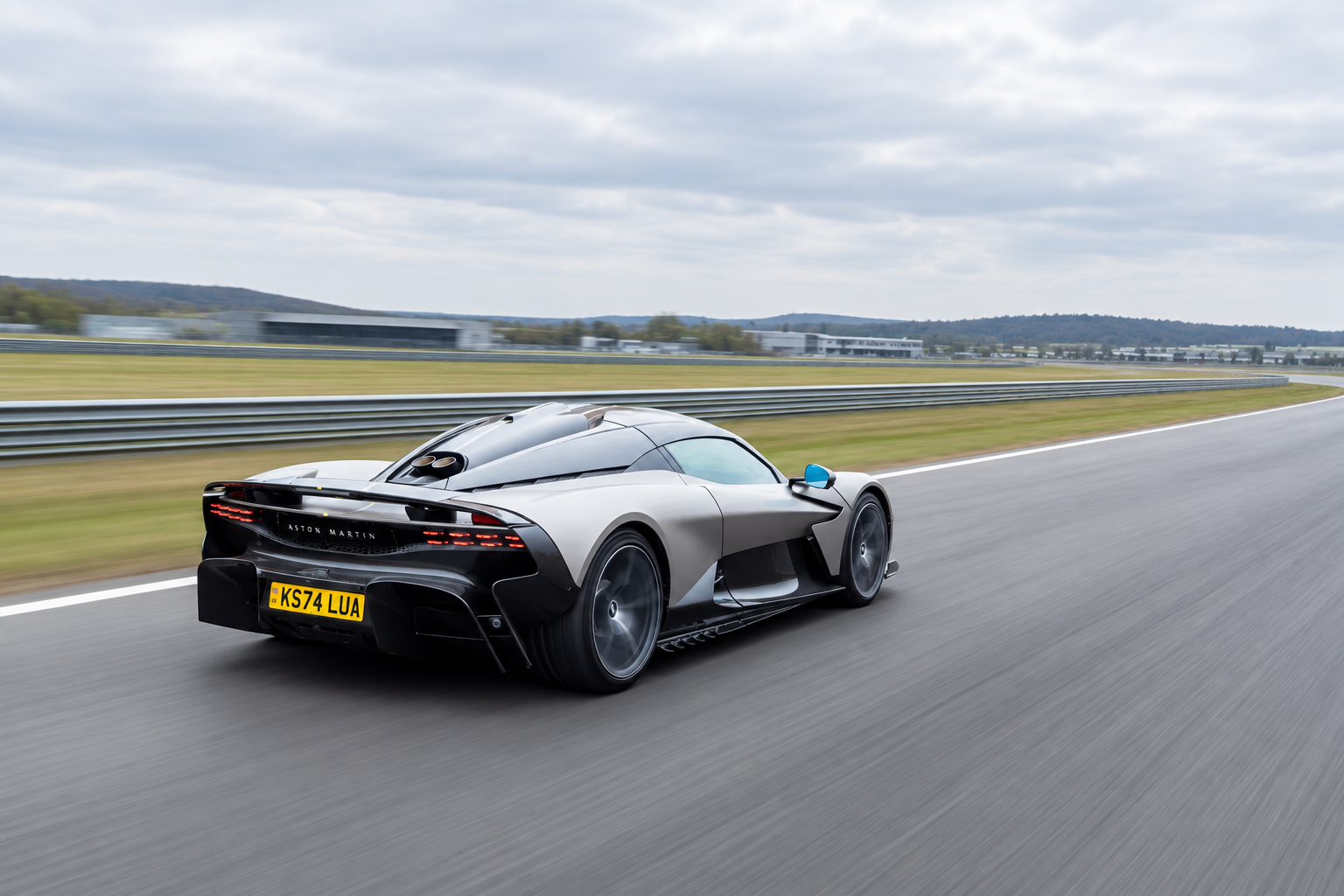
Hallmark does not regard a plug-in hybrid as a universal solution for the entire range. In his assessment, the additional weight of such a system can be around 200 kg. The compromise may be justified in a heavy SUV or a dedicated hypercar, but in a conventional sports coupe it affects handling, packaging, and cost.
What this means for buyers
The current V8 and V12 models have not been announced as the final cars in their respective series.
Delaying the EV does not guarantee that every market will retain the same engine choice through 2035.
Emissions rules, taxes, and registration conditions will affect the availability of specific versions in each country.
Buying a current Aston Martin with the expectation of future collector value is risky: the company has made no such forecasts.
The Lucid agreement remains, but the technology may change
The delay does not mean that Aston Martin is ending its relationship with Lucid. The company still views access to Lucid’s electric motors and battery technology as the basis for its future platform. What has changed is when the project will require the main capital investment.
The delay also has a technical dimension. If full-scale development begins several years from now, production vehicles will not necessarily use components from the generation discussed when the agreement was signed in 2023. By then, battery energy density, system voltage, charging power, and electric-motor design may all have changed. That is why Lucid’s specifications today cannot automatically be attributed to the future Aston Martin.
What is still unknown about Aston Martin’s first EV
name and body style;
number of electric motors and their output;
battery capacity and chemistry;
range and charging speed;
production location;
price and initial sales markets;
exact presentation and delivery dates.
Aston Martin has previously said that its modular electric architecture could be used for sports cars, grand tourers, SUVs, and hypercars. That describes the platform’s capabilities, not four confirmed production models. Until the company shows a production vehicle and reveals its testing program, any specifications remain assumptions.
The bottom line
Aston Martin remains committed to an EV, but is moving its launch to a point when a zero-emission model becomes more necessary from both a market and regulatory perspective. The earliest target is now 2033, with 2035 as the possible end of the window. Until then, the V8 will remain the marque’s main engine, the V12 will retain its role as the flagship powertrain, and hybrid systems will be used selectively.
The next genuinely significant update will come not when management names another year, but when Aston Martin approves a specific model, platform, and start date for the production program. Until that happens, 2033 should be viewed as a strategic boundary, not a date on the launch calendar.