RU
RU

Вопросы и ответы
No. The petrol engine generates electricity, while the traction electric motor directly turns the front wheels.
No. External charging is not required, because the system is not designed to recharge the battery from the grid. Its main energy source remains petrol.
The petrol engine may work harder to generate more electricity for the traction motor. Its noise is not directly linked to vehicle speed, and this is described as a normal consequence of the series-hybrid layout rather than a gear change.
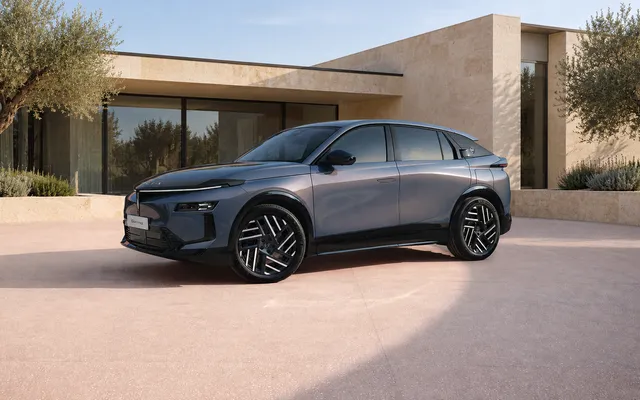
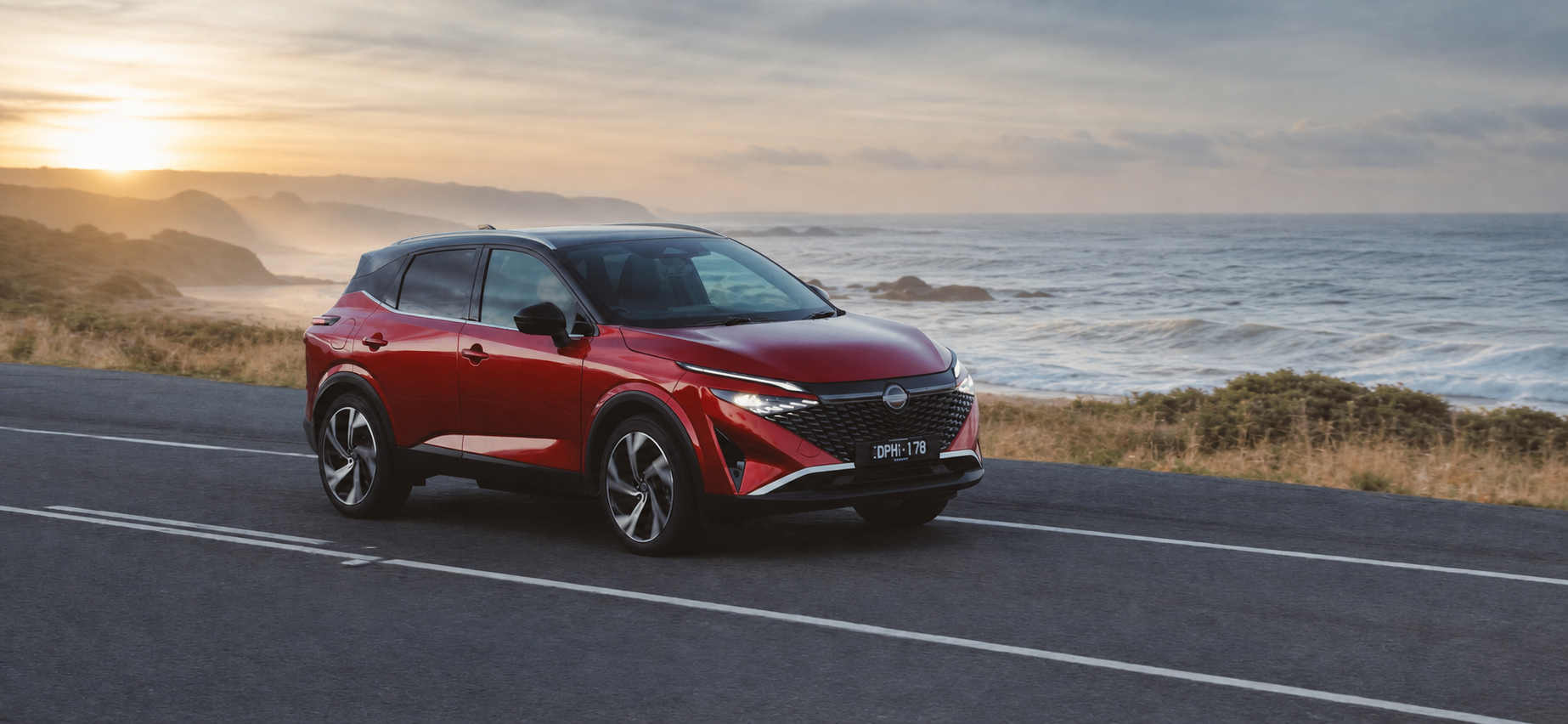
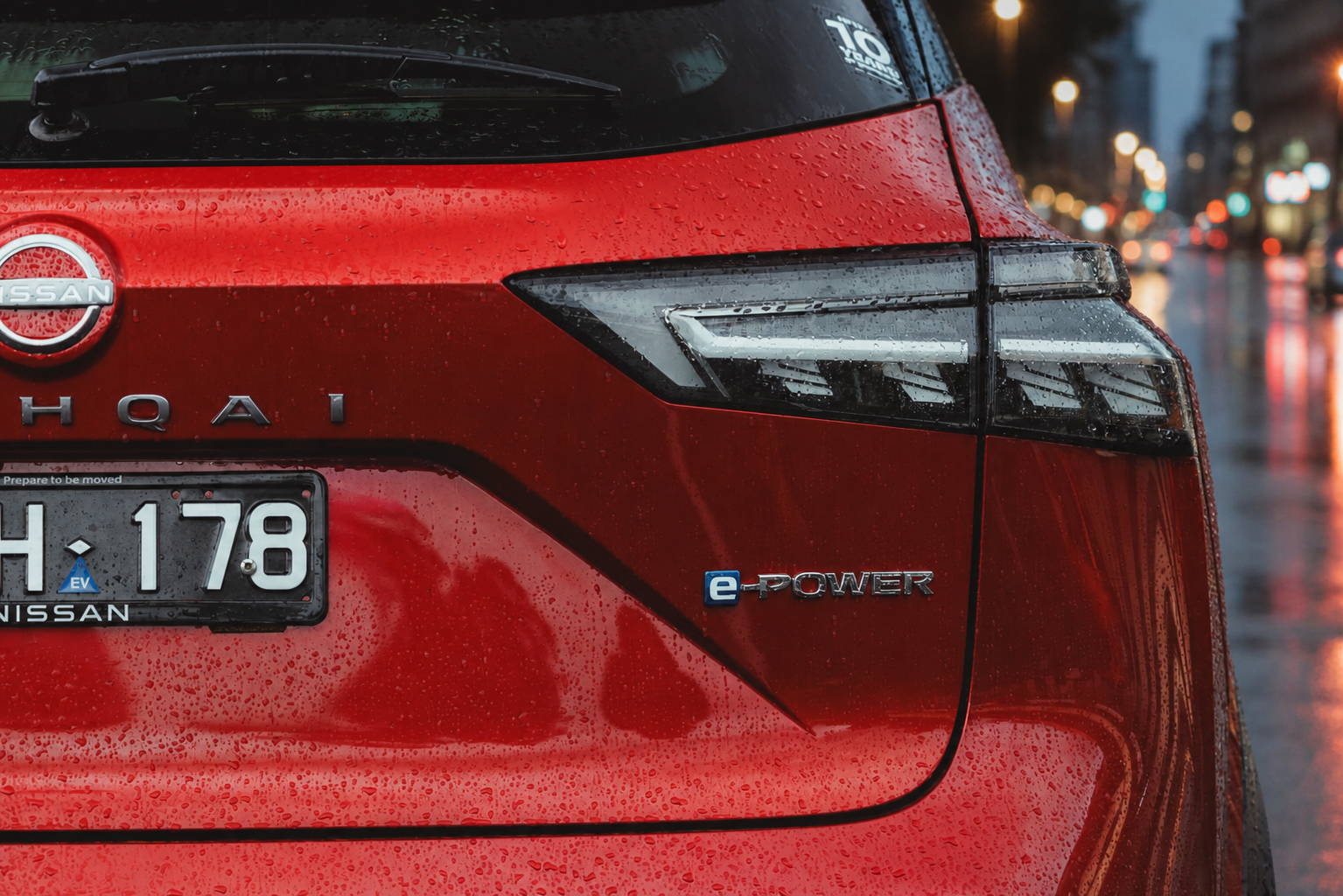
In the Nissan Qashqai e-POWER, the petrol engine is not connected to the driven wheels. It generates electricity, while the car is always propelled by an electric motor. That is why the Qashqai e-POWER runs on petrol, yet its throttle response and regenerative braking feel closer to an electric car than to a conventional hybrid.
On September 18, 2025, Nissan announced the start of the European rollout of the third-generation e-POWER system, initially in the Qashqai. This version uses a new 1.5-litre three-cylinder ZR15DDTe turbocharged engine developed as a generator. Its job is not to turn the wheels, but to maintain the available electrical energy for the traction motor.
How the e-POWER system works
Component | Function |
|---|---|
Petrol engine | Provides mechanical energy for the generator |
Generator and inverter | Convert and distribute electrical energy |
Lithium-ion battery | Acts as a buffer: it stores energy recovered during braking and powers the electric motor |
Traction electric motor | Directly turns the front wheels |
Regenerative braking | Returns part of the energy generated during deceleration to the battery |
Nissan describes this sequence on its official e-POWER page: the internal-combustion engine generates electricity, the battery powers the electric motor, and the electric motor alone turns the wheels. External charging is not required because the system is not designed to recharge the battery from the grid.
What the driver will notice in town and on the motorway
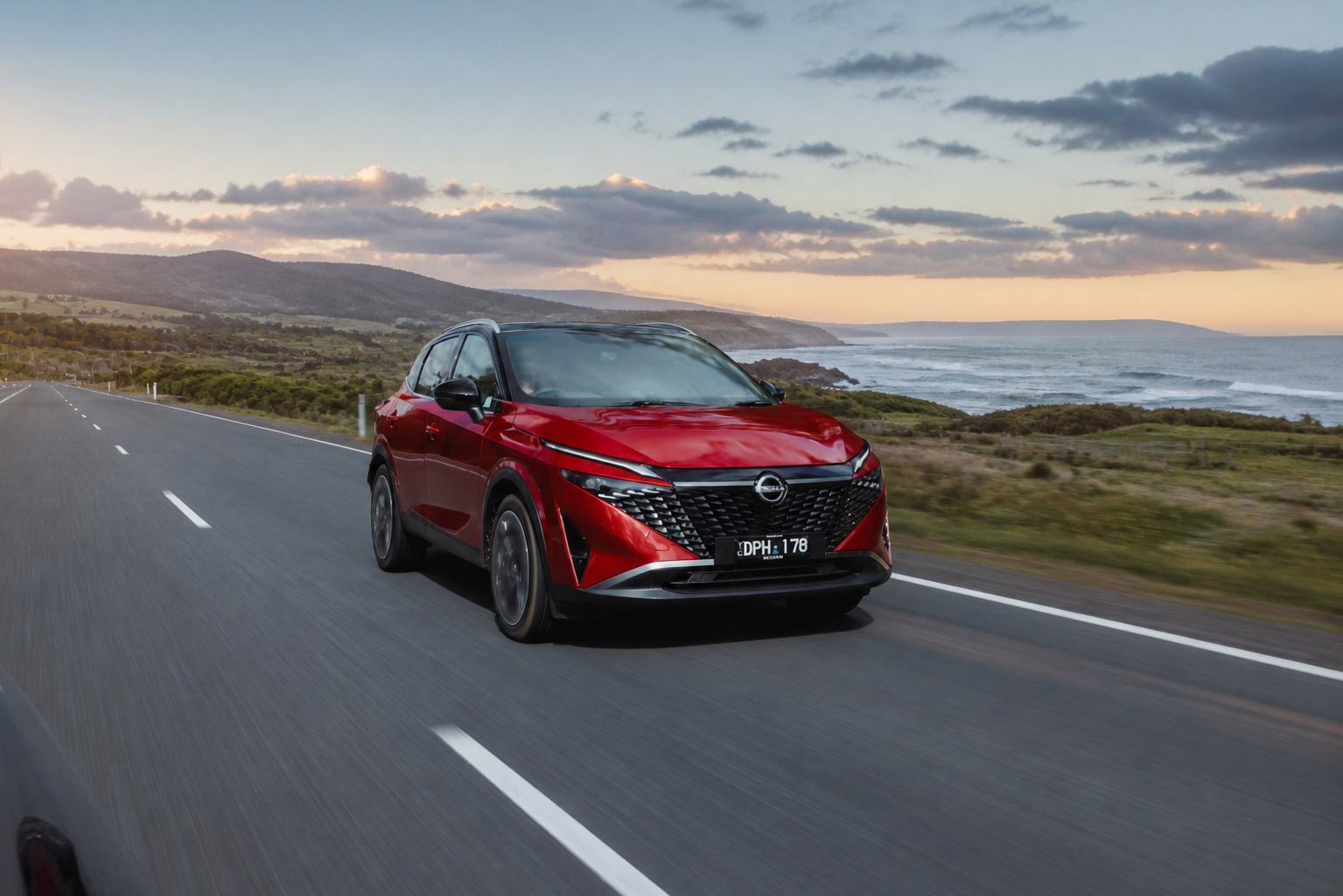
When you press the accelerator, the electric motor provides the drive. There are therefore no conventional gear changes and no pause while the petrol engine builds up revs. When you lift off the accelerator or brake, the system can return part of the energy to the battery.
The relationship between engine noise and vehicle speed is not direct. During hard acceleration, uphill driving or high-speed travel, the petrol engine may work noticeably harder because it needs to generate more electricity. This is a normal consequence of the series-hybrid layout, not a sign that the transmission is changing gear.
Do not confuse it with a plug-in hybrid
The Qashqai e-POWER does not need to be plugged in, but it is not designed for regular driving without using petrol. Its small battery smooths out demand for electrical energy and stores energy recovered during braking; the main energy source remains the fuel in the tank.
Why the engine-generator can be more efficient
A conventional internal-combustion engine must respond to the accelerator while operating efficiently across a very wide range of speeds and loads. In the e-POWER system, the electric motor handles the driving response, allowing the petrol engine to operate more often in conditions that suit it. Nissan explains the third-generation system in its material about the new generator engine.
This does not mean fuel consumption will be fixed in every situation. Speed, temperature, terrain, vehicle load, driving style and battery condition still affect it. Nissan itself points out that WLTP figures are intended for comparison, not as a promise of the result on every journey.
Which figures apply to a specific version
There is no single specification for the Qashqai e-POWER in every country. Nissan’s German website lists 4.3–4.5 L/100 km and 98–101 g/km of CO₂ under WLTP for the new 205 hp front-wheel-drive Qashqai. The Romanian website publishes 5.2–5.3 L/100 km and 117–119 g/km of CO₂ under WLTP for the 188 hp version offered there.
Market and version | Power | WLTP fuel consumption | WLTP CO₂ |
|---|---|---|---|
Germany, new Qashqai e-POWER 2WD | 205 hp | 4.3–4.5 L/100 km | 98–101 g/km |
Romania, Qashqai e-POWER 2WD | 188 hp | 5.2–5.3 L/100 km | 117–119 g/km |
These figures come from Nissan’s official pages for Germany and Romania. They should not be compared as if they described identical vehicles: before buying, check the power, fuel consumption and equipment listed for the specific vehicle in the market where you intend to purchase.
The one-tank journey: a useful reference, not a standard result
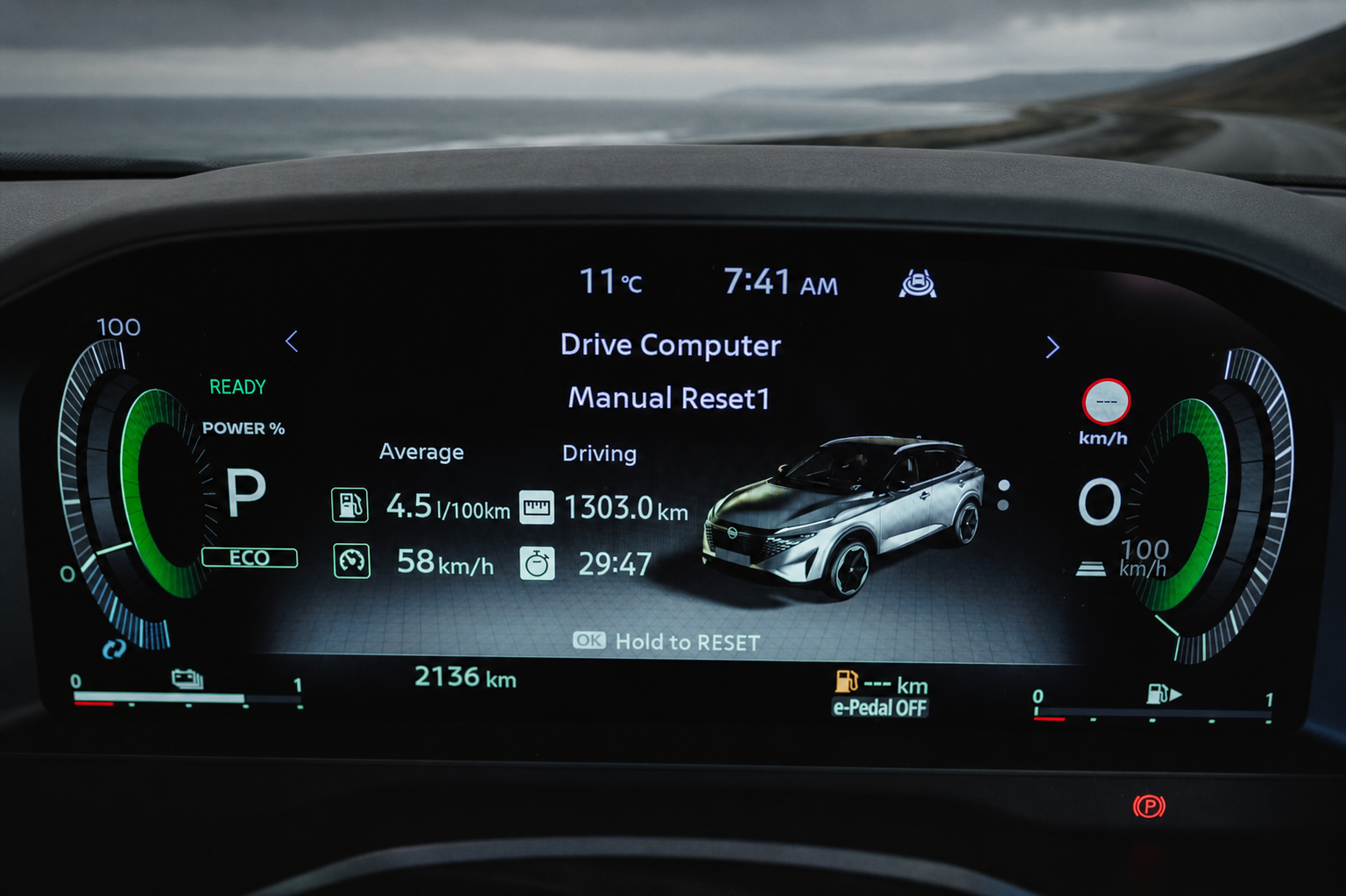
On May 27, 2026, Nissan reported on a Qashqai e-POWER journey across Tasmania. According to the company, the vehicle covered more than 1,300 km without refuelling, with average fuel consumption of 4.5 L/100 km. The route included climbs, coastal roads and motorways. This result is an interesting illustration of how the system can perform, but it should not be applied to every everyday journey: the manufacturer does not present it as a universal fuel-consumption standard.
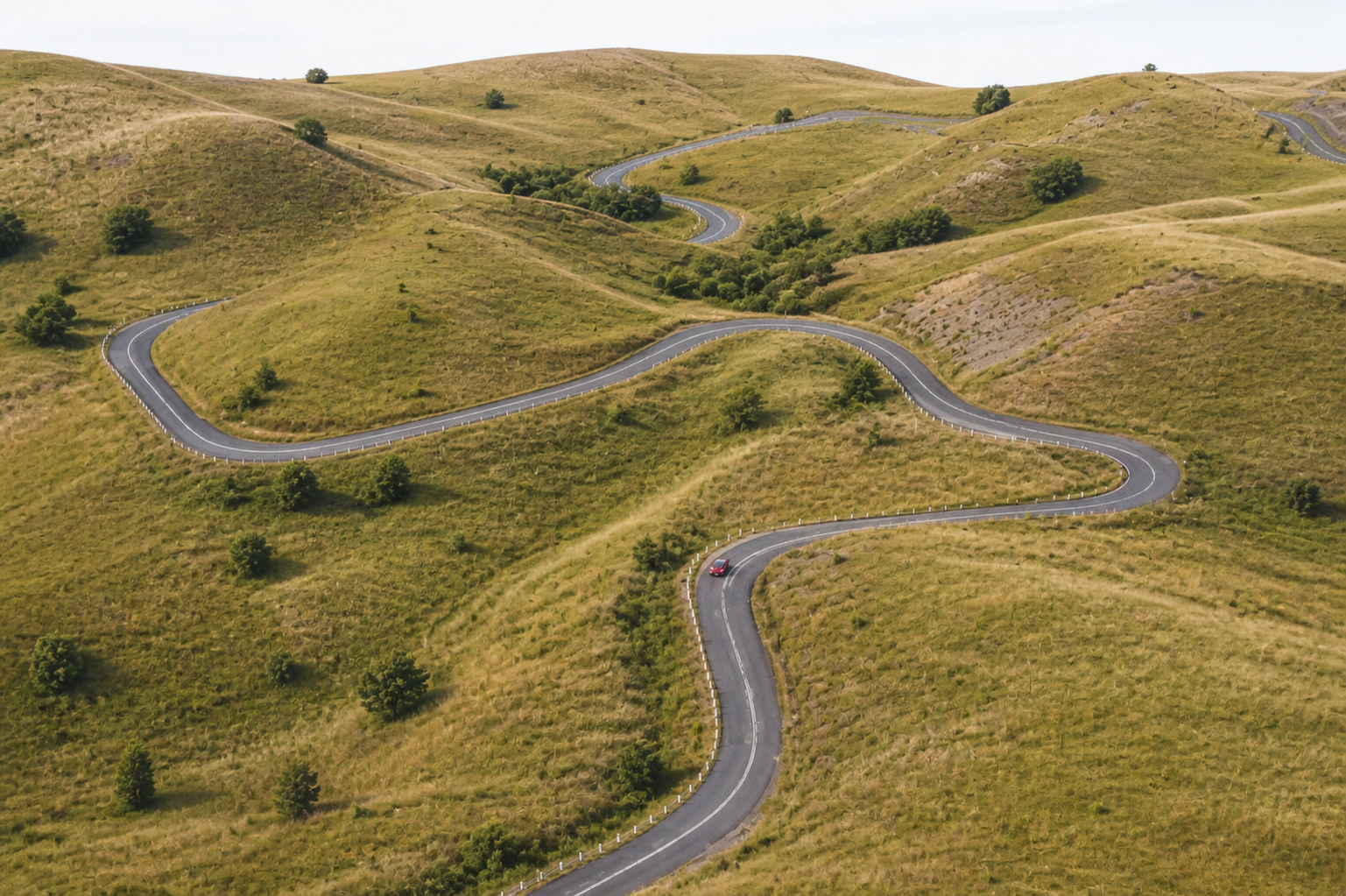
Nissan provides the route details in a separate report on the journey. For an owner, it is more useful to look at the official WLTP figure for the required version and take a test drive on a familiar route.
Who should assess e-POWER carefully before buying
Drivers who spend a lot of time in town: regenerative braking and electric drive will be most noticeable here.
Drivers who often travel on motorways with a full load: it is worth assessing the sound of the engine-generator during sustained acceleration and uphill driving.
Buyers comparing different markets: do not use fuel-consumption and power figures from a foreign specification instead of the data for the local vehicle.
e-POWER does not turn the Qashqai into an electric car and does not eliminate petrol consumption. Its key feature is straightforward: the electric motor is always responsible for propulsion, while the petrol engine generates energy. That is what sets the Qashqai e-POWER apart from a conventional hybrid and explains how it feels behind the wheel.