 EN
ENDEALER
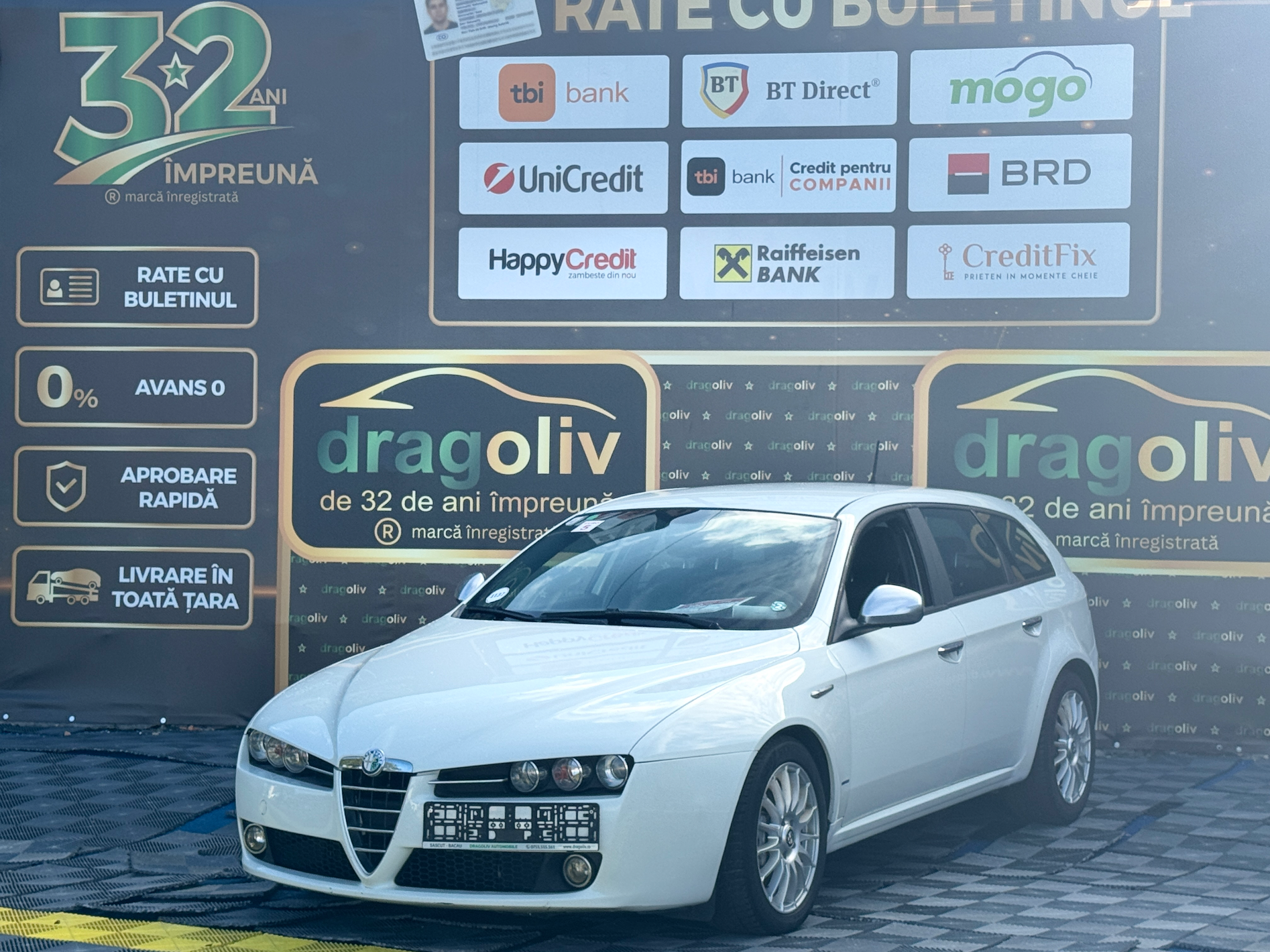
€4,800DEALER
€4,999
2013, diesel, manual, 184K km, wagon, 1,995 cm3, 136 hp, Used condition, In stock

dragoliv.ro
 Romania, Bacău County
 Romania, Bacău County
If you are shopping for an Alfa Romeo 159, do not start with the badge or the dream-spec fantasy. Start with the listing quality. On a model like this, the difference between a satisfying buy and a draining one is often visible before you even call the seller. A good Alfa Romeo 159 listing usually tells you how the car has been owned, not just how it looks in one flattering sunset photo. With only limited market availability in the wider eu market, that matters even more: you may be tempted to chase the first decent-looking car for sale, but patience usually saves money and stress.
People are drawn to the Alfa Romeo 159 because it has presence. That is fair. But when you compare used listings, your best move is to treat style as the final tie-breaker, not the first filter. Begin with the basics: how complete is the ad, how consistent are the photos, is the mileage presented confidently or vaguely, and does the seller explain recent maintenance in normal human language? A serious seller tends to describe the car as an owned object with a history. A weak seller often hides behind broad phrases like “runs great” or “no investment needed” while saying almost nothing useful.
For an Alfa Romeo 159, look closely at whether the ad explains what has actually been done recently. Service history does not need to be perfect to be useful, but it should sound specific. Records, invoices, dates, and parts named clearly are better than emotional claims. If the car has known cosmetic faults, honest sellers usually show them. That kind of transparency is often a stronger buying signal than a polished description with no substance.
This is where many buyers save themselves from wasted trips. With an Alfa Romeo 159, seller signals matter almost as much as the car itself. Study the photos. Are there clear images of all sides, the interior, the seats, the steering wheel, the cargo area, and the engine bay? Does the car appear clean in a normal way, or overly staged to distract from details? Cropped photos, wet bodywork, heavy filters, or repeated close-ups of badges can be a clue that the seller is selling an idea more than a car.
Then read the wording carefully. A better listing usually mentions service notes, ownership length, tire condition, faults that still need attention, and document status without sounding defensive. A weaker one often leans on attitude: “first to see will buy,” “time-wasters stay away,” or “I know what I have.” That tone does not automatically mean the Alfa Romeo 159 is bad, but it often means the conversation will be less useful. The seller’s response style matters too. If you ask three plain questions and get one evasive answer, that is already information. In the used market, a slow but precise reply is usually better than a fast, vague one.
One less obvious clue: check whether the listing explains why this particular Alfa Romeo 159 is being sold now. The answer does not need to be dramatic. Normal reasons sound normal. When the reason for sale changes between messages, or the seller suddenly becomes unclear about registration papers, inspection status, or how long they have owned the car, treat that as a signal to slow down.
Mileage attracts attention because it is easy to compare, but on an older Alfa Romeo 159 it should never be your only sorting tool. A car with slightly higher mileage and consistent care can be the more sensible choice than a lower-mileage example with thin history and tired details. Look at the wear pattern: does the steering wheel match the stated use, do the seats and switchgear look believable, and do the photos support the story the ad is telling?
You should also compare how each seller describes maintenance, not just the number on the odometer. Ask what has been done recently, what still needs doing, and whether there are receipts to support it. If the transmission, suspension feel, braking behavior, warning lights, air conditioning, electronics, or body condition are not mentioned, ask directly rather than assuming. The Alfa Romeo 159 attracts buyers who can be quite forgiving about minor imperfections, and some sellers rely on that. You do not need perfection, but you do need clarity.
There is a pattern in niche-interest cars across the eu market: the attractive but vague listing can sit there because every serious buyer sees the same gaps. The car may look tempting, yet the ad avoids the things that matter. The Alfa Romeo 159 often pulls in buyers who already know they are making an emotional choice, so weak sellers sometimes assume they can skip the evidence. Good buyers do the opposite. They become calmer, more methodical, and more selective.
That is especially useful when availability is thin. If you see only one or a few Alfa Romeo 159 cars for sale, it is easy to talk yourself into a borderline example. Resist that pressure. A thin market does not make a weak listing stronger. It only makes discipline more valuable. Sometimes the smartest move is not to rush toward the available car, but to use that listing as a reference point for what questions your next opportunity must answer better.
Before arranging a viewing, ask for a short, direct summary: current mileage, registration status, service history available, number of keys, known faults, recent work, and whether any warning lights or drivability issues are present. Ask for cold-start behavior if that is not shown. Ask whether there is rust, accident repair, paintwork, or missing trim that the photos do not clearly reveal. If the seller becomes irritated by fair questions, that itself helps you decide.
For the viewing, compare the real car with the tone of the listing. Does the Alfa Romeo 159 feel like a cared-for car that happens to be for sale, or a problem being passed along? That distinction is often visible in small things: matching tires, organized paperwork, clean but not artificially prepared presentation, and a seller who speaks consistently about maintenance and use.
When you choose among used Alfa Romeo 159 listings, the best offer is rarely just the cheapest, closest, or prettiest. It is the one that makes sense. The ad is coherent, the seller answers like an owner rather than a negotiator, the documents line up, and the car’s condition looks believable for its age and mileage. If you shop that way, you give yourself a better chance of finding an Alfa Romeo 159 that is enjoyable to own instead of merely exciting to buy.
 Add as preferred sourceSee more from zvelta in Google Search Add as preferred source