 EN
ENDEALER

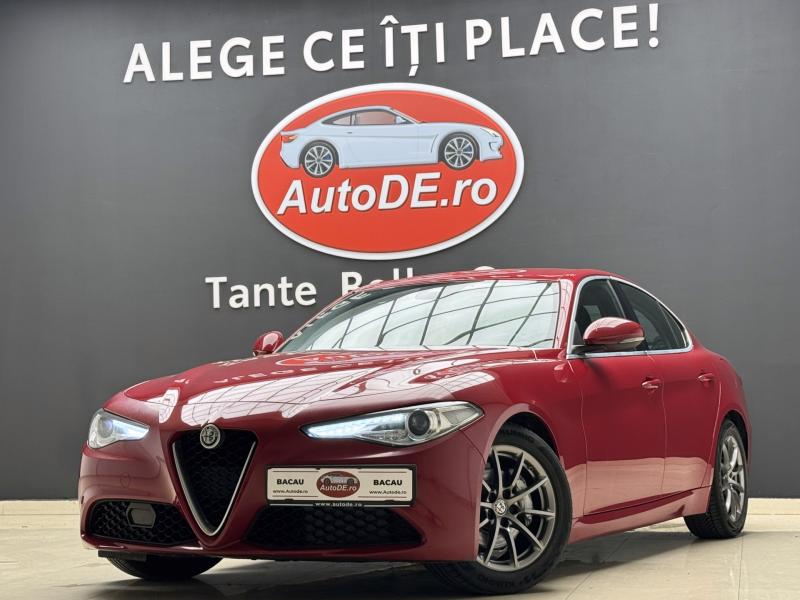
2022, gasoline, automatic, 105K km, sedan, 201 hp, 2.0 TB 200HP ATX SPRINT AUTO, Used condition, In stock, sale date 23.10.2026 03:15

CarOutlet.eu
 Belgium
Auction starts
23 Oct, 03:15
 Belgium
 Netherlands
 Germany
 Romania, Arad CountyRomania, Arad County
 Municipiul Sebeş, Romania
 Romania, Suceava
 Romania
The best Alfa Romeo Giulia listing usually tells you how the car has been lived with, not just how it looks in photos. If you are comparing used Alfa Romeo Giulia cars for sale across the EU market, start there. A seller who can explain recent maintenance, tyre choice, warning lights, the reason for sale, and what the car is like on an ordinary weekday is often more reassuring than one who posts glossy images and a short description. With a Giulia, that ownership story matters because buyers are rarely choosing it as a purely practical default; they are choosing it because they want something sharper, more involving, and a little more special than the usual midsize sedan.
Before you even message the seller, look for consistency. Does the mileage make sense next to the steering wheel, seat bolsters, pedals, and overall cabin wear? Do the photos show the same car clearly from all angles, or do they avoid the areas buyers usually inspect closely? On an Alfa Romeo Giulia, details such as wheel condition, tyre brand matching, body panel alignment, and the condition of the interior trim can tell you a lot about the owner’s habits. One weak sign is a listing that talks loudly about sportiness but says almost nothing about servicing, software updates, brakes, or suspension work.
A strong listing often reads like it was written by someone who actually knows the car. Not a novel, just useful specifics: when it was serviced, whether it has two keys, what was replaced recently, how long the current owner has had it, and whether there are any faults the next buyer should know about. If an Alfa Romeo Giulia has been advertised as carefully maintained, ask for invoices or at least dated service records before arranging a trip.
This is one of those cars where the daily experience matters almost as much as the equipment list. Ask the seller what the car is like cold in the morning, in traffic, on a longer motorway run, and when parking in tight urban spaces. Their answers can be surprisingly revealing. Someone who has genuinely lived with an Alfa Romeo Giulia will usually mention small realities: visibility, seat comfort, fuel use in their own routine, how the transmission behaves in town, whether they mostly drove it on longer journeys, and what maintenance they budgeted for without sounding defensive.
That ownership angle is useful because a Giulia often attracts two very different sellers. One treats it as a car they appreciated and kept properly. The other treats it as a stylish object that looked great on the driveway but was maintained only when absolutely necessary. The photos can look similar. The conversation usually does not. If the seller becomes vague when you ask what they fixed recently, what consumables were last replaced, or whether any warning messages have appeared, take that as information.
When there are only a few Alfa Romeo Giulia listings available, it is easy to talk yourself into the most eye-catching one. Resist that urge for a moment and compare each offer by condition logic instead. Build a simple shortlist around four things: maintenance history, visible honesty, specification relevance, and seller transparency. A lower-mileage car is not automatically the better buy if the service story is thin. A higher-mileage Alfa Romeo Giulia can still be the smarter choice if the owner documents regular care and presents the car without evasive language.
The EU market adds another layer: cars may move across borders, and the same attractive photos can distract buyers from the paperwork trail. Check registration history, ask where the car has been used, and confirm whether all documents needed for your local registration are present. Do not assume anything from the ad wording alone. If the seller says the car is ready to drive home, that is nice; if they can explain the documentation clearly, that is better.
You do not need twenty questions. You need the right seven or eight. Ask when the Alfa Romeo Giulia was last serviced and what exactly was done. Ask whether there are any dashboard warnings, any oil leaks, any suspension noises, any known electrical quirks, and whether the air conditioning, infotainment, and driver-assistance features all work as expected. Ask about tyres, brake wear, and whether the car has had paintwork or accident repairs. Ask for a cold-start video if you cannot inspect it immediately.
Then listen to how the answers come, not only to the answers themselves. A trustworthy seller usually responds in complete, calm detail and does not act offended by normal buyer checks. A weak seller often hides behind phrases like “everything works” or “nothing to invest in” while avoiding specifics. With an Alfa Romeo Giulia, specifics are exactly what you want.
Here is the interesting part: with cars like the Alfa Romeo Giulia, enthusiasm can be either a green flag or a mask. Some owners really are enthusiasts, and that can be excellent news if their care was disciplined. But sometimes a very emotional listing is doing extra work to distract you from ordinary ownership basics. If the ad spends more time celebrating design and driving feel than explaining maintenance and condition, slow down.
Another useful clue is how the seller frames compromise. A realistic owner will admit a stone chip, a worn tyre pair, or a minor cosmetic fault. That honesty usually makes the rest of the listing more believable. The suspicious ad is the one that presents an older used Alfa Romeo Giulia as flawless while showing only selective images and offering almost no document context.
Go see the car when the listing, the seller’s answers, and the document story all line up. At that point, your visit should confirm details rather than begin your investigation from zero. Inspect the body in natural light, start the car from cold if possible, test the electronics, and make sure the way it drives matches the way it was described. If the seller has been accurate in the small things, that usually carries through to the bigger ones.
A good Alfa Romeo Giulia is not just a fashionable listing or a tempting badge. It is an offer where the condition, history, and ownership story make sense together. That is the version worth waiting for, and it is usually the one you feel comfortable owning after the excitement of the first week has passed.
 Add as preferred sourceSee more from zvelta in Google Search Add as preferred source