 EN
DEALER
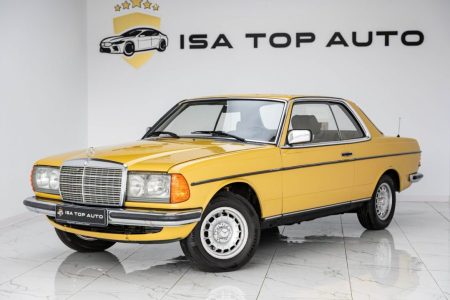
€18,999DEALER
1978, gasoline, automatic, 148K km, 2,300 cm3, 109 hp, 2.3 Benzina, Used condition, In stock
IsaTopAuto.ro
 Romania, Sibiu County
 Romania, Sibiu County
A good Mercedes-Benz W123 listing should calm you down, not create work for you. When a car has reached classic status, weak ads often hide behind nostalgia: one flattering photo, a short line about "legendary quality," and very little that helps you decide whether the car is worth the trip. If you are browsing a Mercedes-Benz W123 for sale in the EU market, start by asking a simple question: does the seller make verification easy? The best offers do. They show the car clearly, describe ownership honestly, mention what has been maintained, and leave you with fewer mysteries than temptations.
People rarely search for a Mercedes-Benz W123 the way they search for an ordinary used car. They are usually looking for a specific ownership experience: classic Mercedes character, simple long-term usability, and the satisfaction of buying something that still feels solid decades later. That changes how you should compare offers. Mileage matters, of course, but on an older car it matters together with storage, repair quality, paperwork, visible body condition, and whether the car has been kept as transport, hobby, or half-finished project.
This is also why thin listings deserve extra suspicion. With a newer car, missing details can sometimes be filled in later. With a Mercedes-Benz W123, every missing detail can hide expensive work, improvised repairs, or a seller who knows the car photographs better than it drives. Look for listings that help you understand the car's recent life: how often it was used, what was done in the last few years, whether the interior looks coherent with the claimed history, and whether the underbody, engine bay, and trim are shown as confidently as the front three-quarter glamour shot.
This is where the market gets interesting. A strong Mercedes-Benz W123 seller usually reveals seriousness in small ways before you ever call. The photos are consistent in lighting and sequence, not a random mix from different seasons. The description does not oversell; it notes imperfections without drama. Service notes, registration documents, inspection papers, old invoices, or even a plain list of recently replaced items all matter because they show memory, not just marketing. If the seller says "restored," ask what that means exactly. Cosmetic refresh, partial repaint, mechanical recommissioning, or full documented restoration are very different stories.
Response style is another underrated clue. A serious seller answers direct questions directly. If you ask for cold-start video, underside photos, chassis documentation, or details about rust repair, you want calm specifics rather than offended pride. Beware of vague phrases like "needs nothing" or "just get in and drive" when the listing provides no supporting detail. On the other hand, a seller who says, "the paint has age-related marks, the seats are original, here are the invoices we have, and here is what I would sort next," is often telling you more than a polished ad ever could.
One less obvious signal: how the car is framed in the ad. If the whole pitch leans on the myth of the Mercedes-Benz W123 but avoids the individual car, be careful. You are not buying the model's reputation; you are buying one specific example with one specific maintenance history. The best classic listings understand that and treat documentation, condition photos, and honest explanation as part of the value.
When you line up used Mercedes-Benz W123 listings, resist the urge to compare only color, trim, or how "original" the car sounds. Start with condition logic. Are the panel gaps visually consistent? Does the interior wear make sense for the claimed mileage and use? Are the steering wheel, seat bolsters, switches, and pedals telling the same story? If one listing shows a very tidy cabin but avoids close photos of body edges, lower doors, arches, floor areas, or engine bay, ask why. A classic Mercedes can still be an attractive buy even with cosmetic flaws, but hidden structural or neglected mechanical work changes the decision completely.
It also helps to compare the seller's level of evidence, not just the car itself. One Mercedes-Benz W123 may look cheaper until you realize another listing includes better documentation, clearer history, and a more transparent owner. That second car can be the smarter viewing appointment. A low-effort ad often becomes a high-effort ownership story.
Try to move beyond generic questions. Instead of only asking whether the car is "good," ask what has been done recently, what remains on the to-do list, how long the current owner has had it, how regularly it is driven, and whether there are documents for maintenance or restoration work. Ask for photos or video that show a cold start, idle, walkaround, underbody points if available, engine bay details, trunk floor, and areas where moisture or corrosion could matter. If the seller mentions repainting, ask which panels and why. If originality matters to you, ask which parts are believed to be original and which were replaced.
A useful practical trick with a Mercedes-Benz W123 is to listen for how the seller describes imperfections. Strong sellers usually know them by memory. Weak sellers speak in fog: "old car things," "nothing major," "I am selling for a friend," or "I do not know much about it." Sometimes that is harmless, but often it means you will need to verify twice as much in person. If travel is involved, that alone may be enough reason to keep scrolling.
Availability for the Mercedes-Benz W123 can be uneven, and that is exactly when buyers make rushed decisions. A scarce model page can tempt you to excuse poor photos, missing documents, or a seller who cannot answer basic questions. Try not to. Thin supply should make you more selective, not less. With older Mercedes models, the wrong car can absorb time and money very quickly, especially if the ad relied on reputation instead of evidence.
The smarter approach is to treat every listing as a document trail first and a dream second. Compare maintenance history, visible honesty, and seller behavior before you compare charm. If an offer survives that test, then arrange a viewing and inspect the car with patience. The right Mercedes-Benz W123 is not just the one that looks appealing online; it is the one whose story remains consistent from photos to paperwork to conversation to real metal. That is the offer worth leaving home for.
 Add as preferred sourceSee more from zvelta in Google Search Add as preferred source