 EN
ENDEALER
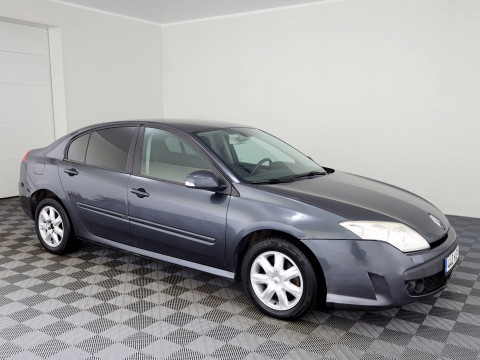
€1,199DEALER
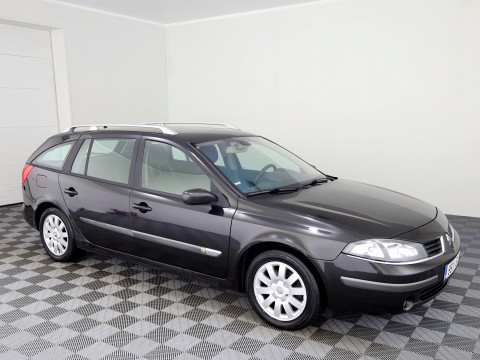
2008, diesel, manual, 275K km, hatchback, Front Wheels Drive, 2,000 cm3, grey, Used condition, Europa, In stock

BaltiCar.com
 Estonia, Harjumaa
 Estonia, HarjumaaEstonia, Harjumaa
 Romania, Arad County
 RomaniaRomania
 Romania, Bacău CountyRomania, Bacău County
 Romania, Bacău County
 Romania, Prahova
 Romania, Prahova
 Romania, Bucharest
If you are looking at a Renault Laguna, the smartest move is not to ask "is this a good model?" but "which of these offers is worth my time?" That is the real difference between ending up with a tidy, honest car and wasting a weekend on a cheap-looking listing that falls apart under basic questions. In the EU market, where a Renault Laguna can appear as a comfortable bargain one day and a neglected ownership story the next, your shortlist matters more than your first impression.
A good Renault Laguna listing deserves a call when the seller shows effort: clear exterior photos, cabin shots, dashboard visible, mileage stated plainly, and at least some mention of service history or recent maintenance. A car can still be imperfect and worth considering if the ad feels transparent. A visit is deserved when that same offer also shows consistency: matching wear for the mileage, no suspiciously selective photo angles, and equipment that makes sense for the car being advertised.
Skip the tempting low-price Renault Laguna when the ad is thin and evasive. One dark photo, no interior, no cold-start information, no explanation for warning lights, no registration or ownership context, and vague phrases like “everything works” are usually not bargains. They are often time traps. When only a few active cars for sale are visible, buyers sometimes lower their standards too quickly. That is exactly when you should raise them.
That is not a criticism. It is actually useful buying context. People usually put a Renault Laguna on a shortlist because they want comfort, space, and value, not because they are chasing an image car. That changes how you should read listings. A strong offer is often the one that looks calm and honest rather than flashy: normal photos, believable description, service invoices mentioned, maybe even a seller who explains what still needs attention.
A weak offer, by contrast, often tries to sell the Renault Laguna on generic praise alone. If the text leans on “very good car” but avoids specifics about maintenance, ownership length, gearbox behavior, suspension work, electronics, or document history, treat that as missing information, not enthusiasm. On a model like this, details are what make an average listing turn into a worthwhile one.
Do not call the first Renault Laguna you see. Open several listings side by side and compare the basics that sellers cannot easily hide. Start with body condition and panel consistency. Look closely at bumper alignment, differences in paint tone between panels, headlight age, wheel condition, and whether the cabin wear fits the stated mileage. Then compare how sellers present the car. A careful owner usually writes and photographs the car like someone who has had to live with it.
Next, compare the ownership story. Ask yourself: does the ad explain who used the car, how long it has been owned, and why it is being sold? You are not looking for a perfect biography, just a believable one. A Renault Laguna with a modest, coherent history can be a much safer choice than a shinier example with a foggy backstory. If the listing mentions recent work, ask what exactly was done, when, and whether there are invoices. “Serviced” means very little unless the seller can describe it.
A short phone call can save you hours. Ask the seller of the Renault Laguna to describe the car cold, not after a long drive. Does it start cleanly? Are there any warning lights that appear and disappear? How does the gearbox behave from cold and when warm? Is the air conditioning working properly? Are there any electrical items that work intermittently? Has the car needed recent suspension, brake, or cooling-system work? You are not demanding perfection; you are checking whether the answers come easily and consistently.
Then ask for one or two extra photos or a short walkaround video. Serious sellers usually do this without drama. Reluctance is informative. If somebody cannot provide a clear shot of the dashboard with the ignition on, the tires, or the lower body edges, assume there is a reason. On used Renault Laguna listings, responsiveness itself is a quality signal.
Here is something buyers often miss. With a Renault Laguna, the seller’s tone can tell you almost as much as the photos. Owners who have actually maintained the car tend to speak in specifics: what was replaced, what still needs doing, which features work, and how the car is used. Traders or careless owners often stay abstract. They talk around the car instead of through it.
That matters especially in a broad EU search, where cars move across borders and listing styles vary. You do not need to assume the worst, but you do need to verify calmly. Documents, service stamps, invoices, inspection records, spare keys, and a believable explanation of mileage all help turn a possible Renault Laguna into a sensible shortlist candidate. If the story becomes blurry every time you ask for something concrete, move on.
The best visit candidates are not automatically the cheapest or the newest-looking. They are the Renault Laguna listings where condition, history, and seller behavior line up. The ad is complete, the car looks used rather than disguised, the mileage and wear make sense together, and the seller answers direct questions directly. Bonus points if the ad admits small flaws. Honesty about minor issues often correlates with honesty about bigger ones.
A maybe-worthy visit can also be a car with average photos but strong documentation. In real life, paperwork often beats presentation. If the seller can show a maintenance trail and speak clearly about the car’s current needs, that Renault Laguna may be more promising than a polished listing with no substance behind it.
Leave the cheap Renault Laguna alone if the value depends on you ignoring obvious gaps. No service proof, uncertain mileage story, unclear title situation, warning lights explained away, major cosmetic damage hidden by poor images, or a seller who keeps changing details from message to message — that is not a practical shortlist car. That is a negotiation with risk.
The right Renault Laguna to buy is usually the one that remains convincing after your second look, not the one that creates urgency on the first. Compare several used listings, ask ordinary but pointed questions, and be willing to skip a weak offer even in a thin market. The buyer who keeps a disciplined shortlist usually ends up seeing fewer cars and buying the better one.
 Add as preferred sourceSee more from zvelta in Google Search Add as preferred source