 EN
ENDEALER
€2,499DEALER
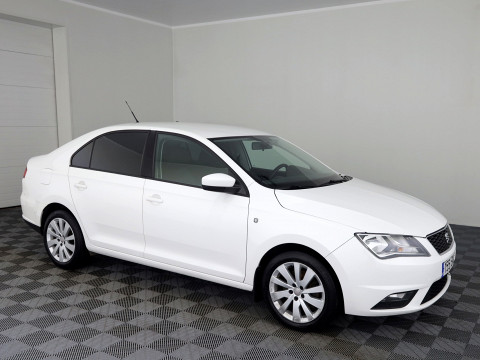
2014, gasoline, manual, 268K km, hatchback, Front Wheels Drive, 1,200 cm3, white, Used condition, Europa, In stock

BaltiCar.com
 Estonia, Harjumaa
 Estonia, HarjumaaEstonia, Harjumaa
 Romania, Arad County
 Romania, Cluj County
 Afumaţi, Romania
 Bucov, Romania
If you are shopping for a SEAT Toledo, the smartest move is not to ask first whether it is a “good car,” but whether a specific listing is a good use of your time. That sounds simple, yet it is where many buyers lose days on vague ads, weak photos, and sellers who know less than they should. On a thinner market page, where the current SEAT Toledo choice may be only a couple of used cars for sale, your shortlist matters even more: one offer may deserve a quick call, one may deserve a proper visit, and one cheap-looking listing can still be the most expensive mistake.
Start by comparing the listings as if you were already trying to reject one of them. With a SEAT Toledo, the useful differences are rarely hidden in the headline. Look at how complete the ad is. Does the seller show the car from all sides, include interior photos, and mention service history, mileage, transmission, and recent work? Or do you get three dark photos and a one-line description that says almost nothing? A sparse listing is not always a bad car, but it is often a bad first signal.
For a practical shortlist, put each SEAT Toledo offer into one of three buckets:
That little sorting step keeps you from treating every used SEAT Toledo listing as equally promising. They are not.
A good first call should confirm that the ad reflects the real car. Ask the seller to describe the current condition without reading the listing back to you. Listen for specifics. Has the SEAT Toledo had regular maintenance? Are there invoices or stamps, or at least a believable timeline of ownership and servicing? Is the mileage supported by documents? Are there any known faults the seller would fix before sale, or is it being sold exactly as it sits?
A seller who answers calmly and directly is usually worth more attention than a seller with a cheaper price and endless fog. Ask simple but revealing questions:
These questions are useful because weak sellers tend to get irritated by normal detail. Strong sellers usually sound prepared.
One of the best filters on the EU market has nothing to do with trim level or equipment. It is whether the seller speaks about the SEAT Toledo like an owner, a trader who knows the stock, or someone clearing an anonymous object from a driveway. That difference matters. A private seller who can explain when the brakes were last done, what tires are on the car, and whether the air conditioning was serviced may be giving you a more trustworthy path than a prettier ad with no substance.
There is also a pattern buyers often miss: some borderline listings try to compensate with cosmetic language. “Very clean,” “drives perfect,” and “nothing to invest” can mean almost nothing without evidence. On the other hand, a listing that openly mentions a scratch, worn seat bolster, or a small issue the seller has not fixed can be refreshingly credible. With a SEAT Toledo, honesty in the ad is often a better sign than polish in the wording.
Only go see a SEAT Toledo when the listing and the call line up. The visit should be for confirmation, not discovery. If the seller cannot say whether the documents are complete, whether the mileage can be supported, or whether there are known faults, you are not arranging an inspection; you are volunteering for uncertainty.
At the viewing, match the car against the ad carefully. Check panel alignment, paint consistency, glass markings, lights, wheel condition, seat wear, steering wheel wear, and the general feel of use. None of these alone proves a problem, but together they tell you whether the car has lived the life the listing suggests. Start the engine cold if possible. Listen for unusual sounds, watch for smoke, and pay attention to idle quality. During a short drive, check clutch take-up, steering straightness, braking stability, gearbox feel, and whether anything changes once the car warms up.
A worthwhile SEAT Toledo visit also includes paperwork discipline. Compare VIN details, registration data, inspection records if available, and any service invoices. If the seller gets casual about identity, history, or missing papers, treat that as a bigger issue than a dirty body panel.
The tempting low-price car is usually where buyers start negotiating with themselves. Don’t. A cheap SEAT Toledo can make sense when the seller is transparent, the defects are visible, and your expectations are realistic. It does not make sense when the price is doing all the talking.
Skip or heavily downgrade offers where the photos avoid key angles, the description contradicts itself, the mileage story feels vague, or the seller keeps pushing urgency instead of answers. Be cautious if the car is presented as excellent but arrives dirty, half-charged, unprepared, or clearly different from the photos. That gap between ad quality and real-world quality is one of the most reliable warning signs in used car shopping.
Another useful observation: because the SEAT Toledo is often considered by practical buyers rather than image-led shoppers, the best examples are not always marketed loudly. Sometimes the stronger offer is the ordinary-looking ad with complete information and a believable owner story, while the weak one is the glossy listing leaning too hard on price and appearance. That is exactly why shortlist discipline matters.
If you are cross-shopping, do not compare a rough SEAT Toledo with an immaculate alternative and blame the model. Compare condition with condition, history with history, and seller quality with seller quality. The right SEAT Toledo listing should make sense as a whole: condition, documents, maintenance story, and asking price should feel internally consistent.
That is the final test for whether an offer deserves a call, a visit, or a skip. Not whether the ad is exciting, but whether the car looks honest enough to be
 Add as preferred sourceSee more from zvelta in Google Search Add as preferred source