 EN
ENDEALER
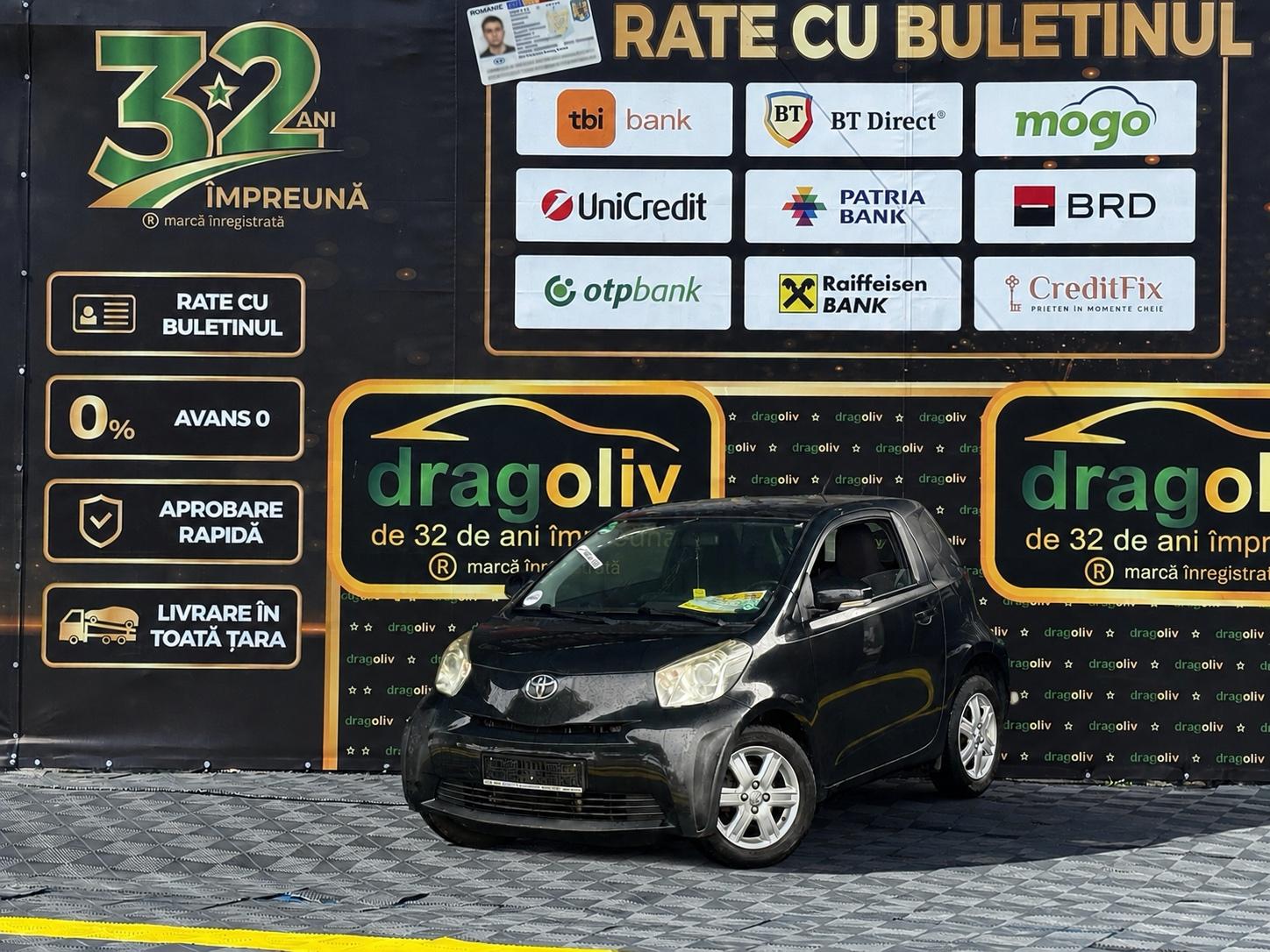
€3,499DEALER
2009, gasoline, manual, 155K km, coupe, 999 cm3, 68 hp, Used condition, In stock

dragoliv.ro
 Romania, Bacău County
 Romania, Bacău County
If you are looking at a Toyota iQ, the smart move is not to treat it like a generic small city car. On paper, many used examples can look similar: compact size, modest mileage claims, decent photos, and a short seller description. In practice, the right Toyota iQ is the one with a believable story, careful ownership signs, and enough detail in the listing to save you from a wasted trip. That matters even more in the EU market, where the next interesting offer may be nearby or several borders away.
The Toyota iQ tends to attract two very different kinds of listings. One type is the tidy, well-photographed car from a seller who understands that buyers will care about service records, keys, tires, warning lights, and honest cosmetic wear. The other is the vague ad: a few dark photos, almost no interior shots, no mention of history, and a description that assumes the car will sell just because it is small and wears a Toyota badge. When you compare Toyota iQ cars for sale, that gap matters more than the headline spec.
Look closely at how complete the ad feels before you even think about calling. Does the seller show the seats, dashboard, cargo area, wheels, and close-ups of common wear points? Is mileage presented clearly, with enough context to make sense? Does the description mention maintenance history, recent work, or known faults? A weak listing is not always hiding a disaster, but a strong listing usually saves you time because the seller has already answered the first layer of serious buyer questions.
With the Toyota iQ, search geography can change your decision almost as much as condition. You may find one used Toyota iQ close enough for a quick weekday inspection and another that looks better on paper but requires a long drive, a train trip, or even a flight. That is where buyers often rush. A distant listing can start to feel special simply because you invested time in planning the trip.
Try to decide in advance what would make a cross-border or long-distance Toyota iQ worth the effort. Ask for cold-start video, instrument cluster photos, service book images, VIN-related document confirmation if appropriate, and a walkaround in daylight before you commit to travel. If the seller becomes vague when the questions get specific, that tells you something useful. Distance should make you stricter, not more forgiving.
There is also a less obvious point here: very small cars are often searched casually and bought impulsively. People think, "It is only a city runabout," and lower their standards. That is exactly how buyers end up overpaying for a Toyota iQ with an unclear history, neglected cabin condition, or unresolved warning lights. The cheaper and smaller the car seems, the more disciplined your comparison should be.
A promising Toyota iQ offer usually does not shout. Instead, it gives you enough specifics to trust the next step. Look for consistency between photos, mileage, wear, and seller tone. A steering wheel, pedals, and driver seat that look heavily worn compared with the stated mileage deserve a follow-up question, not an automatic rejection, but definitely a follow-up. If exterior panels show mismatched paint tones or uneven panel gaps, ask whether the Toyota iQ has had body repairs and request clearer images in natural light.
Pay attention to small signs of ownership quality. Matching tires from a known brand can suggest routine care; random mismatched tires can suggest a car maintained only when absolutely necessary. A clean boot floor, intact trim pieces, functioning infotainment or climate controls, and two keys may sound minor, but on a compact used car these details often separate careful owners from careless ones.
And because the Toyota iQ is often bought for urban use, do not dismiss cosmetic parking damage as purely visual before you inspect it properly. Scuffs on bumpers are normal enough, but repeated knocks can hide broken clips, poor repaint work, or careless ownership habits. In a small car, little details tell a big story.
A good seller should be able to answer direct, ordinary questions without sounding offended. Ask how long they have owned the Toyota iQ, why they are selling it, what maintenance has been done recently, and whether any warning lights, gearbox issues, starting problems, or air conditioning faults are present. Ask whether the car is being used daily right now. A currently driven car is not automatically better, but it often gives a more honest picture than one that has been standing for a long time.
You should also ask what is included: service records, invoices, spare key, seasonal wheels if relevant, and registration documents ready for transfer. If the listing says the Toyota iQ is in very good condition, ask the seller to describe the worst cosmetic flaw before your visit. Serious sellers answer that question clearly. Weak sellers dodge it.
One useful editorial trick: listen not only to what the seller says, but to the order in which they say it. Careful owners tend to volunteer maintenance details early. Flippers and vague traders often return to generic lines about the car being "good," "economical," or "perfect for the city" without answering the specific point you raised.
The Toyota iQ is usually shortlisted by buyers who want a compact car that is easy to park, cheap to keep sensible, and simple to use in daily life. So inspect it through that lens. You are not buying the idea of clever packaging; you are buying one exact used example. Check whether entry and seating feel right for your routine, whether visibility works for your traffic environment, and whether the luggage area matches what you actually carry.
On the test drive, focus on basics. Does the engine start cleanly from cold? Does the transmission behave smoothly and predictably? Are there rattles, warning lights, odd vibrations, or braking behavior that the listing never mentioned? A Toyota iQ that has been honestly represented should feel coherent: the driving impression should match the written description and visible condition.
The easiest mistake with a Toyota iQ is judging it only against other Toyota iQ listings. Also compare each offer against the alternatives that keep appearing in your search history. If another small hatchback at the same money comes with clearer history, better photos, more transparent ownership, or lower inspection risk, that matters. The best Toyota iQ listing is not automatically the best buy in your broader shortlist.
This is especially true in a multi-country European search. An average Toyota iQ nearby may be a better decision than a supposedly cleaner one far away with thin info
 Add as preferred sourceSee more from zvelta in Google Search Add as preferred source