 EN
ENDEALER
€10,900DEALER
€12,990
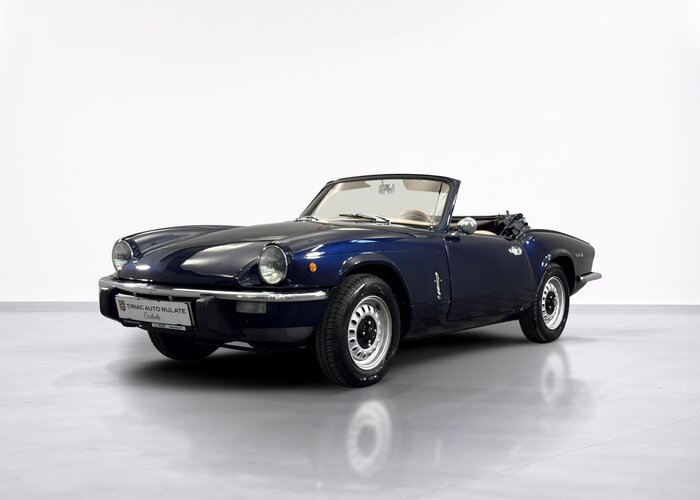
1971, gasoline, automatic, 33K km, cabriolet, Rear Wheels Drive, 1,297 cm3, 75 hp, red

TiriacAuto.ro
 Dămăroaia, Romania
 Dămăroaia, Romania
If you are shopping for a Triumph in Europe, the first useful rule is simple: do not treat the first attractive listing as the right car. Supply can be thin, cars may be far apart, and photos often hide the real story better than they reveal it. With a rare brand, buyers get tempted to move too quickly because they fear missing the chance. That is exactly when weak offers win. A better approach is to slow down, compare what is actually being sold, and judge each Triumph as a whole package: paperwork, condition, honesty of the listing, and how realistic the seller sounds when you ask basic questions.
A second reality of buying Triumph cars across the EU is that distance changes the process. You may be comparing one car in one country with another several borders away, and a nice-looking ad can become expensive if the seller is vague about registration documents, ownership history, transport, or what still needs attention. Before you get emotionally attached to a color or a set of wheels, ask for the things that save time: chassis details, cold-start video, underbody photos if available, service records, and a clear explanation of what is original, what has been restored, and what still does not work. Rare listings reward patient buyers more than fast buyers.
With Triumph, especially in used listings, the description matters more than polished photos. A strong seller usually explains the car in plain language: how long they have owned it, what has been repaired, which parts were replaced, whether the car was restored or simply kept running, and what documents come with it. A weak seller often leans on romance instead of facts. If the ad sounds charming but tells you little about maintenance history, previous registration, engine behavior, or missing details, treat it as incomplete rather than special.
This is also where originality becomes part of the buying logic. Some buyers want a Triumph that is as close to factory specification as possible; others are fine with tasteful changes if the work was documented properly. Neither approach is wrong, but confusion between the two is costly. If the seller calls the car original, ask what exactly that means. Original paint, original interior, original engine, period-correct parts, older restoration, or simply the original style? That one word can hide a lot.
When listings are scarce, buyers often compare them too emotionally. One car looks cleaner, another seems cheaper, a third has more dramatic photos. A better method is to compare the effort each car will demand after purchase. One Triumph may look less impressive in the ad but come with better documentation, a more transparent seller, and fewer unknowns. Another may seem like a bargain until you count transport, registration complications, deferred maintenance, missing trim, electrical faults, or a questionable restoration.
A less obvious point: rare-brand buyers often underestimate how much seller behavior predicts ownership experience. If someone answers specific questions clearly, sends extra photos without irritation, and distinguishes between known facts and guesses, that is a strong signal. If every answer is slippery, if the mileage or history is brushed aside, or if the seller keeps returning to how "special" the car is instead of explaining its actual condition, you may already be seeing how the next stage of the deal will go. With Triumph offers in Europe, transparency is not a bonus feature. It is part of the value.
Before arranging a viewing, ask questions that separate a real candidate from a time-waster. Has the car been driven recently, or mostly stored? How does it start from cold? Are there invoices, stamps, restoration photos, or any evidence of recent work? Are there known leaks, electrical issues, rust repairs, non-working gauges, or registration complications? If parts were changed, were they chosen for originality, drivability, or convenience? The goal is not to demand perfection from an older Triumph. The goal is to understand whether the seller knows the car and whether the ad reflects reality.
Photos deserve a second look too. Try to read them like a cautious buyer, not an admirer. Wide exterior shots are easy. What you really want are consistent details: panel fit, interior wear matching the claimed condition, engine bay honesty, trunk area, lower body sections, and signs that the car has been photographed to inform rather than distract. When a listing has beautiful angles but avoids the places buyers naturally worry about, ask why.
The best Triumph to buy is not automatically the rarest, shiniest, or nearest one. It is the one whose condition, documents, and ownership story make sense together. If you cannot clearly explain to yourself why this specific car is worth the travel, the risk, and the likely follow-up work, keep looking. That sounds cautious, but with a niche brand it is often the difference between a satisfying purchase and an expensive lesson.
In practice, a good Triumph shortlist comes from calm comparison. Save the listings that give you enough evidence to evaluate them properly. Compare the seller's openness, the quality of the history file, the plausibility of the mileage and condition, and how many assumptions you still have to make. A rare car should still survive normal buyer scrutiny. If it does, it may be worth the trip. If it only works as a fantasy, it is probably not the one.
 Add as preferred sourceSee more from zvelta in Google Search Add as preferred source