
On August 2, 2026, Autoblog reported new comments from Ferrari CEO Benedetto Vigna: the company had tested several types of carbon-neutral fuel, and its engines ran on them without noticeable changes. This does not mean Ferrari has announced a date for switching production cars to biofuel. However, the report is consistent with the brand’s official strategy: internal-combustion engines will not disappear from the range, but will develop alongside hybrids and electric cars.
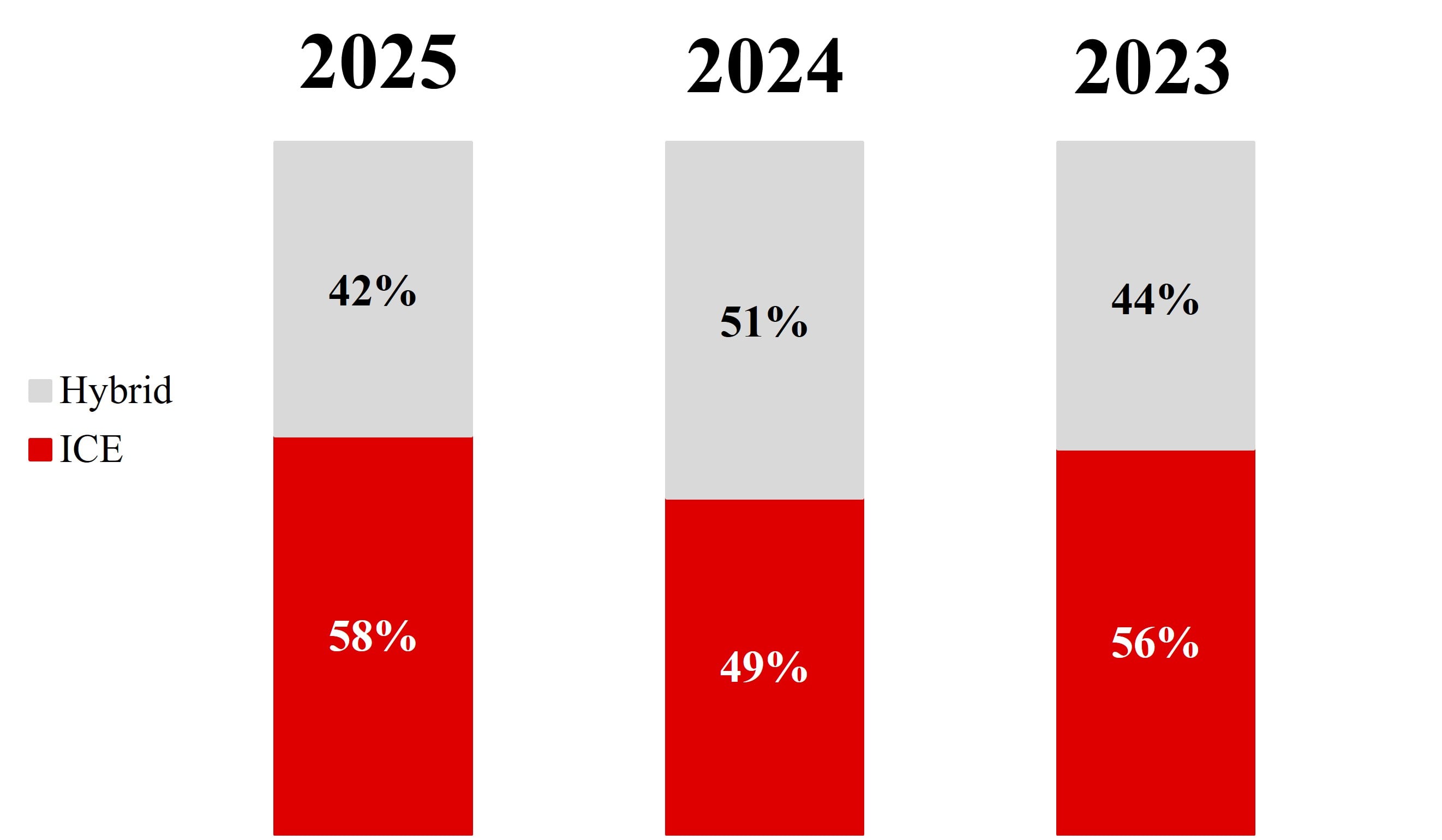
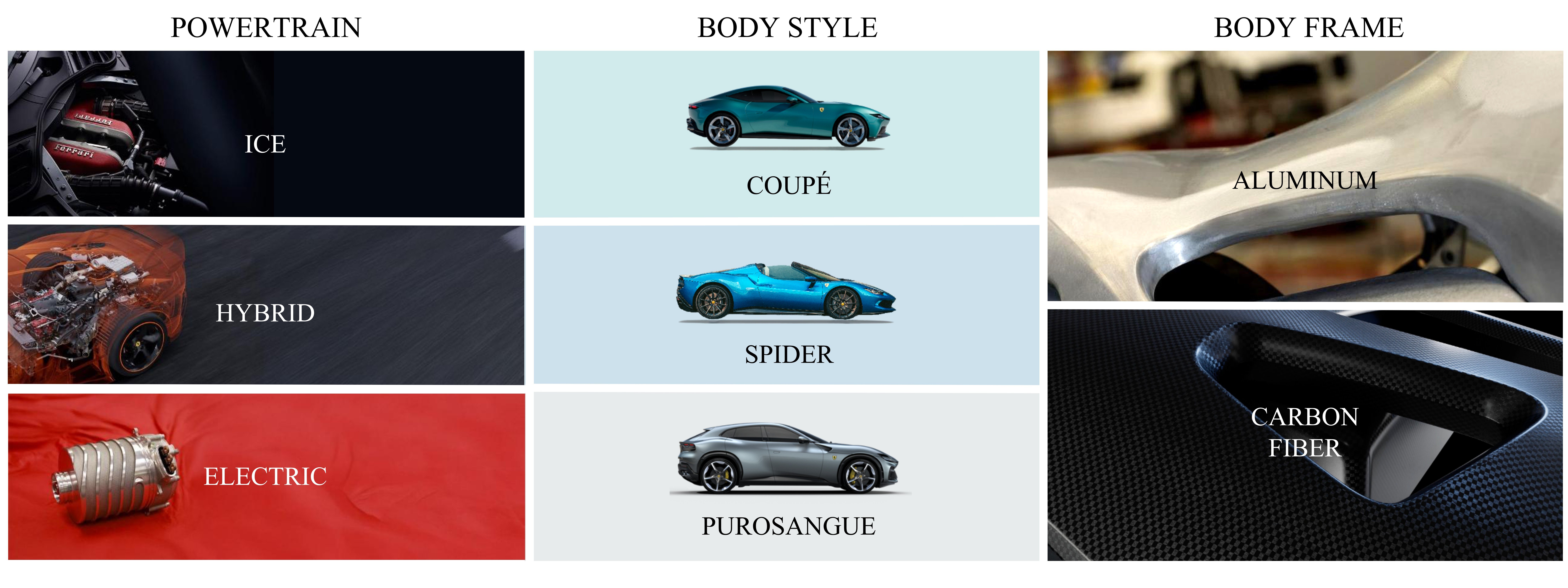
By 2030, Ferrari plans to maintain three powertrain directions at once: around 40% of the model range with internal-combustion engines, 40% hybrids and 20% electric cars. These figures describe the composition of the offering, not production or sales shares.
What Is Confirmed
Ferrari will continue developing V6, V8 and V12 engines to meet changing requirements in different markets.
Future internal-combustion engines should be compatible with alternative fuels.
Hybrids will remain a substantial part of the range in their own right, rather than a temporary step toward abandoning the engine altogether.
The first fully electric Ferrari will expand the range, but will not replace the other powertrains.
Key Dates: How Ferrari Arrived at a Multi-Powertrain Strategy
Key Stages in Ferrari’s Electrification | ||
Date | Event | Strategic Significance |
|---|---|---|
May 29, 2019 | The SF90 Stradale was unveiled as Ferrari’s first production plug-in hybrid. | Electric motors became part of a production powertrain rather than merely an experiment |
June 24, 2021 | The 296 GTB debuted with a V6-based plug-in hybrid system. | Ferrari showed that hybridization was not limited to V8 engines |
June 21, 2024 | The e-building plant opened in Maranello. | Cars with internal-combustion engines, hybrids and electric powertrains can be built at one site |
October 9, 2025 | Ferrari presented its strategic plan through 2030 and production-ready components for its first electric car. | The official 40/40/20 model-range split was established |
August 2, 2026 | Automotive media published Vigna’s comments about testing carbon-neutral fuels. | The official commitment to retaining internal-combustion engines gained additional context |
What the 40/40/20 Split Really Means
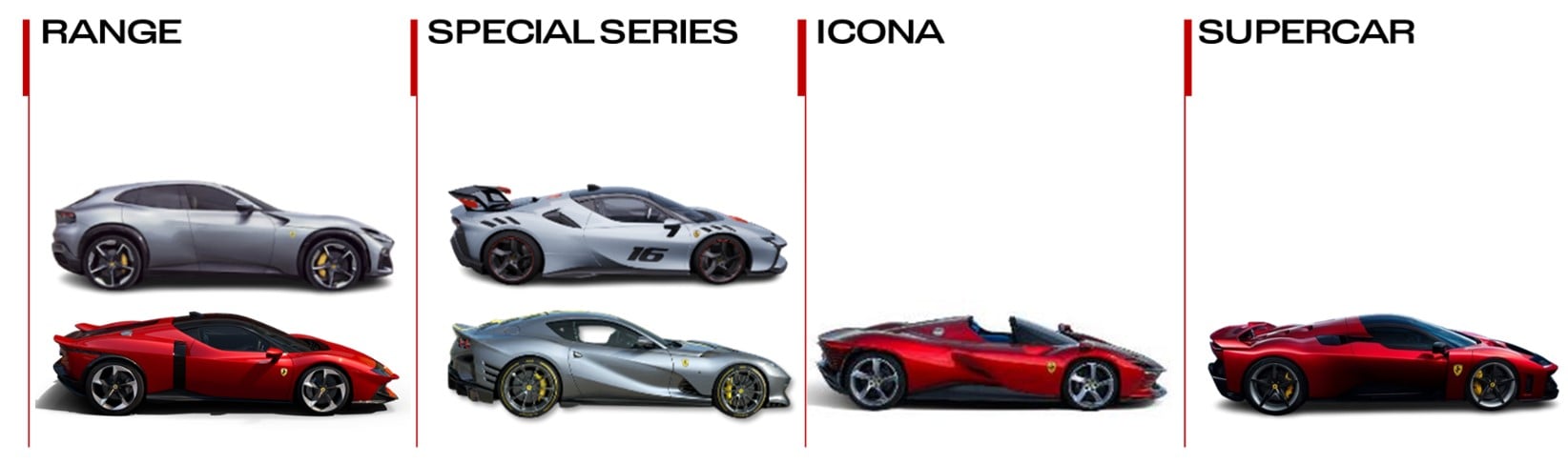
At the Capital Markets Day on October 9, 2025, Ferrari described the expected composition of its 2030 model range. Around 40% of the offering should consist of models with internal-combustion engines, another 40% of hybrids and approximately 20% of electric cars.
It is easy to mistake these percentages for a sales forecast, but Ferrari presented them as the structure of its model line-up. A limited-edition car and a more accessible production model may count equally within the range, even though their production volumes will be completely different. The company has not disclosed what share of actual deliveries in 2030 will come from each type of powertrain.
How to Read 40/40/20
If the range were represented by ten models, the strategy would correspond roughly to four petrol-only Ferraris, four hybrids and two electric cars. This is only an illustration: the actual number of models and the production volume of each series may be different.
The same plan sets out an average rate of four new launches per year from 2026 through 2030. A launch does not necessarily mean a completely independent model family, so multiplying that figure by five and expecting 20 continuously available models would be incorrect.
Why Ferrari Is Not Abandoning the V6, V8 and V12
The official strategy explicitly lists the V6, V8 and V12. Ferrari intends to continue developing them, increasing specific output and adapting the engines to changing regulations. This is a confirmed long-term direction, not a promise to preserve every current model or a specific engine displacement.
The production base is already designed for this scenario. Opened on June 21, 2024, the e-building is intended for assembling cars with all three types of powertrain. Ferrari also produces key electric components there, including high-voltage batteries, electric motors and axles.
This arrangement allows the plant to adjust its production mix without building a separate facility for each type of car. However, Ferrari has not published an exact annual production allocation for internal-combustion cars, hybrids and electric vehicles.
For Ferrari, a Hybrid Is More Than a Way to Reduce Fuel Consumption
The brand’s production plug-in hybrid story began with the SF90 Stradale, unveiled on May 29, 2019. Then, on June 24, 2021, Ferrari introduced the 296 GTB: its petrol V6 works with an electric motor, while the system’s combined output reaches a claimed 830 cv.
These cars show why Ferrari is keeping its hybrid division. The electric system can add traction, fill gaps in the internal-combustion engine’s response, enable short periods of electric driving and help manage power distribution. That is why hybrids account for the same share of the model offering in the plan through 2030 as cars without a traction battery.
Type | Share of the 2030 Model Range | Role | What Remains Unknown |
|---|---|---|---|
Internal-combustion engines | Around 40% | Retaining the V6, V8 and V12 while developing specific output | Which models and engines will remain by the end of the decade |
Hybrids | Around 40% | Combining a petrol engine with in-house electric components | The split between conventional and plug-in hybrids has not been disclosed |
Electric cars | Around 20% | A new direction that expands the range | The full composition of the electric family and production volumes |
The Electric Car Will Expand the Range, Not Displace Other Ferraris
On October 9, 2025, the company revealed the production-ready chassis and powertrain of its first fully electric car. The official Ferrari Elettrica page states that the project uses more than 60 patented solutions, while its main electric components are developed and manufactured in Maranello. Deliveries were planned to begin at the end of 2026.
Ferrari presents the electric car as an expansion of choice. This is consistent with the target share of around 20%: battery-powered models will become a permanent part of the offering, but the official plan does not indicate that the entire brand will switch to electric power.
An Interesting Detail
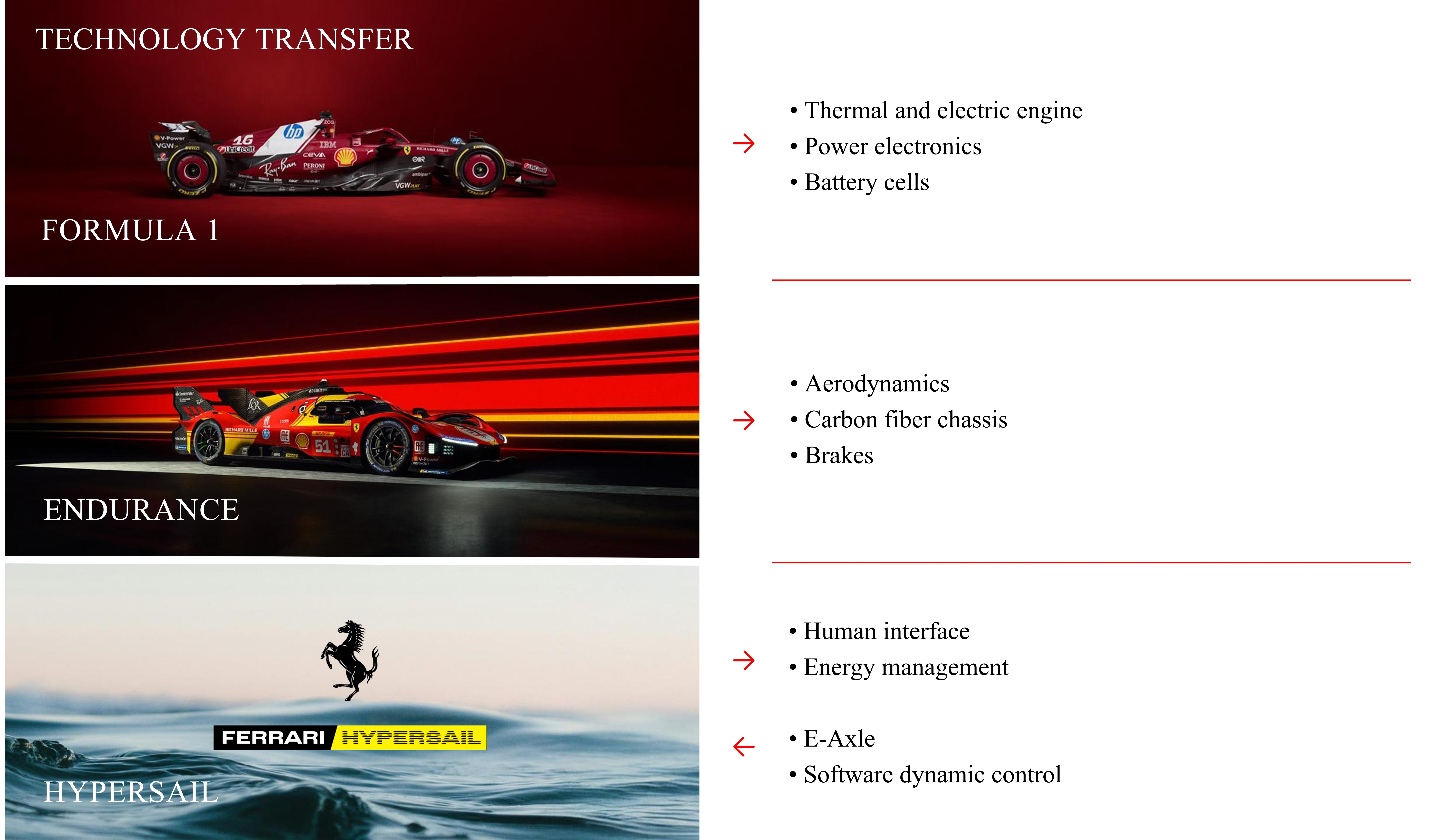
Ferrari’s electric strategy began long before its first production car without an internal-combustion engine. The company traces the development of its expertise to the hybrid systems used in its 2009 Formula 1 car, the 2010 599 HY-KERS prototype and the 2013 LaFerrari.
What Role Could Alternative Fuels Play?
Ferrari’s official plan calls for future V6, V8 and V12 engines to be compatible with alternative fuels. An Autoblog report dated August 2, 2026, citing comments from Benedetto Vigna, said that Ferrari had already tested several carbon-neutral fuel blends and found no operating problems with its engines.
However, this report does not mean that all new Ferraris will soon switch to biofuel. The company has not yet named the fuel specification, the list of compatible road models, a commercial launch date or the countries where it will be available. It has also not confirmed whether previously produced cars would require recalibration.
Carbon-Neutral Fuel Does Not Mean Zero Emissions
When burned, the fuel still causes the engine to emit CO₂. The term refers to a full life-cycle calculation: the carbon used to produce the fuel should offset subsequent emissions. The final result depends on the feedstock, the energy used in production, transportation and the accounting methodology applied.
For Ferrari, alternative fuel could help extend the life of internal-combustion engines in segments where sound, mechanical connection and the historic character of the powertrain matter. For now, however, the technology sits between engine readiness and future commercial use.
What Ferrari’s Strategy Means for Buyers
The new electric car is not a signal that petrol-powered Ferraris will soon be discontinued.
A hybrid will remain an independent choice, rather than necessarily being a compromise between an internal-combustion car and an electric vehicle.
Compatibility with future alternative fuels does not guarantee that those fuels will be available at ordinary petrol stations.
The percentages in the plan cannot be used to predict the residual value or rarity of a specific model.
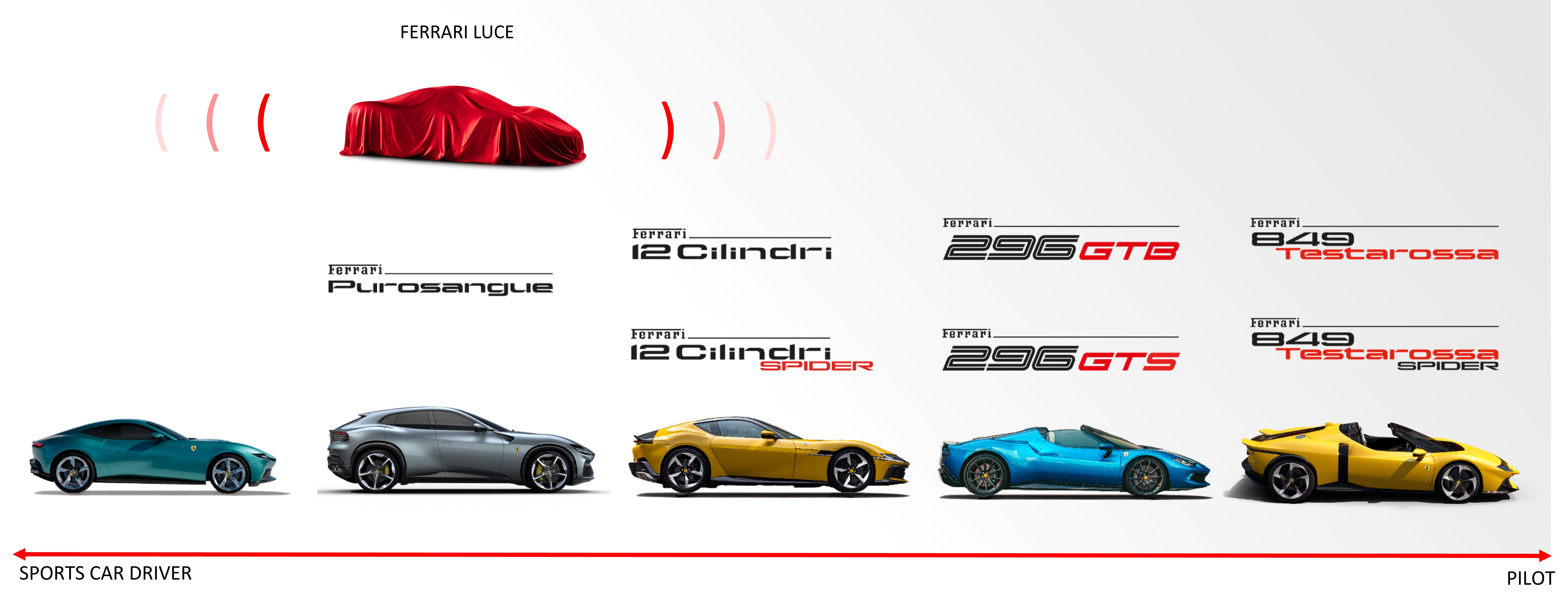
Ferrari has chosen not one powertrain for the future, but a flexible production strategy. By 2030, the brand aims to develop internal-combustion engines, hybrid systems and fully electric cars at the same time. Alternative fuel adds another element to this structure, but its practical role in production cars has not yet been defined.