 EN


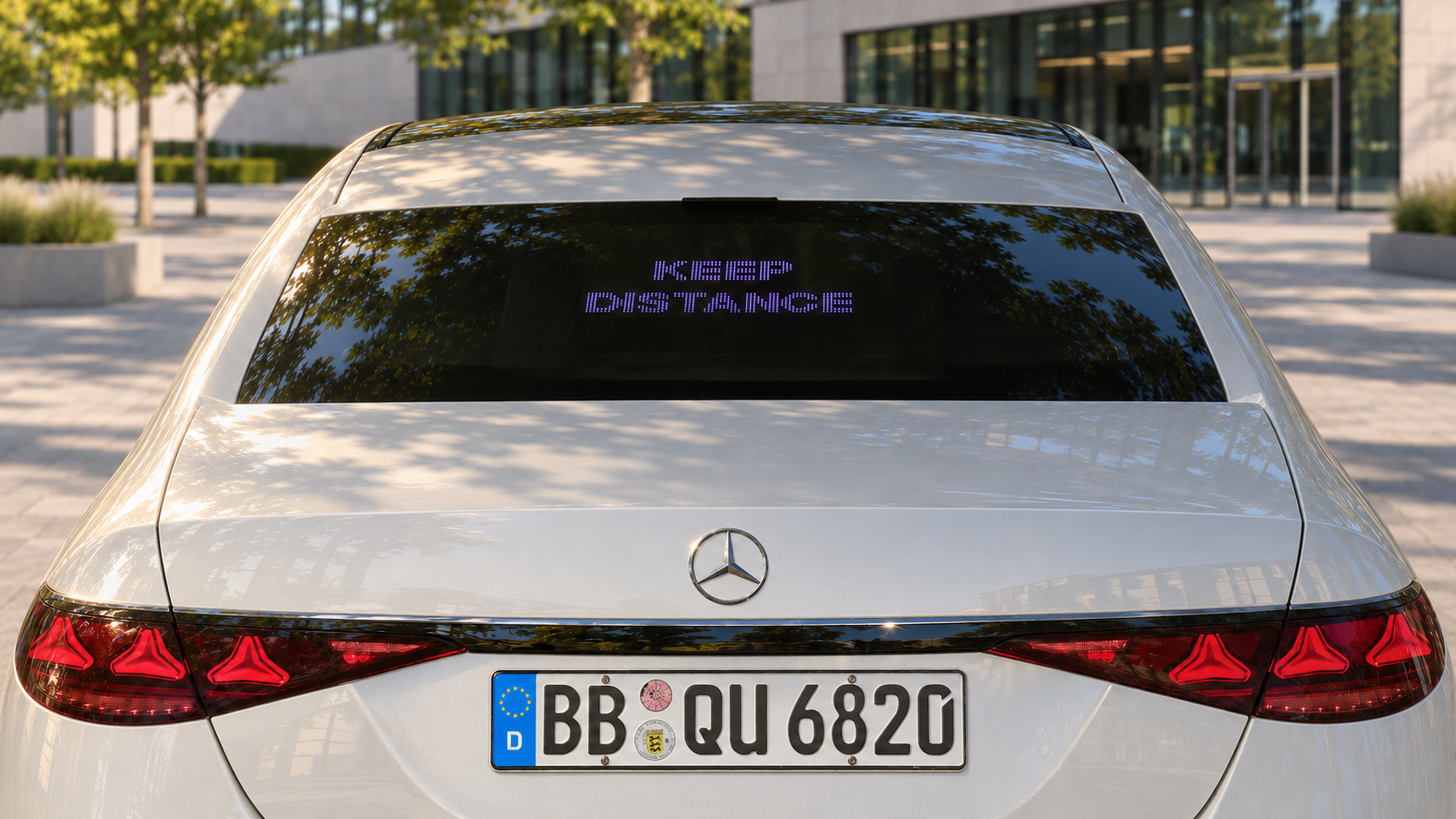
On 3 November 2026, Mercedes-Benz described two systems being developed to display information on car windows. One is intended to warn people outside the vehicle; the other would show navigation and other content to the driver and front passenger. Both are intended to display images when needed and remain almost invisible at other times.
These are research projects, not announced production-model options. Their designs are described in enough detail, however, to explain what Mercedes-Benz intends to show and to whom.
Rear window: warnings for following traffic
Intelligent Display in Glass uses LED elements embedded in laminated glass. The image is formed within the glass structure, and the elements are almost invisible when switched off.
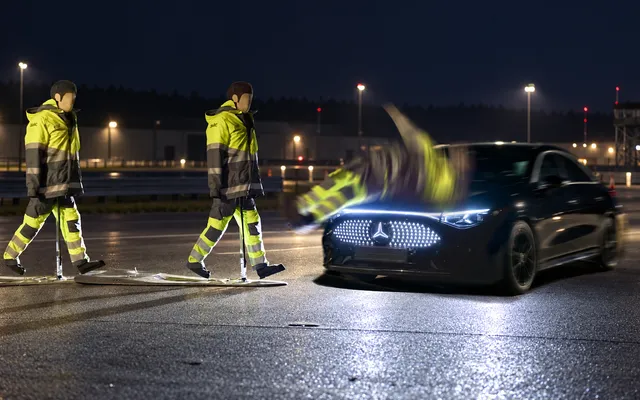
Mercedes-Benz is considering Mini LEDs for large areas such as the rear window and Micro LEDs for smaller areas requiring more detailed graphics. Proposed uses include brake lights, warning symbols and traffic information for drivers behind.
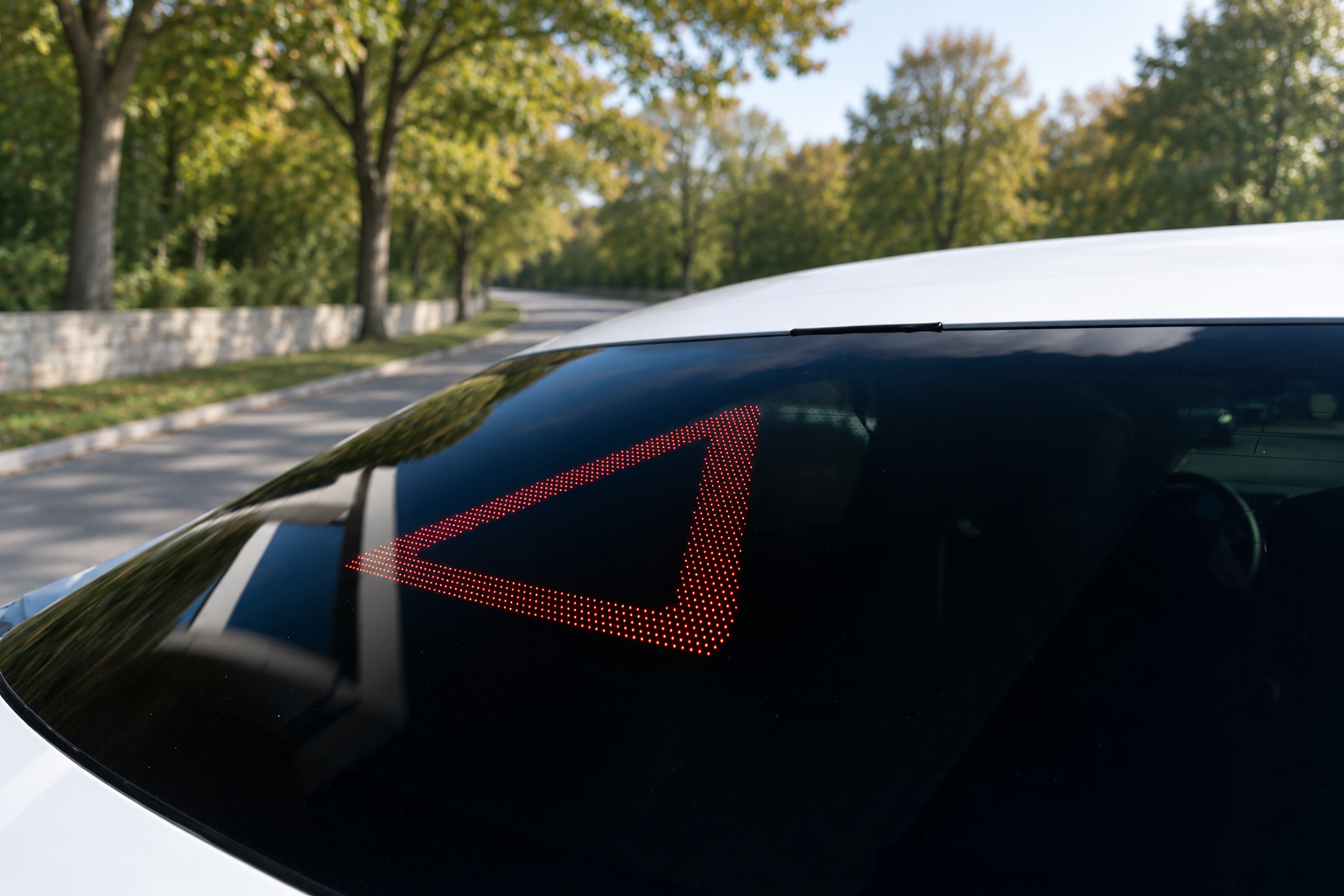
What another driver would see
The exterior display is intended to convey information to someone outside the car. The demonstrated symbol does not explain how the vehicle would detect danger: the announcement does not specify sensors, message-selection rules or activation conditions.
Windshield: a separate image for each front seat
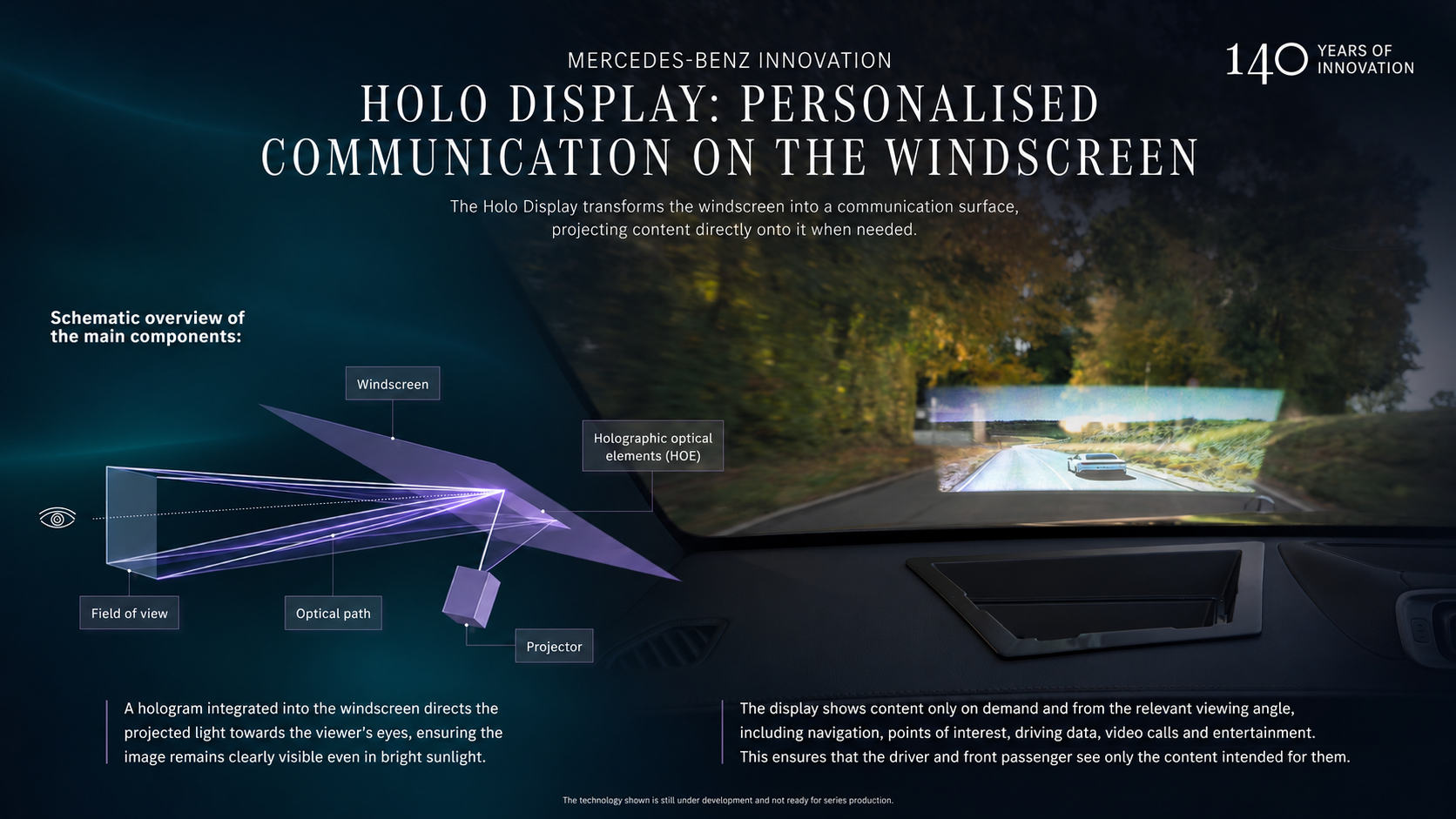
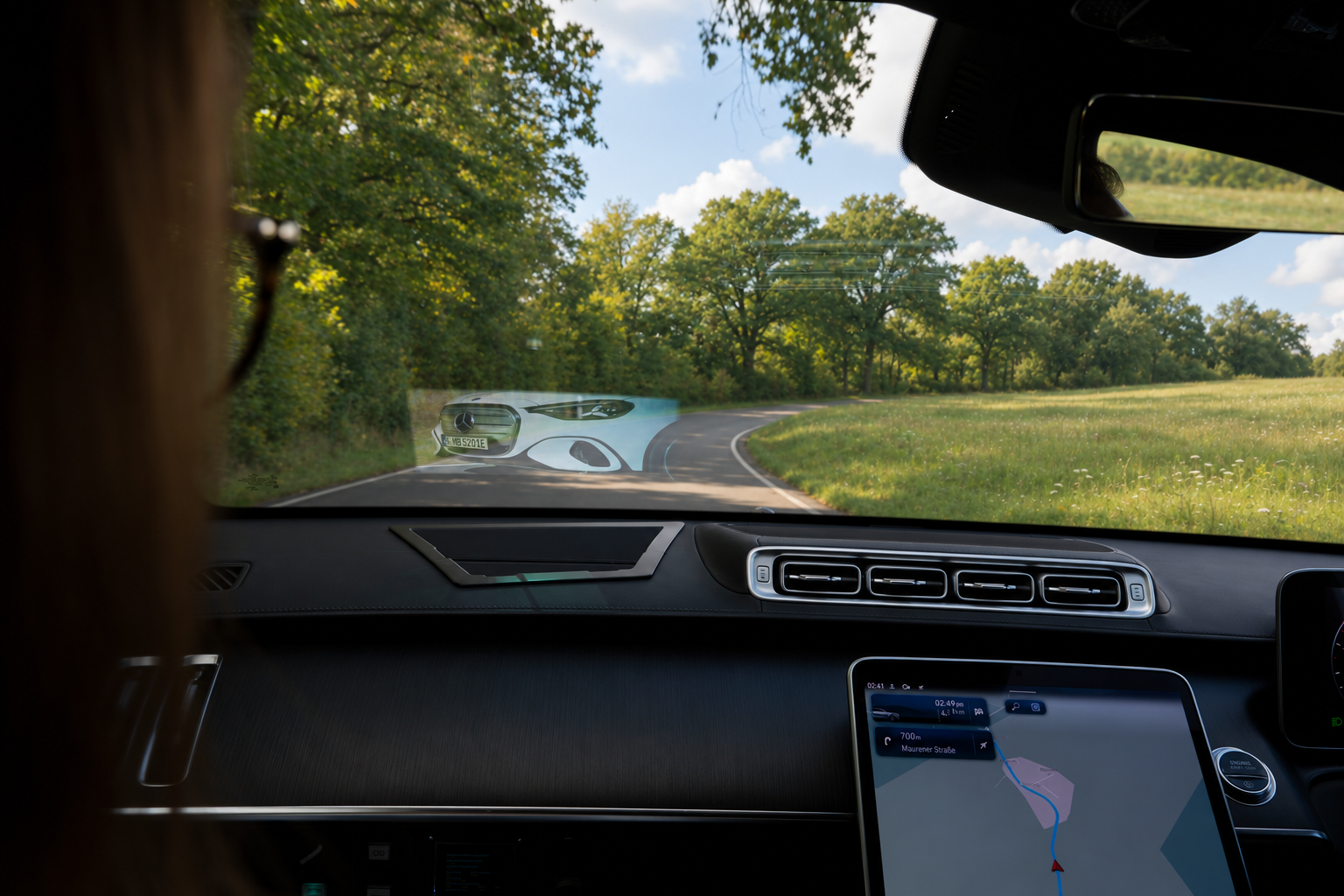
The second project, Holographic Display, uses a projector in the dashboard to direct light onto a transparent film inside the windshield. The film contains holographic optical elements, or HOEs, that selectively reflect light at particular wavelengths.
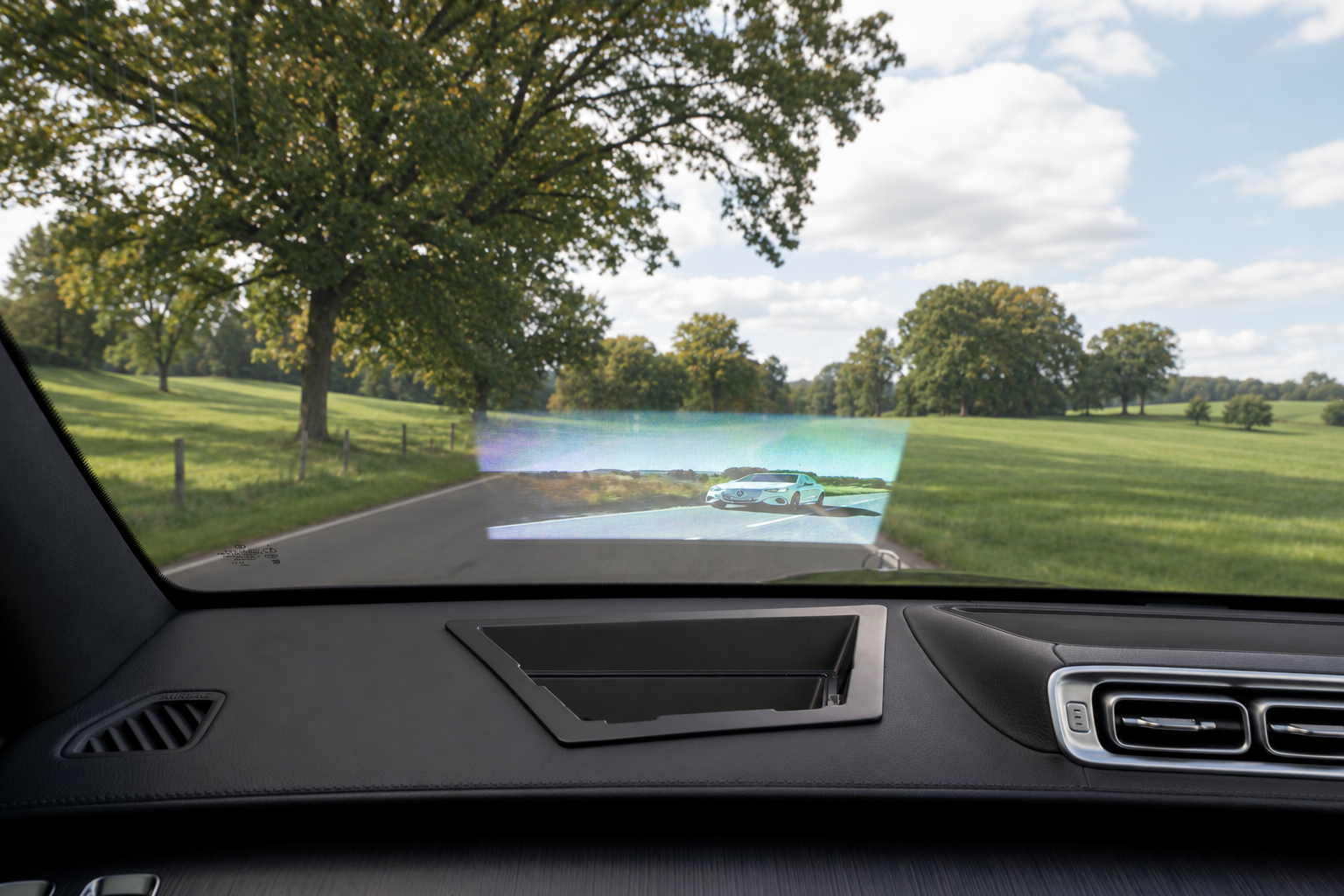
According to Mercedes-Benz's technical description, this control of light keeps the image visible in sunlight. Content is visible only from specified angles: the driver cannot see the passenger's image and the passenger cannot see the driver's.
Potential uses include navigation, trip data, information about places of interest, video calls and films. The company has not described which modes would be available while driving or parked, so the announcement does not establish that all these functions would be available to a driver in motion.
Why “holographic” does not mean an image floating in the air
The described system comprises a projector, windshield and special optical film. The term refers to elements that control reflected light; Mercedes-Benz does not claim the project creates a freestanding three-dimensional figure in front of the driver.
Who could see what
For whom | Where information appears | Possible content |
|---|---|---|
Driver | Projection area on the windshield | Navigation and driving data |
Front passenger | Separate area with a different viewing angle | Information and entertainment |
Following drivers | LED elements in the rear window | Warning symbols and traffic information |
How this differs from an existing head-up display
Driver-facing projection is already used in production Mercedes-Benz vehicles. The official C-Class owner's manual, in its Head-up Display section, lists navigation instructions, speed and recognised road signs. It also says seat position, lighting and polarised glasses affect visibility.
The new project expands the role of the windshield by considering separate content for the two front seats. Brightness, resolution, viewing-area dimensions and results with different glasses have not been published for Holographic Display, so specifications of the existing HUD cannot be assumed to apply.
When could these windows reach production?
As of 5 November 2026, the official materials reviewed give no production launch date, model list or price. Practical questions also remain:
Which exterior messages will be permitted in different markets?
How will entertainment functions be restricted while driving?
How much will replacement glass with integrated elements cost?
Will a replacement require separate display calibration?
For buyers, this is a technology to watch rather than a feature currently available in a configurator. An ordinary head-up display in an existing car does not mean that it has Holographic Display or LED warnings in the rear window.