 EN
EN
Frequently asked questions
It is a display integrated into the car windshield using a holographic optical element film between glass layers and a projector that creates images in front of the driver and passengers.
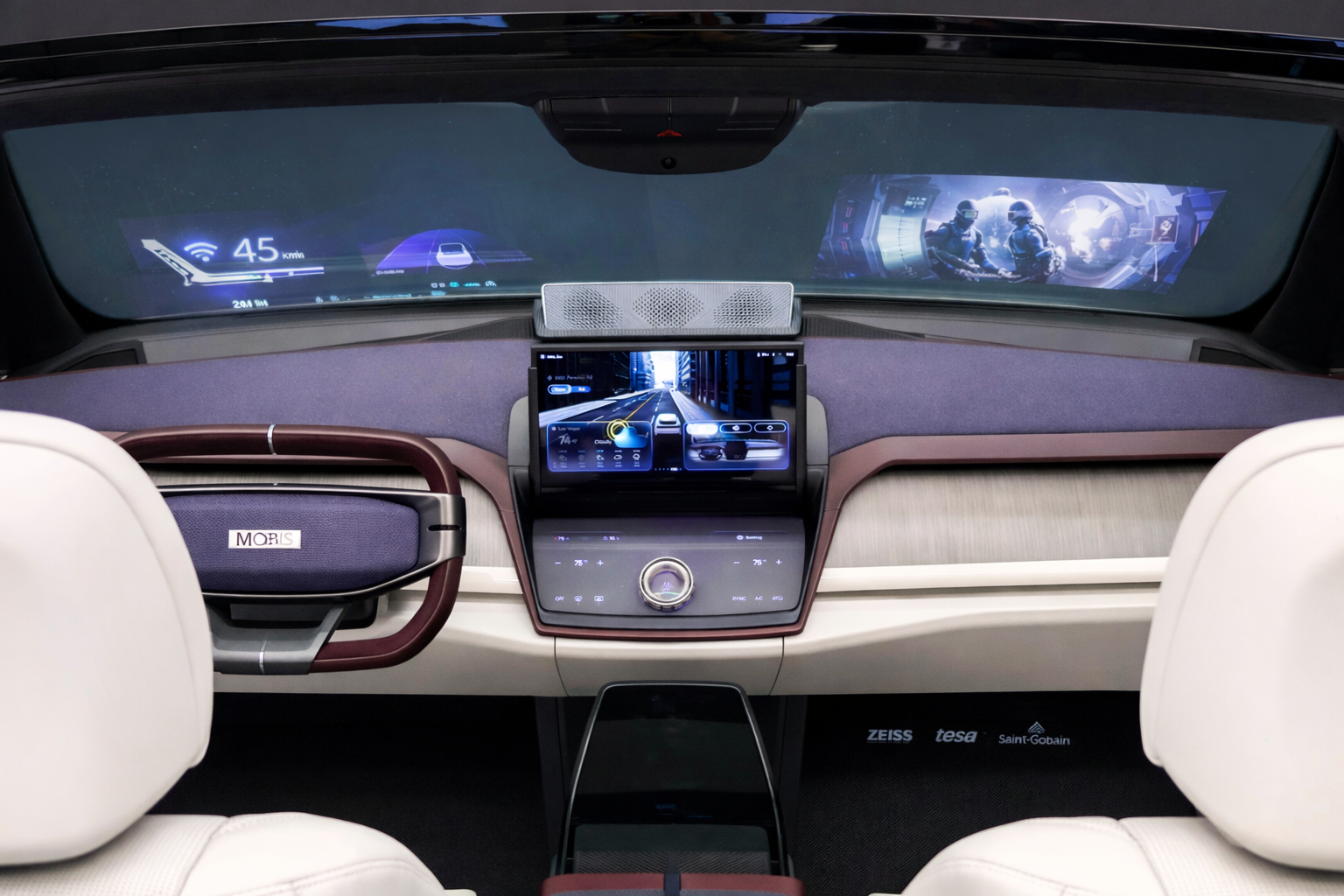
Yes. The driver can see information such as speed, navigation and hazard warnings, while the passenger can watch videos, play games or access other multimedia content.
The article says Hyundai Mobis plans to begin mass production as early as 2029, in cooperation with ZEISS, tesa and Saint-Gobain Sekurit.
Imagine your windshield is not just protection from wind and rain, but a huge digital screen right before your eyes. Hyundai Mobis is turning that futuristic scenario into reality by developing the Holographic Windshield Display (HWD) — a holographic display integrated directly into the car glass. This innovation could radically change how we see information while driving and how passengers interact with in-car entertainment.
What is the Holographic Windshield Display?
A giant screen instead of the instrument panel
The HWD technology turns the car windshield into a vast digital display without the need for an additional screen. This is achieved using a special holographic film (HOE — Holographic Optical Element) integrated between layers of glass, and a powerful projector that creates bright images directly in front of the driver’s and passengers’ eyes.
Two separate visual spaces
Most impressive is the ability to separate displayed content for the driver and the passenger. The driver sees only the most critical information — speed, navigation, hazard warnings — while the passenger can watch videos, play games, or access other multimedia content that will not distract the driver.
Technical features and advantages
Crystal-clear image in any weather
The HOE film provides light transmission greater than 92% (like ordinary glass) and incredible brightness — more than 10 000 nits, which is twice the brightness of outdoor LED screens. This means information will remain clear even in bright sunlight, without the need to dim the cabin.
Safety first
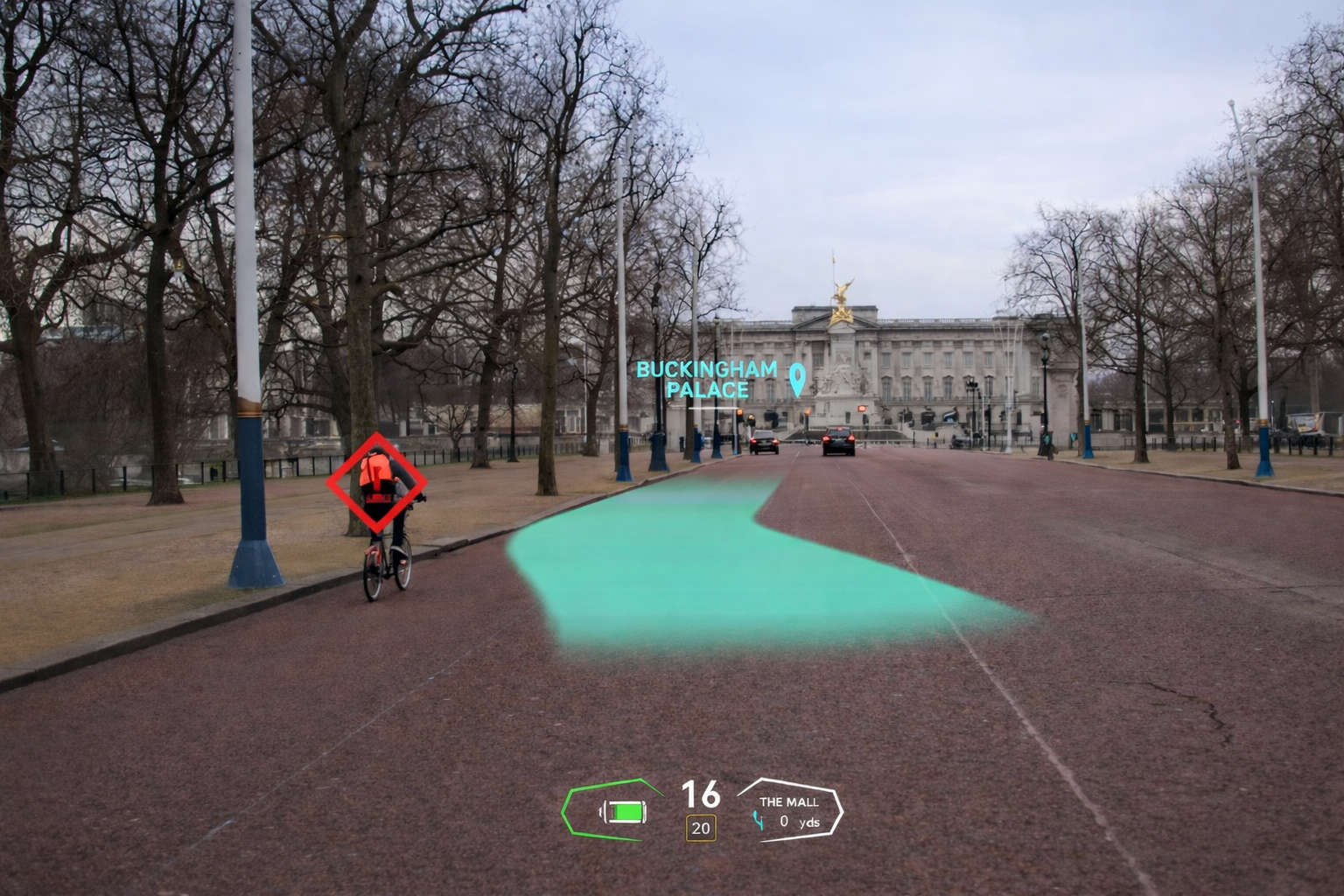
The projected display allows the driver to see only the information necessary, while everything else is shown outside the driver’s zone of attention. This reduces the risk of distraction and makes the technology potentially safer than conventional multimedia interfaces.
When will this become a reality?
Hyundai Mobis plans to begin mass production of the holographic display as early as 2029, thanks to a global alliance with leading European companies in optics, films, and automotive glass — ZEISS (Germany), tesa (Germany) and Saint-Gobain Sekurit (France). This cooperation helps create a technology ready for use in production cars of the future.
Possibilities and impact on car design
One of the most interesting consequences of implementing HWD is the opportunity to rethink interior design. If the traditional instrument panel and center screen are no longer needed, cars can feature a more open, spacious dashboard, giving the cabin a sense of lightness and technological sophistication.
Conclusion
The shift from traditional displays to holographic technologies is not just a trendy novelty but a step toward a new era of the automotive experience. Hyundai Mobis is blurring the boundary between the road and the digital world, bringing information and entertainment directly into passengers’ field of view. In just a few years we may get into a car where the windshield becomes the main source of information and inspiration — a future that no longer feels far away.