 EN
EN


Frequently asked questions
The Ferrari Luce is Ferrari’s first fully electric production car. It is a four-door, five-seat grand tourer with four electric motors and a total output reported as 1,050 cv or 1,035 hp, depending on the source.
Ferrari says the Luce can accelerate from 0 to 100 km/h in 2.5 seconds and reach 200 km/h in 6.8 seconds. Its top speed is reported as over 310 km/h, with a range of more than 500 km.
Reuters reports that first deliveries are expected from the fourth quarter of 2026, with a European price of about €550,000.
Ferrari has revealed the Luce, its first fully electric production car. The name means “light” in Italian, and the car is meant to bring Ferrari into a new electric era without turning its back on performance, luxury or driving emotion. Ferrari’s own magazine presents the Luce as a major step for the brand, with four electric motors, one for each wheel, and a total output of 1,050 cv.
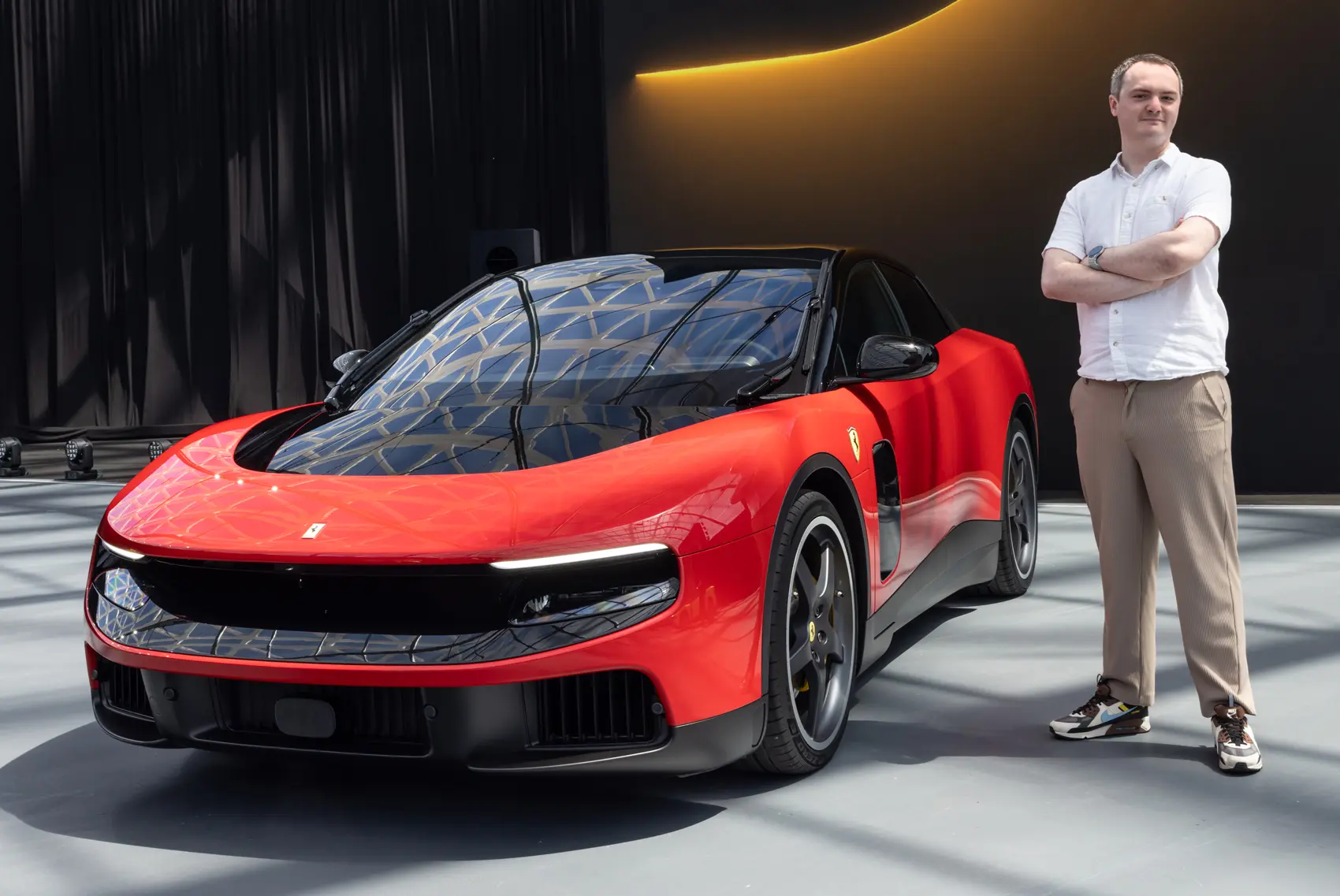
This isn’t the small two-seat electric supercar many people expected. The Luce is a four-door, five-seat grand tourer with a spacious cabin, a large trunk and a design shaped with help from LoveFrom, the studio led by Jony Ive and Marc Newson. Reuters reports that deliveries are expected to begin in the fourth quarter of 2026, with a European price of about €550,000.
The big story is simple: Ferrari isn’t replacing its combustion-engine icons with one electric car. It’s adding a new kind of Ferrari to the family.
Key facts
Ferrari Luce | Details |
|---|---|
Powertrain | Fully electric |
Motors | Four electric motors |
Power | 1,050 cv / 1,035 hp, depending on source |
0–100 km/h | 2.5 seconds |
Top speed | Over 310 km/h |
Battery | 122 kWh, according to Car and Driver |
Range | More than 500 km; Car and Driver lists 330 miles WLTP |
Seats | Five |
Body style | Four-door grand tourer |
Design partner | LoveFrom, led by Jony Ive and Marc Newson |
European price | Around €550,000 |
First deliveries | Expected from Q4 2026 |
A different kind of Ferrari
Ferrari has always changed carefully. The brand is built on racing, engines, sound and emotion, so its first EV had to do more than just be fast. It had to feel special.
That explains why the Luce isn’t positioned like a normal electric sedan. It’s closer to a luxury grand tourer: quick enough to be a Ferrari, comfortable enough for long drives, and practical enough to carry more than two people. Reuters describes it as Ferrari’s first five-seater, with comfortable seating, high-end technology and a 600-litre trunk.
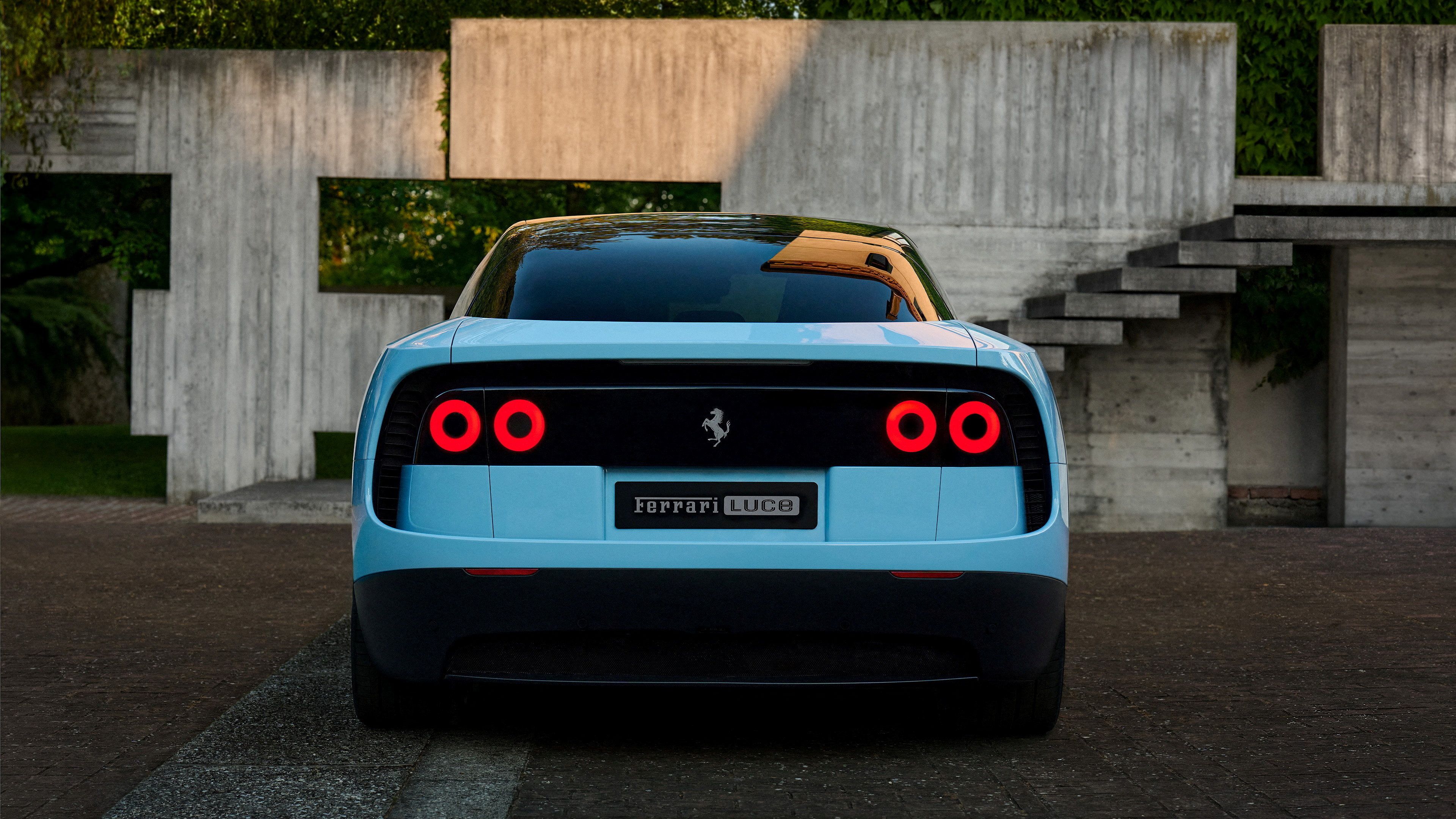
For buyers, that matters. A Ferrari owner may already have a track-focused car or a V12 GT. The Luce gives them something different: a quiet, powerful, electric Ferrari for daily driving, family trips or city use.
Performance is still the center
The Luce may be electric, but Ferrari clearly didn’t build it to be gentle. Car and Driver reports that the car uses four permanent-magnet electric motors with a total output of 1,035 hp. The setup is rear-biased, with most of the power coming from the rear motors, which should help keep the driving character closer to what people expect from Maranello
Ferrari says the Luce can reach 100 km/h in 2.5 seconds and 200 km/h in 6.8 seconds. Top speed is above 310 km/h, which puts it firmly in serious Ferrari territory. Reuters also reports a range of more than 500 km.
The battery is another important part of the story. Car and Driver says the Luce uses a 122-kWh battery pack, an 800-volt architecture and charging capability of up to 350 kW. That makes the car more than a short-range showpiece; it’s designed to travel.
Ferrari didn’t fake the sound
Sound is one of the hardest problems for an electric Ferrari. A Ferrari engine is not just noise. It tells the driver what the car is doing.
Ferrari chose not to simply play a fake V12 soundtrack through the speakers. Car and Driver reports that the Luce uses a patented system that captures mechanical sound from inside the rear axle, then processes and amplifies it depending on the driving mode.
That’s a smart approach. The Luce doesn’t pretend to be an old Ferrari. It tries to create its own electric voice.
Design shaped by Ferrari and LoveFrom
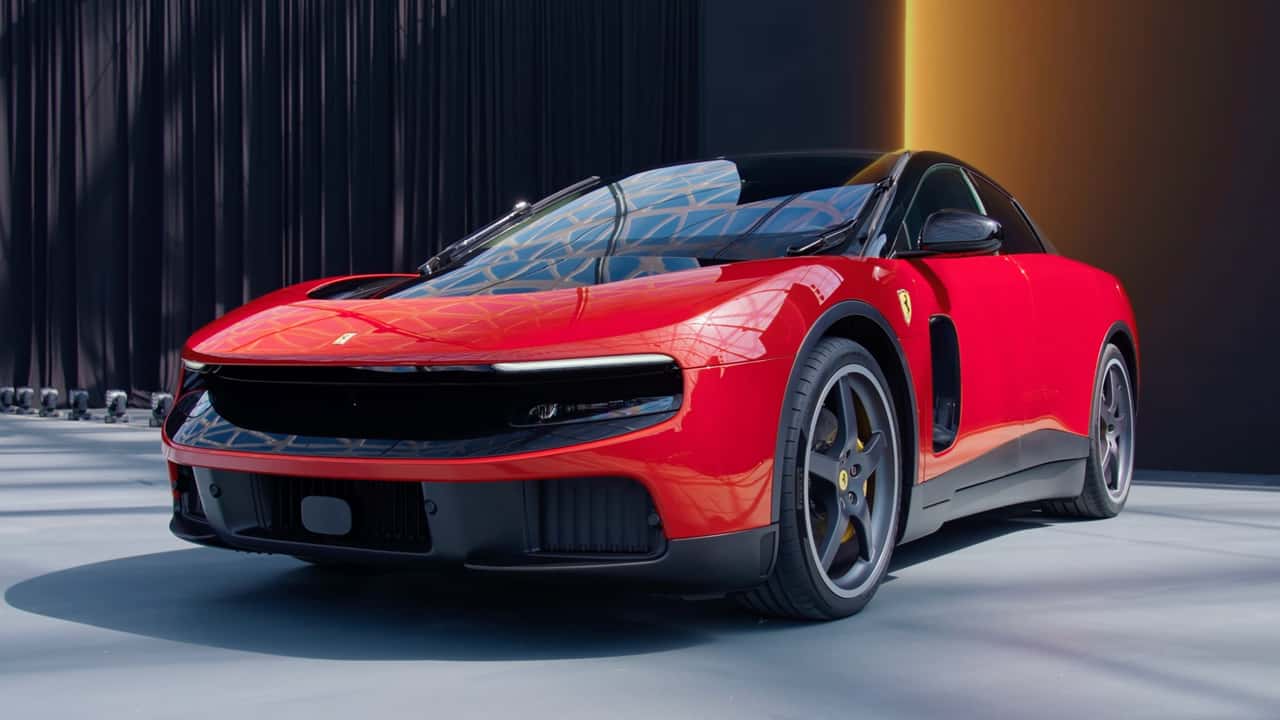
The Luce also matters because of who helped shape it. LoveFrom, the design collective led by Jony Ive and Marc Newson, worked with Ferrari on the project. Wallpaper* described the collaboration as one of the most interesting parts of the car, because it brings together Ferrari’s engineering culture with two of the best-known industrial designers of the modern era.
The result is cleaner and more futuristic than many traditional Ferrari models. It has a smooth body, a large glass area, center-opening doors and a cabin placed far forward. Car and Driver notes that the Luce is longer than the Purosangue but lower, with a dedicated EV layout that gives Ferrari more freedom with space and proportions.
Some people will need time to get used to it. That’s normal. When a brand as emotional as Ferrari changes its design language, the reaction is always strong.
Inside: digital, but not cold
A lot of modern EVs feel like they were designed around a screen. Ferrari took a different route.
Car and Driver reports that the Luce uses OLED displays, but keeps real switches, physical controls and two manettino dials on the steering wheel. It also has paddles for regeneration and torque delivery, giving the driver something to do with their hands, even without a gearbox.
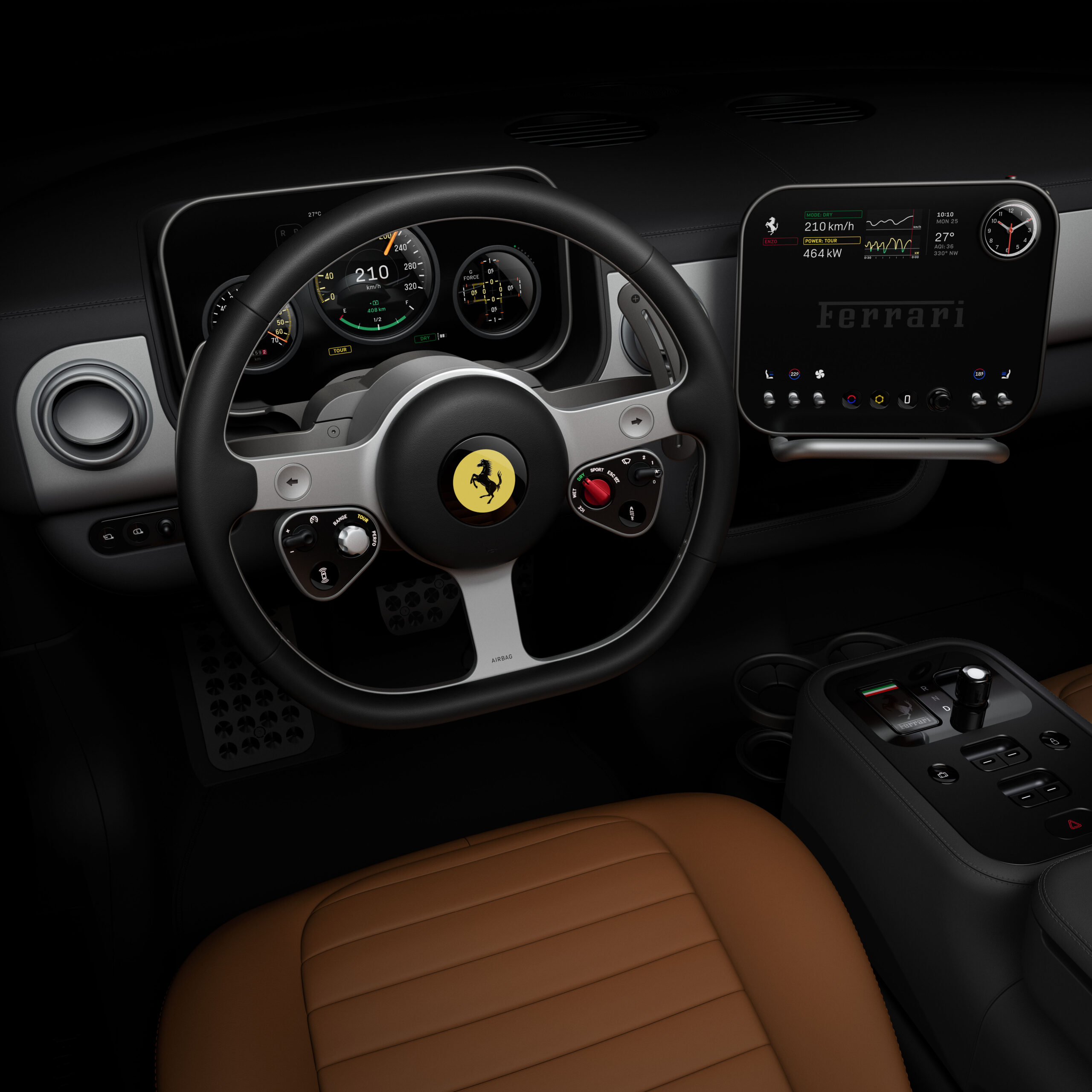
That detail is important. Ferrari seems to understand that an electric performance car still needs interaction. Instant acceleration alone isn’t enough. The driver has to feel involved.
Reaction: a big conversation, not just a launch
The Luce has already started a major conversation among Ferrari fans, design watchers and investors. That was always going to happen. A first electric Ferrari is not a normal model launch.
Reuters reported that some critics and investors reacted cautiously after the reveal, and Ferrari shares fell in Milan and New York. The Guardian also described the design as divisive, noting that the Luce’s minimalist shape and five-seat layout led some analysts and fans to question how far Ferrari can stretch its traditional sports-car image.
Still, controversy doesn’t automatically mean weakness. Cars that matter often divide opinion at first. The Porsche Cayenne did. The Ferrari Purosangue did. Now both ideas feel much easier to understand.
The Luce may follow the same path: surprising at first, clearer with time.
Why Ferrari Luce matters
The Luce is not important only because it’s electric. It’s important because it shows Ferrari trying to define what a luxury performance EV can be on its own terms.
It has the power. It has the speed. It has the design ambition. It has the badge. Now the real question is whether it can deliver the feeling buyers expect from Ferrari.
That answer won’t come from photos or online comments. It will come when clients drive it.
Conclusion
The Ferrari Luce is one of the most important Ferrari models of the modern era. It opens a new chapter for Maranello, but it doesn’t close the old one. Ferrari still has combustion and hybrid models in its future; the Luce simply gives the brand a new direction beside them.
It’s fast, luxurious, technically ambitious and very different from what people expect when they hear the word Ferrari. That difference is the point.
The Luce is not trying to be yesterday’s Ferrari with a battery. It’s Ferrari exploring what desire, performance and grand touring can mean in the electric age