 EN
EN

Frequently asked questions
Citroën aims to present the production model by 2028. Exact dates for orders opening and the first deliveries have not yet been announced.
Citroën is targeting a starting price of around €15,000, but this is not a published list price. Final trim levels and purchase terms are still unknown.
Citroën has not yet released exact details of battery capacity, WLTP range, AC and DC charging power, charging times, production-model equipment or battery warranty.
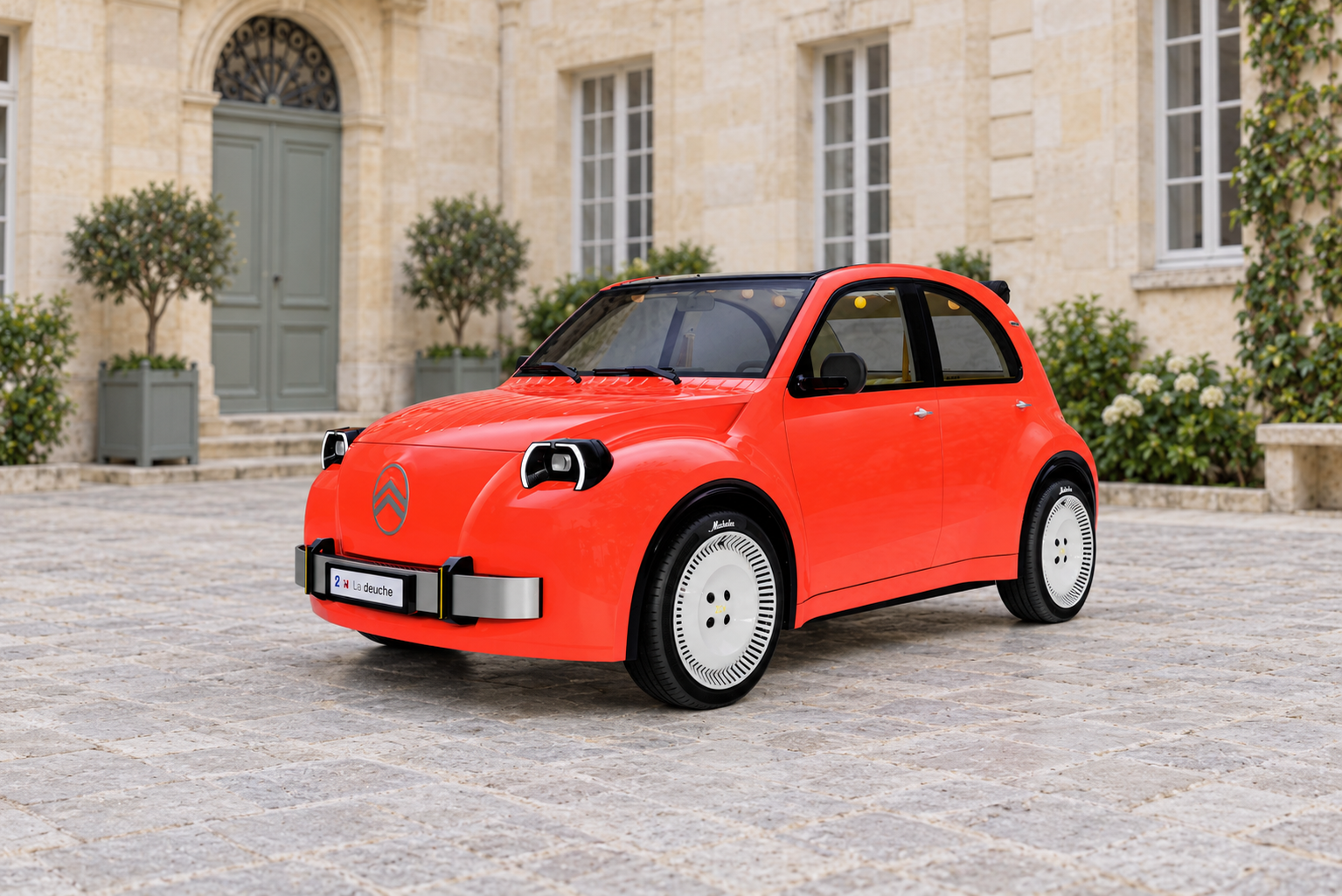
On 11 October 2026, Citroën unveiled the electric 2CV Concept ahead of the Paris Motor Show. Behind its familiar round headlights and curved roof is a proposal for a small car designed for everyday travel. The manufacturer aims to present a production model by 2028, build it in Europe and keep the starting price at around €15,000.
€15,000 is a price target, not an announced list price. In its 2CV Concept launch release, Citroën outlines its vision for the future car. Final trim levels and purchase terms have not yet been announced.
What is known about the new 2CV
Item | What has been announced |
|---|---|
Vehicle type | Compact electric concept car |
Length | 3.76 m |
Weight | Target: around one tonne |
Position in the range | Between the Ami and C3 |
Future production model | To be presented by 2028; production is planned in Europe |
Battery, range and charging | Exact specifications were not disclosed in the launch release |
How Citroën plans to keep it affordable
Citroën officially announced the return of the 2CV idea on 22 May 2026. Even then, simplicity, low weight and affordability were named as the project's foundations. The October reveal showed how those principles are being applied to the car's design.
Citroën links lower weight with the option of using a smaller, less expensive battery. That is a sensible starting point for an everyday car, but a one-tonne kerb weight alone says nothing about driving range. Range cannot be calculated without battery capacity and energy-consumption figures.
The design uses bumpers that are separate from the body and can be replaced individually. For an owner, that could mean repairing a damaged component rather than a larger body section. However, the cost of parts and labour is still unknown, so it is too early to call the new 2CV inexpensive to repair before the production car arrives.
What lies behind the retro design
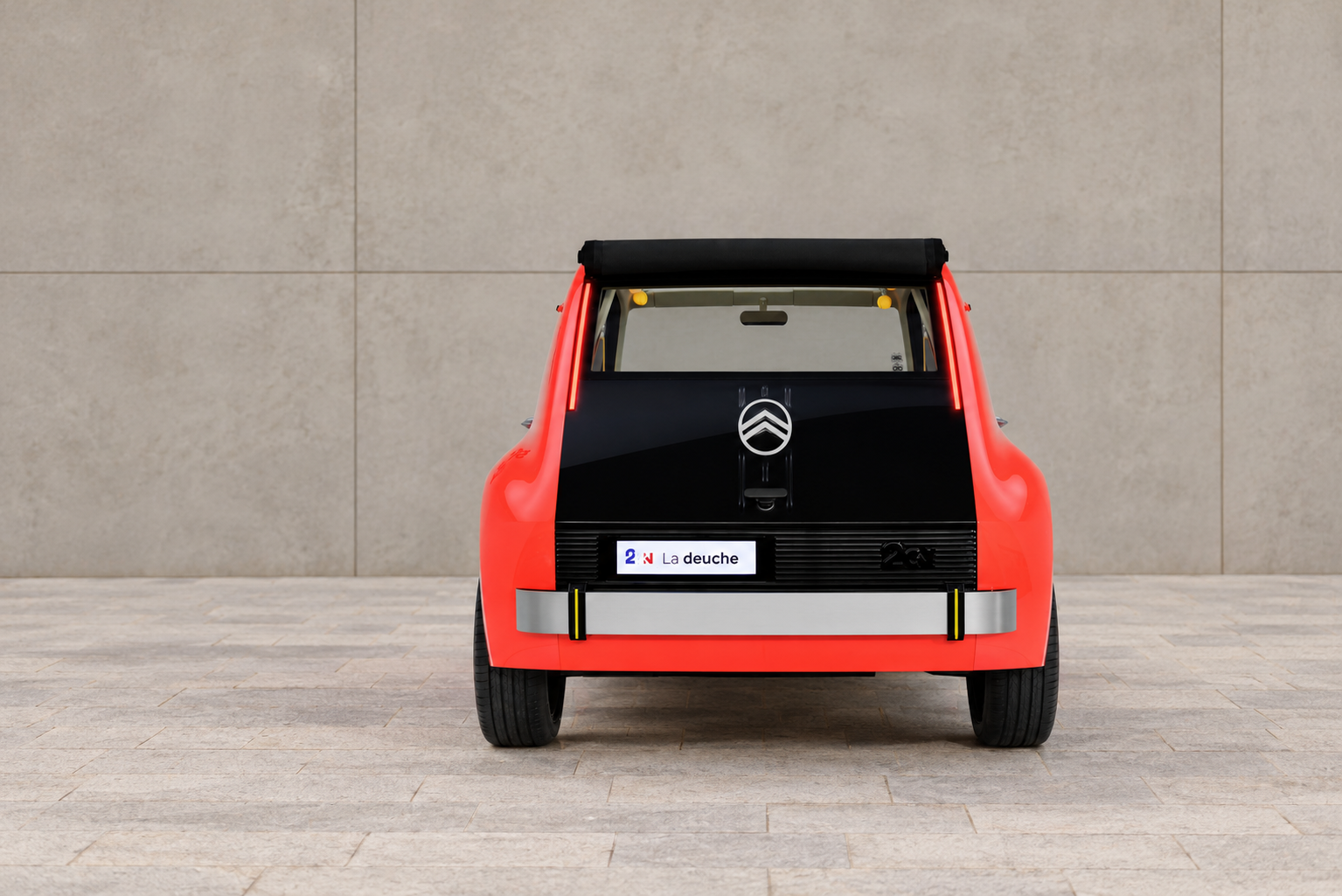
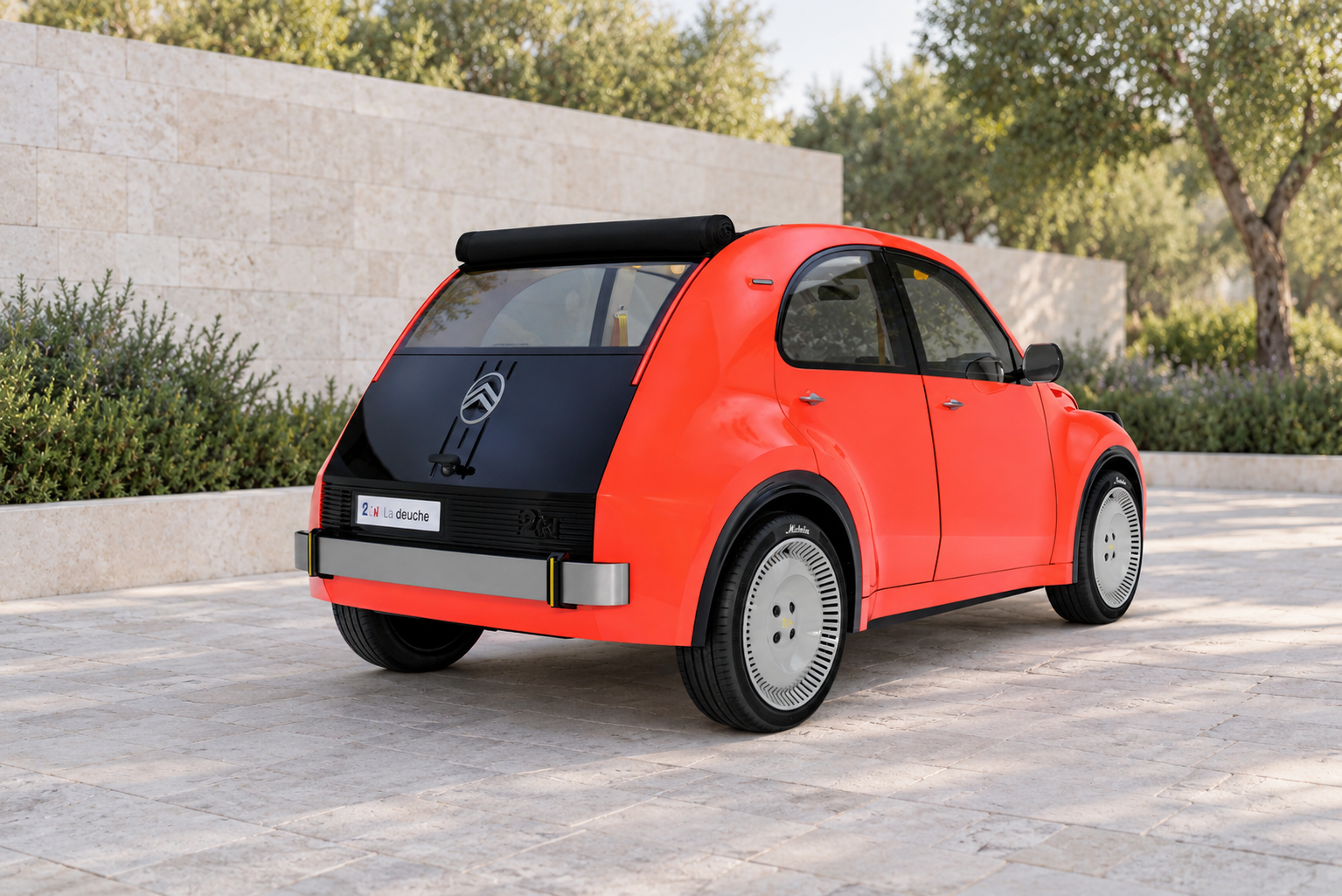
The round headlights sit proud of the main body surfaces, the indicators are positioned on the rear pillars, and the fabric roof opens. The concept has 18-inch steel wheels and a black tailgate that extends down to the bumper. These details appear on the show car; the production specification has not yet been announced.
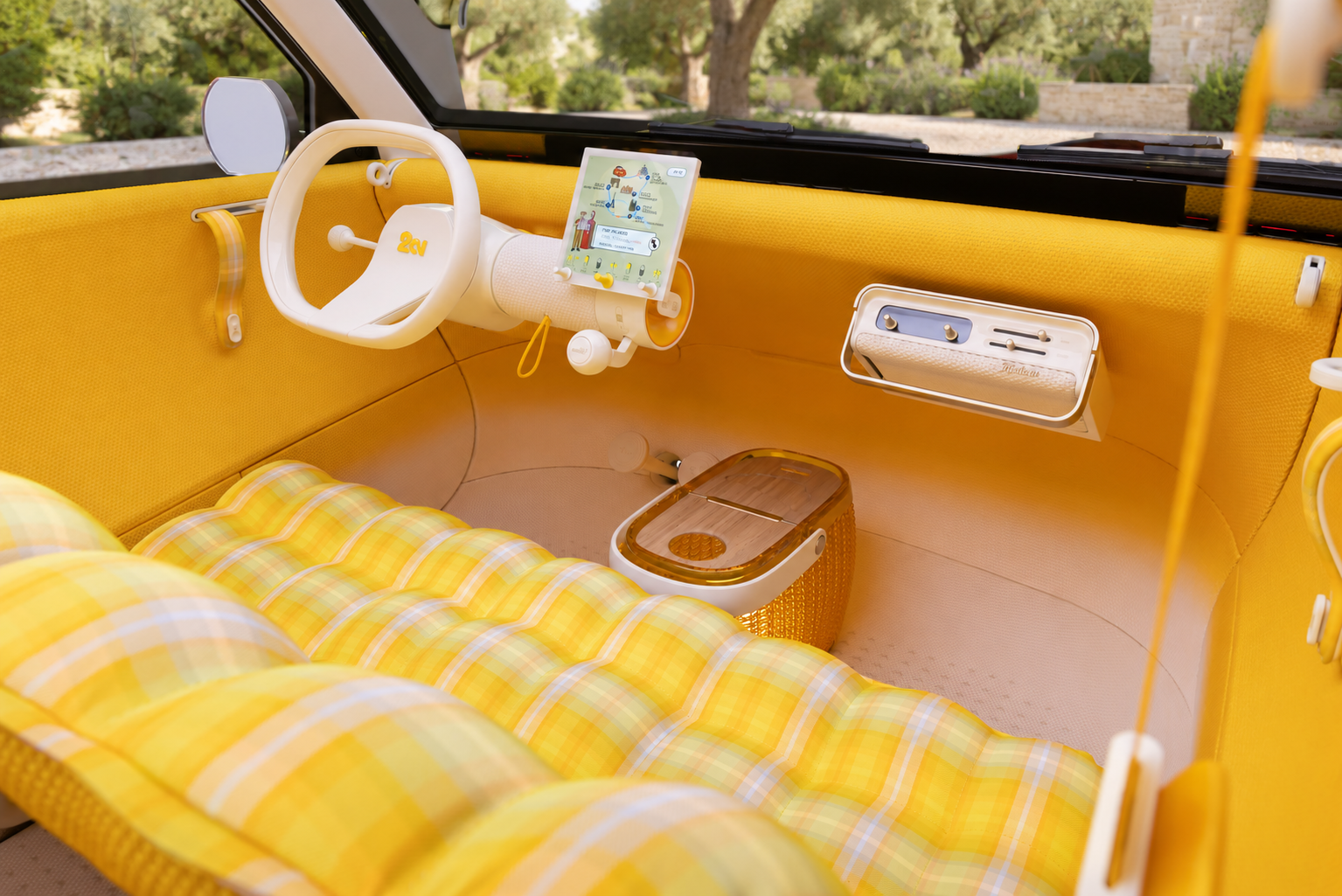
Inside, the usual bulky dashboard is replaced by a transverse cylinder containing the controls. There is a single-spoke steering wheel, an 8-inch touchscreen and a removable basket in place of the centre console. The Radioën unit can be removed and used as a separate speaker. Here, simplicity means freeing up space rather than eliminating electronics altogether.
Three details that are easy to miss
The brake pedal features a tortoise, while the accelerator shows a hare.
The door compartments are designed for eggs, a reference to the original brief for the old 2CV.
The numbers 48, 90 and 26 on the windscreen mark the years the original premiered, production ended and the new concept was unveiled.
Why eggs have returned to the story
As the official history of the Citroën 2CV recalls, its TPV predecessor was intended to carry four people and 50 kg of luggage. The ride-comfort requirement was expressed vividly: it had to carry a basket of eggs across a ploughed field without breaking them.
The production 2CV was first shown to the public on 7 October 1948. The final example left the line in Mangualde, Portugal, on 27 July 1990. The current door compartments are therefore a historical joke by the designers. They prove nothing about the ride comfort or off-road ability of the electric successor.

Which figures future buyers should look for
The main missing information is the battery and charging specification. To assess the production 2CV, buyers will need:
usable battery capacity and WLTP range;
AC and DC charging power, plus battery charging times;
the price of the entry-level version and its included equipment;
the battery warranty and delivery times for a specific country.
These are the details that will show how well the car suits a daily commute and trips beyond the city.
When will the new 2CV be available to buy?
The target of “by 2028” refers to the presentation of the production model. The official materials reviewed do not provide exact dates for order books opening or the first deliveries. For now, the new 2CV is notable for its clear approach: a compact body, careful weight control and replaceable components. How well those solutions work alongside the price and everyday usability will become clear once the production specifications are published.