 EN
EN

Frequently asked questions
BYD claims charging from 10% to 70% in five minutes, from 10% to 97% in nine minutes and from 20% to 97% in 12 minutes at −30 °C. The nine-minute figure does not mean charging from empty to full and excludes the time needed to find a bay, connect the vehicle and start the session.
The Design RWD has one rear motor, 340 kW, a 0–100 km/h time of 8.0 s and a WLTP range of up to 653 km. The Excellence AWD adds a front motor, produces 570 kW, reaches 100 km/h in 4.6 s and has a WLTP range of up to 602 km.
With all three rows in use, the ATTO 8 has 270 l of rear luggage space and a separate 136 l front compartment. The maximum rear cargo capacity is 1960 l with the second and third rows folded.
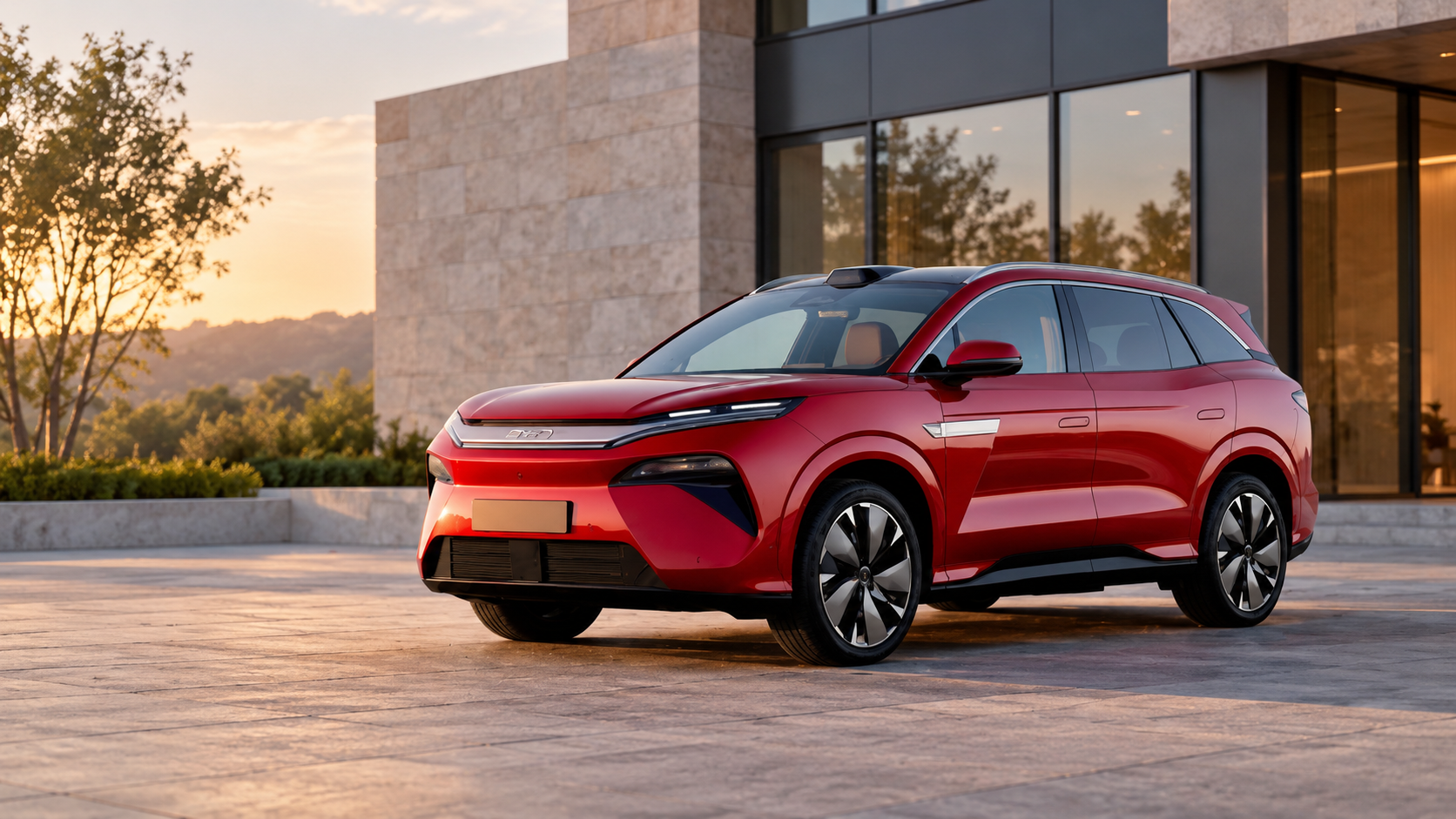
On October 12, 2026, BYD presented the European ATTO 8 at the Paris Motor Show — a seven-seat electric SUV with a 115 kWh battery. The model's headline claim is charging from 10% to 97% in nine minutes. But for a family vehicle, other figures matter just as much: how much luggage fits behind the third row, how the versions differ and where this charging speed will actually be available.
Two versions: more range or all-wheel drive
In its official premiere announcement, BYD describes two electric versions. The Design RWD has one rear motor, while the Excellence AWD adds a front electric motor. Battery capacity is identical, but power, performance and range differ.
Specification | Design RWD | Excellence AWD |
|---|---|---|
Drive | Rear-wheel drive | All-wheel drive |
Power | 340 kW / 462 hp | 570 kW / 775 hp |
Torque | 365 N·m | 775 N·m |
0–100 km/h | 8.0 s | 4.6 s |
Battery | 115 kWh | 115 kWh |
WLTP combined range | Up to 653 km | Up to 602 km |
The quoted range advantage is 51 km for the rear-wheel-drive version. That makes choosing solely on power difficult to justify: the Design RWD is more appealing to buyers who value range over acceleration, while the Excellence AWD offers power to both axles and significantly stronger performance. Without pricing, it is not yet possible to assess how much extra these features will cost.
Nine minutes: what BYD is actually measuring
For the ATTO 8, the manufacturer quotes three charging scenarios: 10% to 70% in five minutes, 10% to 97% in nine minutes and 20% to 97% in 12 minutes at −30 °C. Nine minutes means charging from 10% to 97%, not from zero to a full battery. It is also not the complete duration of a charging stop: finding an available bay, plugging in and starting the session all take additional time.
Why the winter “extra three minutes” needs context
The standard and winter figures use different starting conditions. In the first case, the battery gains 87 percentage points of charge; in the second, it gains 77. These figures therefore do not show that the same amount of energy takes exactly three minutes longer at −30 °C. Charging speeds should be compared over the same percentage range.
A fast-charging battery needs the right station
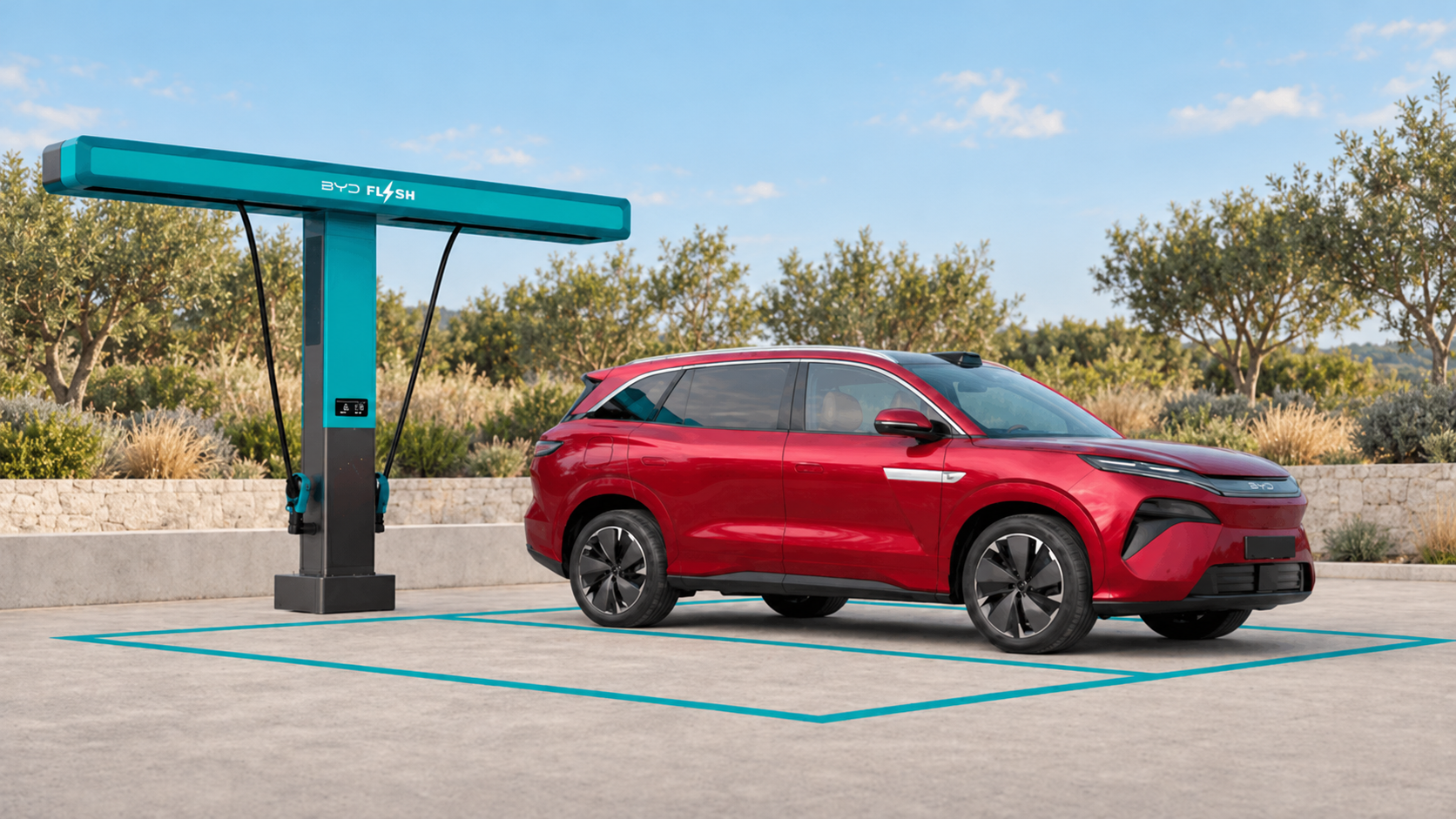
On March 5, 2026, BYD introduced its second-generation Blade battery and FLASH Charging system. In the technical description of the system, the company specifies up to 1500 kW through a single connector for the Chinese station configuration. This is a specification of the charging equipment; it cannot be treated as the European ATTO 8's continuous charging input.
The station is supplemented by its own energy-storage system. It charges from the grid more slowly and helps deliver high power during a vehicle charging session. BYD is therefore addressing the challenge on both sides: the vehicle and the electricity supply.
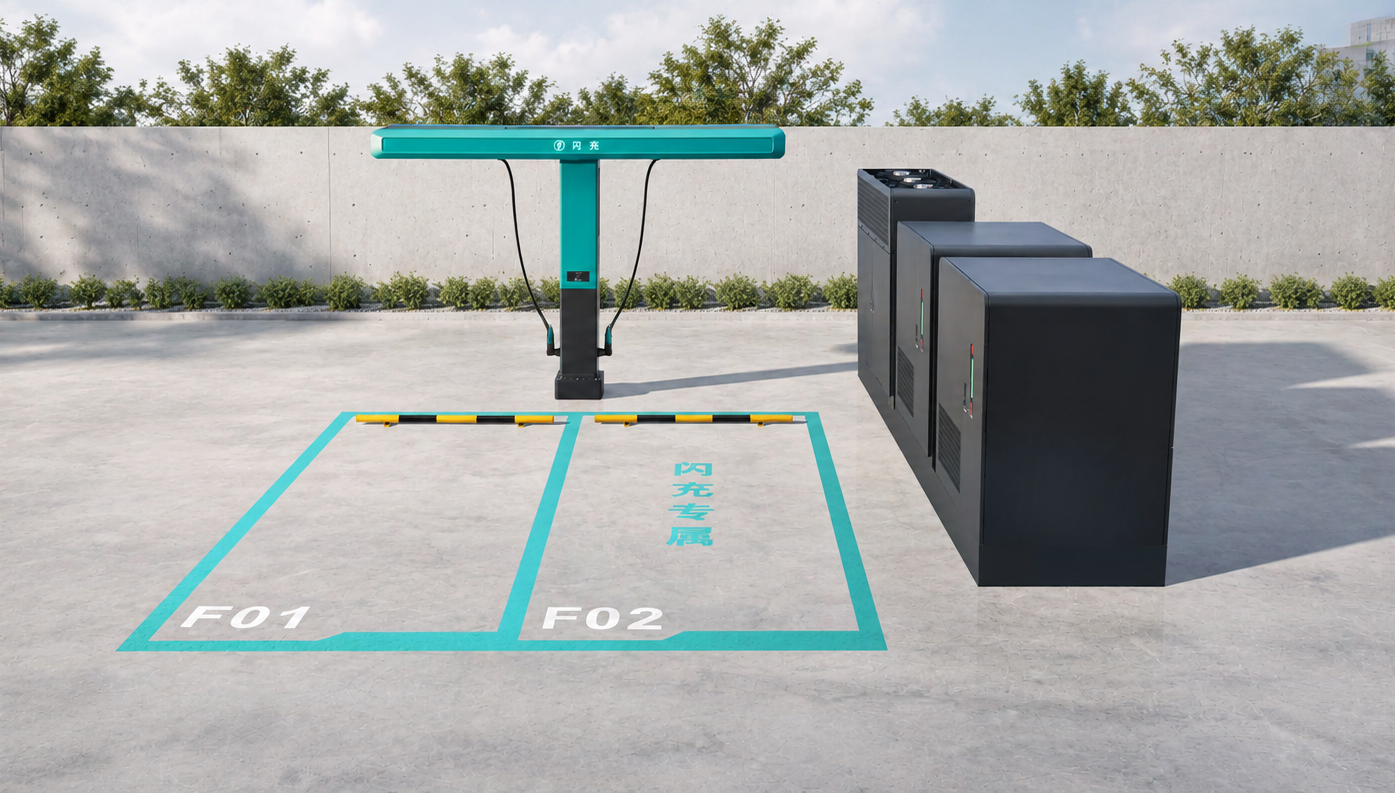
For Europe, the company has announced plans to expand the FLASH Charging network to 3000 stations by the end of 2027. This is a planned future network, not confirmation that high-speed charging will be available on every route today. The claimed nine-minute time cannot automatically be applied to a conventional DC fast charger.
What to check before a long trip
Whether the route has a compatible station with the required power output.
Whether it is operational, whether payment is available and whether there is a backup charging location.
What charge level is expected on arrival: the 10–97% result does not describe any other charging interval.
Seven passengers: where does the luggage go?
The ATTO 8 is 5040 mm long, 1996 mm wide and 1760 mm high. With all three rows in use, 270 l of luggage space remains at the rear; a separate 136 l compartment is provided at the front. Rear cargo capacity reaches 1960 l when the second and third rows are folded.
Two storage areas are not the same as one large boot
Mathematically, 270 and 136 l add up to 406 l, but they are two separate compartments. A large suitcase or stroller cannot be divided between them in the way soft bags can. For a trip with seven people, checking how your own luggage fits is more useful than relying on the maximum 1960 l figure. That figure applies with the passenger rows folded.
Heating, ventilation and massage are provided for the front seats and the outer seats in the second row. The third row is claimed to have adjustable head restraints, while three-zone climate control is standard. However, an equipment list cannot show whether a particular adult will be comfortable in the rear for several hours: seating position, knee room and access between the rows are best assessed in person.

Why 653 km is not a ready-made route plan
WLTP range is a benchmark for comparing versions, not a promise of the distance covered on every trip. Speed, terrain, temperature and heating use all affect energy consumption. A US Department of Energy study examines how cold affects both the energy available from the battery and climate-control consumption. These are general patterns for electric vehicles, not a test of the ATTO 8.
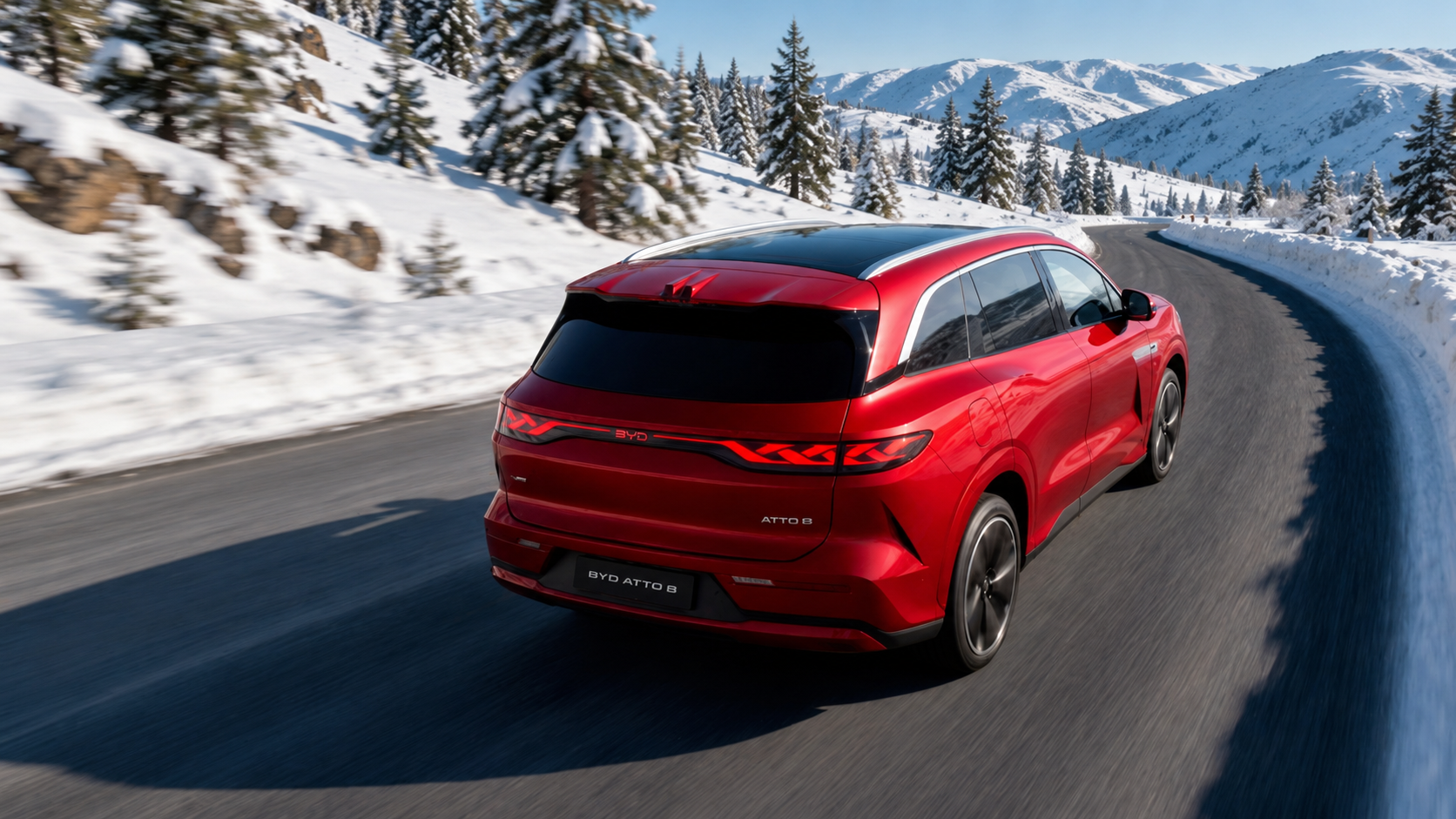
The quoted 653 or 602 km therefore does not justify promising the same result on a winter motorway. Planning charging stops requires consumption data from similar conditions and a charge reserve sufficient to reach the next working station.
When sales will begin and what is still missing
BYD plans to start European sales in the first quarter of 2027. As of October 14, 2026, the reviewed premiere materials did not list European prices. An exact launch date for each market has also not been announced.
The ATTO 8 already has clear differences between its versions and specific capacity figures. The next step for buyers is to compare the local price, third-row comfort and FLASH Charging availability on their usual roads. Those factors will show how useful the nine-minute charging claim is for their actual journeys.