
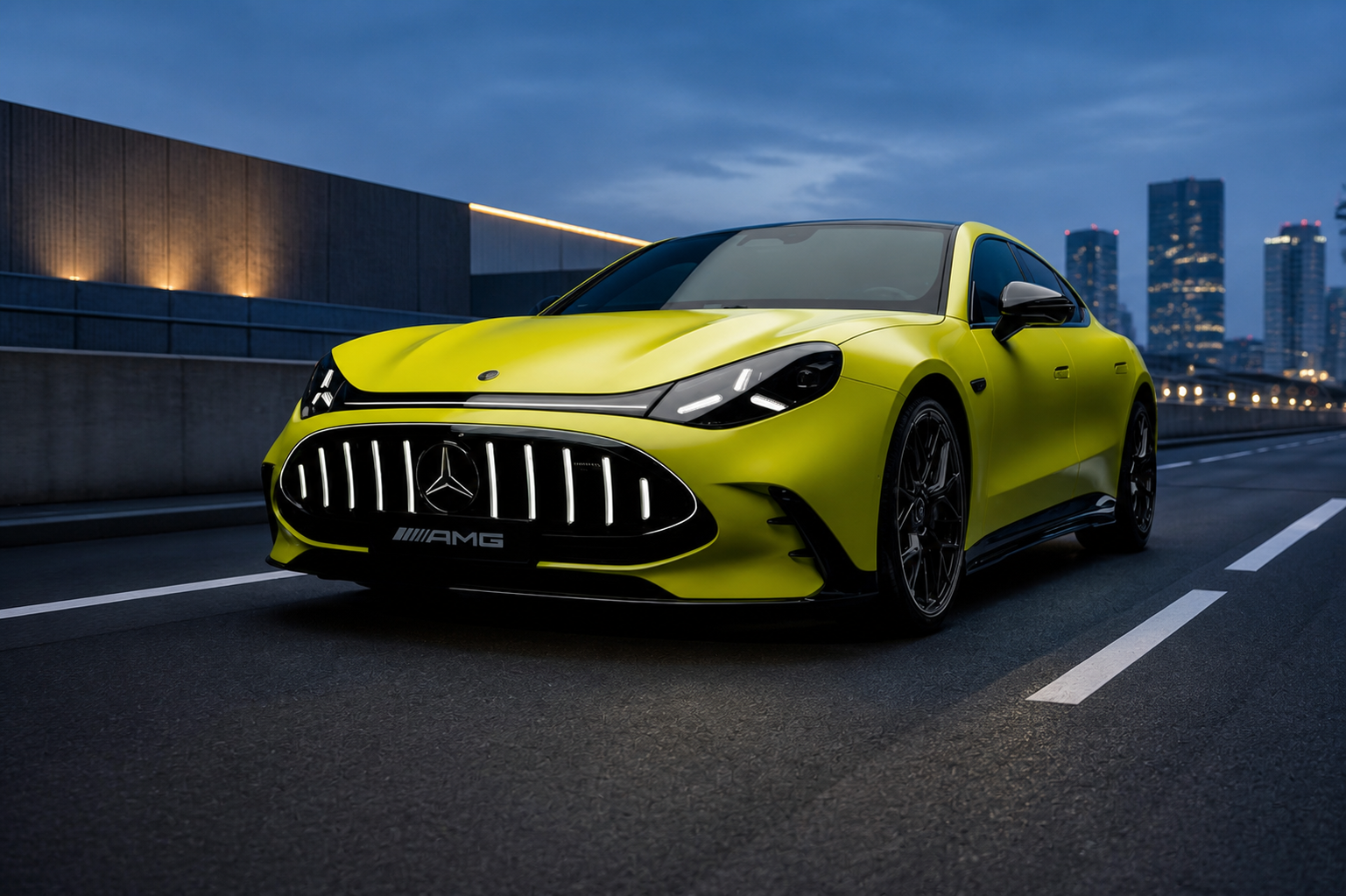
On May 20, 2026, Mercedes-AMG unveiled the new electric four-door GT coupe. The official announcement covered the GT 55 4MATIC+ and GT 63 4MATIC+ versions, while the model itself became the first production car based on the AMG.EA architecture. On August 6, automotive publications reported another version—the 536-hp GT 53, which is said to simulate the sound of an inline-six engine.
The sound does not turn the GT 53 into an internal-combustion car. It is a digital layer intended to change how the driver perceives acceleration and throttle response. However, as of the time of writing, Mercedes-AMG had not released a separate full specification for the GT 53: its power output and the presence of sound simulation were reported by an automotive publication rather than confirmed in the brand's model press release.
How the AMG GT electric lineup began
At the world premiere on May 20, 2026, Mercedes-AMG confirmed the AMG.EA architecture, three axial-flux electric motors, and a battery with direct cell cooling for the new GT 4-Door Coupé. These details apply to the GT 55 and GT 63 that were unveiled, so they cannot be attributed to the GT 53 without separate confirmation.
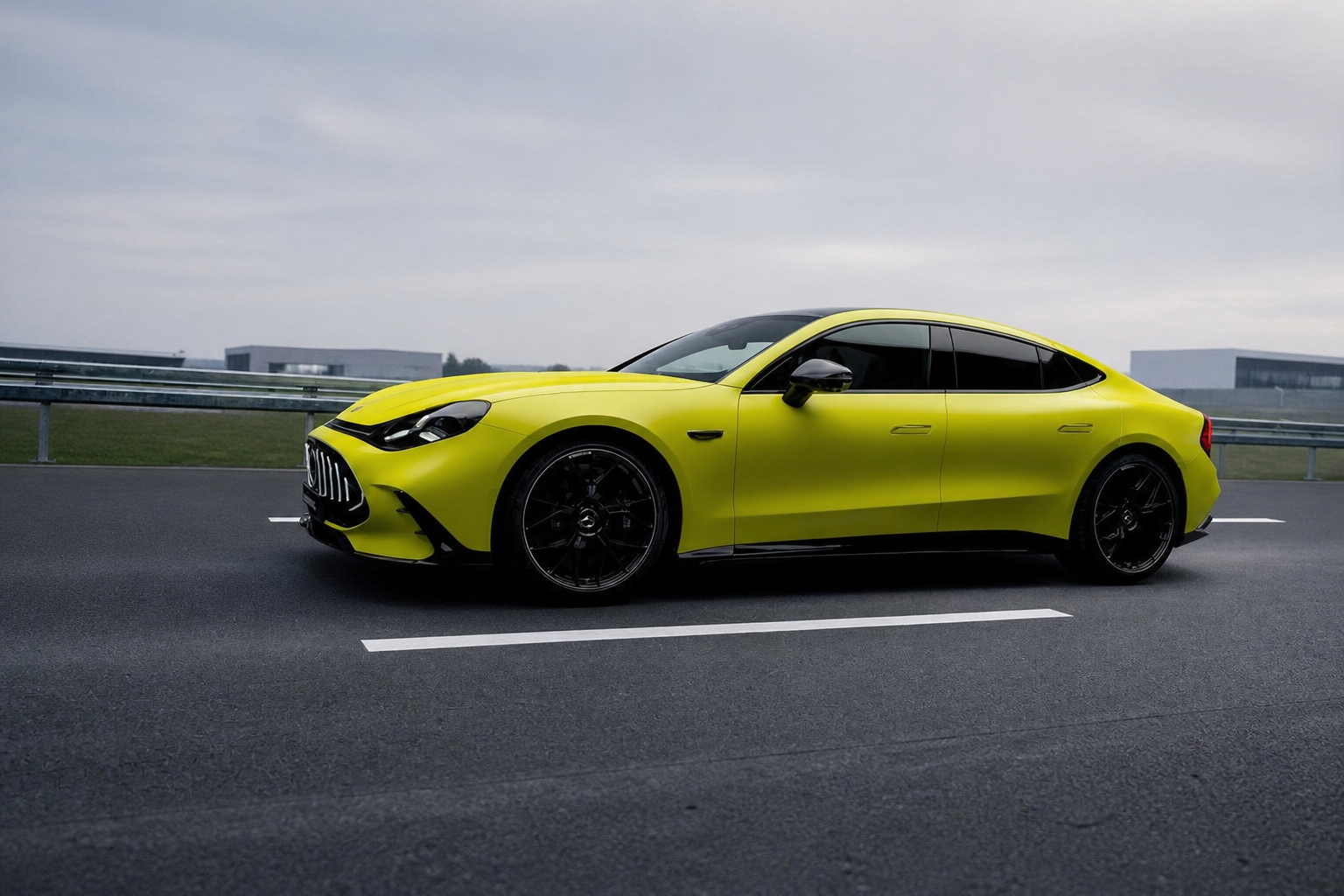
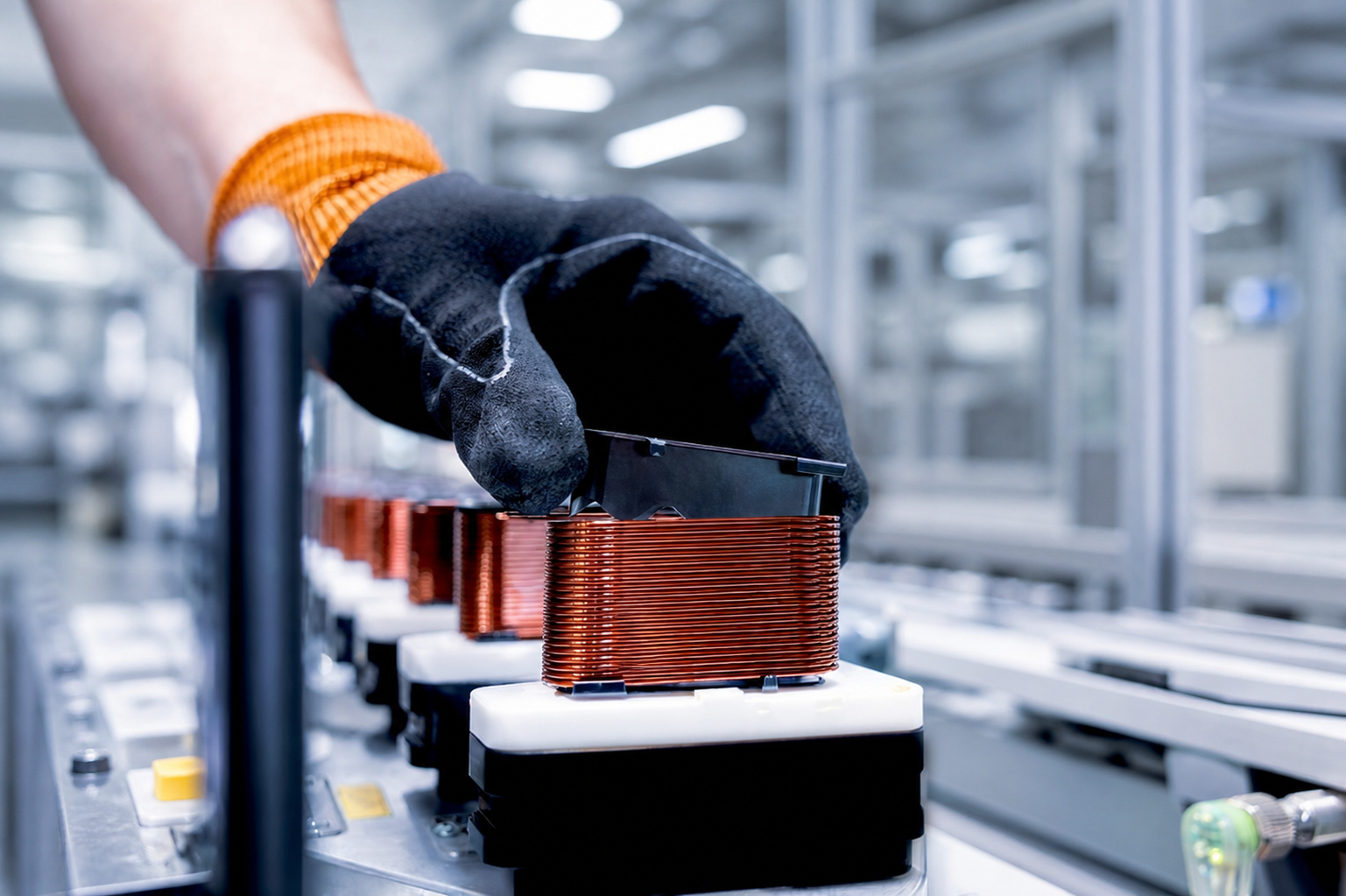
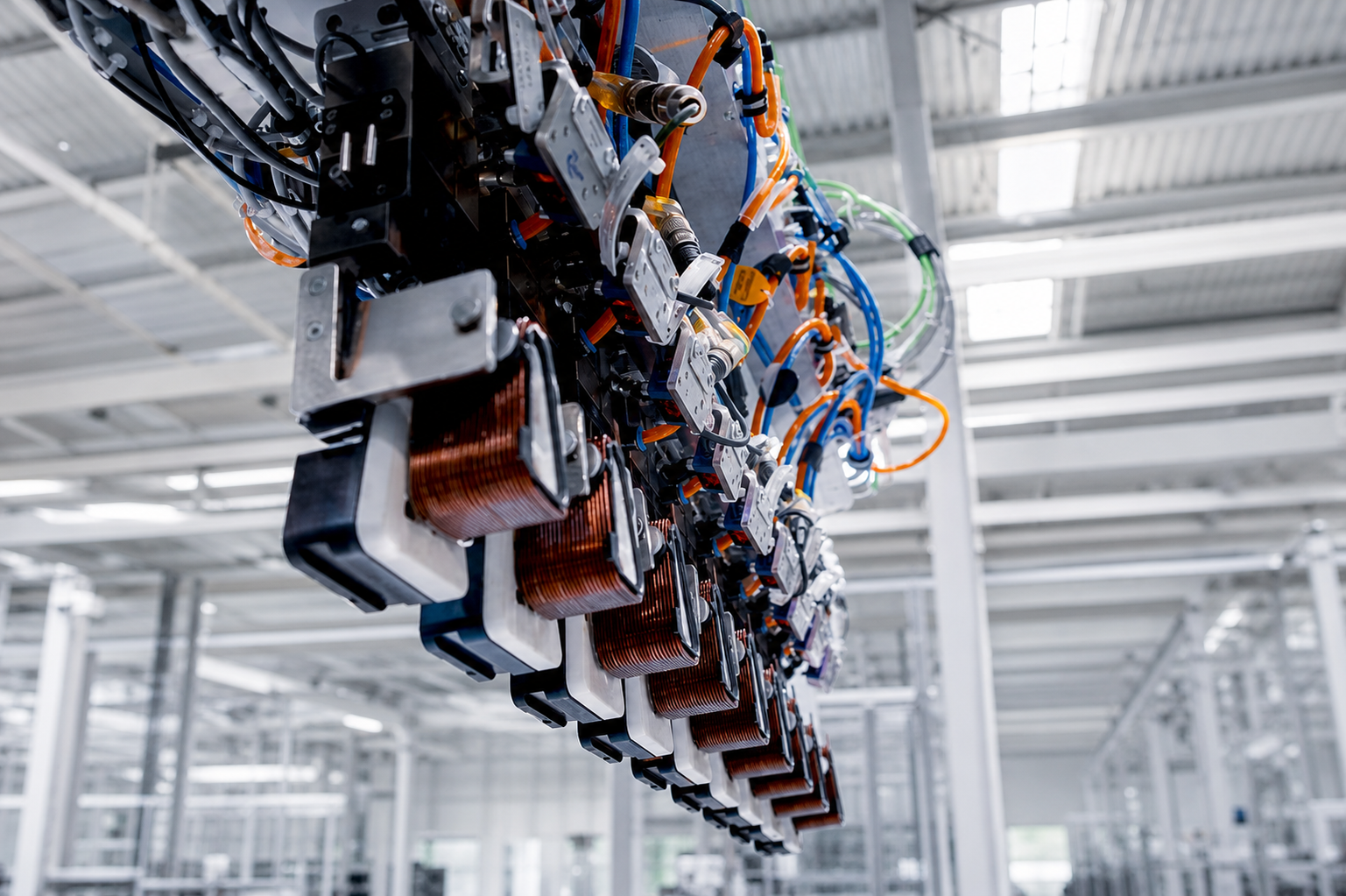
On June 9, 2026, Mercedes-Benz announced the launch of series production for axial-flux electric motors at its Berlin-Marienfelde plant. In the same announcement, the brand called the new AMG GT 4-Door Coupé the first model to use this technology. The design, with magnetic flux running along the motor's axis, is more compact than a conventional radial-flux layout; in the higher-output GT versions, the front motor is less than nine centimeters wide, while the two rear motors are around eight centimeters wide. Further details are provided in the official Mercedes-Benz material.
In brief: what is already known about the GT 53
the version was mentioned in a report published on August 6, 2026;
the stated output is 536 hp;
inline-six engine sound simulation has been reported;
as of the time of writing, the manufacturer had not confirmed the range, battery capacity, charging time, price, or sales markets.
What engine sound simulation adds
In a gasoline-powered car, the driver receives a great deal of information through sound: revs rise, the transmission shifts, and the engine changes tone under load. An electric motor works differently—quickly, quietly, and with almost no pauses. Artificial sound can therefore become part of the feedback system, alongside pedal resistance or the graphics on the instrument display.
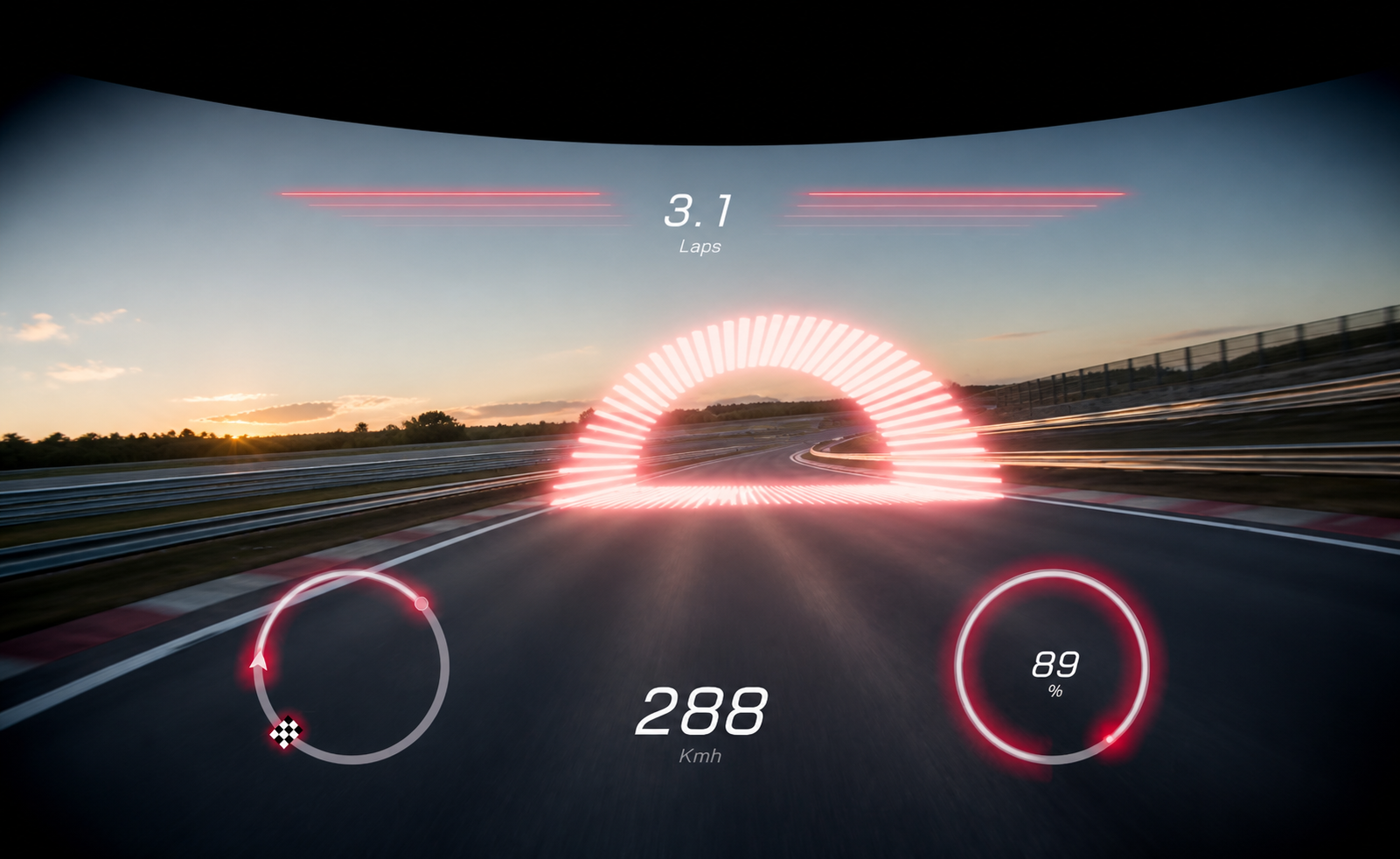
In the GT 53, this is not about reproducing the sound of a real engine under the hood: there is no engine there. Most likely, the audio system will link the tone and volume to speed, load, and the selected driving mode. This is about the sensation of pace, not an increase in power or range.
The approach makes particular sense for AMG, where the character of the powertrain has long been part of the product. That does not mean every buyer wants an artificial soundtrack; some will value the quietness of an electric vehicle more. The key question for a future owner is whether this mode can be switched off or adjusted. Mercedes-AMG has not yet clarified that point.
Why the technical foundation matters more than sound alone
For a high-performance electric vehicle, the main engineering challenge is not peak power during a single launch, but the ability to repeat accelerations and recharge quickly without overheating. Mercedes-AMG links the AMG.EA architecture with axial-flux motors, an 800-volt system, and direct cooling for the battery cells. The company demonstrated these solutions in detail on the GT XX technology prototype; their design is described in the official material about the Concept AMG GT XX.
However, the prototype's specifications cannot automatically be treated as specifications for the GT 53. Mercedes-AMG has already confirmed the GT 55 and GT 63 versions, while the entry-level GT 53 may differ not only in output, but also in its number of motors, battery, cooling calibration, and selection of drive modes.
What is confirmed—and what remains to be learned
Question | Status as of August 9, 2026 |
|---|---|
Electric AMG GT 4-Door and AMG.EA architecture | Confirmed by Mercedes-AMG on May 20, 2026. |
GT 53 with 536 hp | Reported by an automotive publication on August 6; a separate Mercedes-AMG model listing has not yet been found. |
Inline-six sound simulation | Reported by an automotive publication; tuning details and the option to disable it have not been disclosed. |
Battery, range, charging, price, and GT 53 sales launch | No confirmed manufacturer data. |
The key takeaway
The Mercedes-AMG GT 53 4-Door EV is interesting for more than its 536-hp output. It reflects an attempt to separate two elements: the technical hardware remains electric, while the emotional feedback draws on a familiar gasoline-powered character. Buyers should wait for the official specification before comparing the GT 53 with the higher-output versions or the gasoline-powered AMG 53. For now, the direction of the idea is clear, but its final implementation is not.