
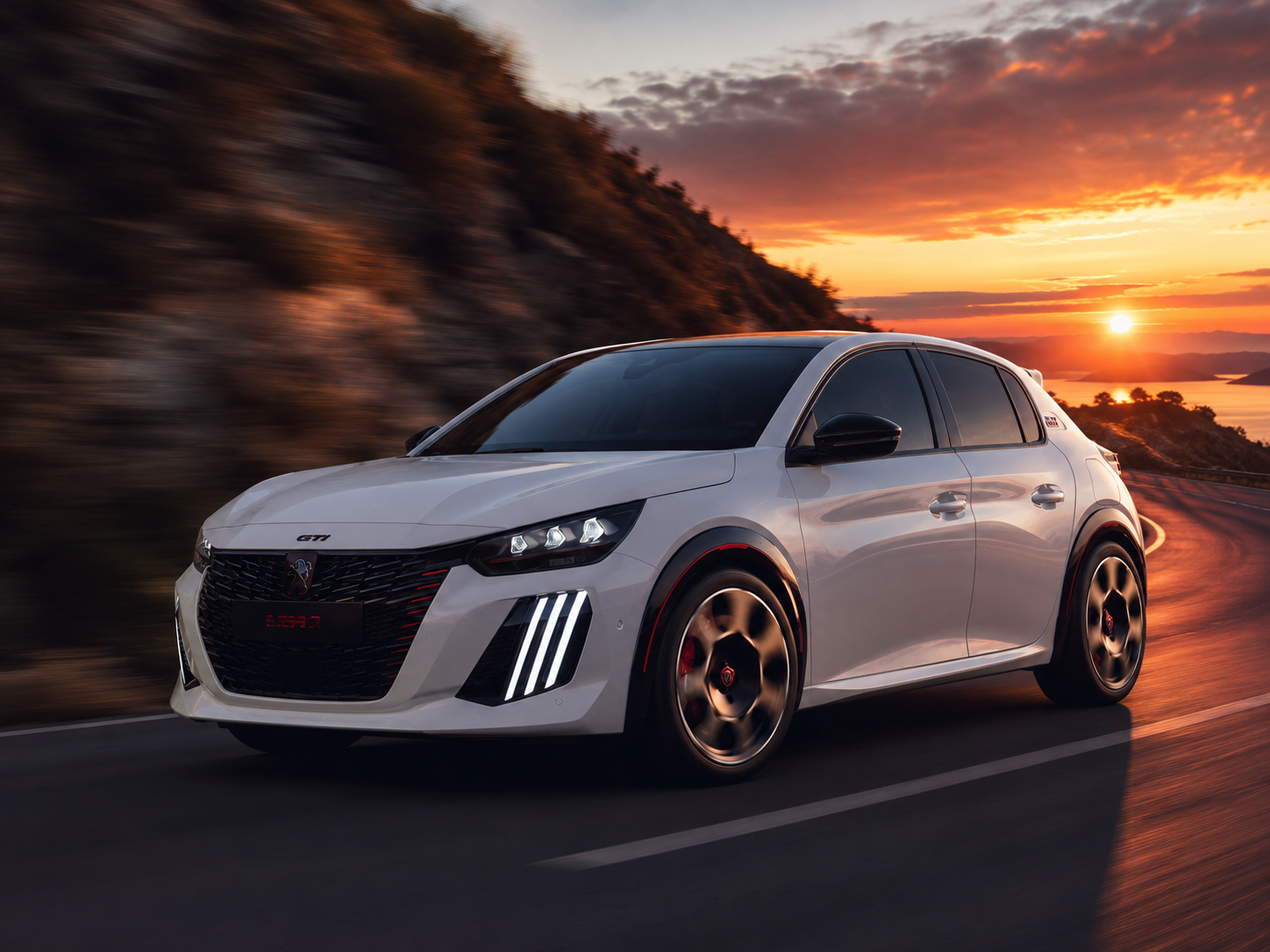
Peugeot is saying three letters again that, for many car fans, sound like a whole chapter of automotive culture: GTi.
After several quiet years, the name is back, but not in its familiar gasoline form. The new Peugeot E-208 GTi is a fully electric hot hatch built for drivers who want more than just an efficient city car — they want real character behind the wheel.
This is important news not only for Peugeot, but for the entire European compact EV market. For a long time, electric cars in this class were seen mainly as practical urban transport. Now Peugeot is showing that a compact electric car can be not just convenient, but emotional, quick, and genuinely sporty.
The return of GTi
For Peugeot, the GTi badge is more than a marketing label. It is a reminder of small, light, sharp cars that once made the brand especially appealing to young drivers and enthusiasts.
A special place in that story belongs to the Peugeot 205 GTi. It became one of the symbols of Europe’s hot hatch culture in the 1980s. Later came other sporty Peugeot versions, including the 206, 207, and 208 GTi.
Now the brand is bringing that name back in a new reality. There is no internal combustion engine here anymore, but the idea remains the same: a compact body, strong output, precise handling, and emotion at the wheel.
Why does this matter?
Because the car market is becoming more and more rational. Manufacturers talk about range, batteries, charging, emissions, software, and efficiency. All of that matters. But drivers still ask another question: will the car make them feel something?
The Peugeot E-208 GTi tries to answer: yes, an electric car can still feel alive.
Key specs of the Peugeot E-208 GTi
This new version is based on the electric Peugeot E-208, but it gets major technical and visual changes. It is not just a regular city EV with red accents. Peugeot Sport has genuinely worked on the car’s setup.
Main data
Parameter | Peugeot E-208 GTi |
|---|---|
Powertrain type | Fully electric |
Output | 280 hp |
0–100 km/h | about 5.7 seconds |
Battery | 54 kWh |
WLTP range | about 350 km |
Fast charging | up to 100 kW |
20–80% charging | about 30 minutes |
Drive | Front-wheel drive |
Features | sport suspension, upgraded brakes, wider track, limited-slip differential |
280 hp in a small electric Peugeot
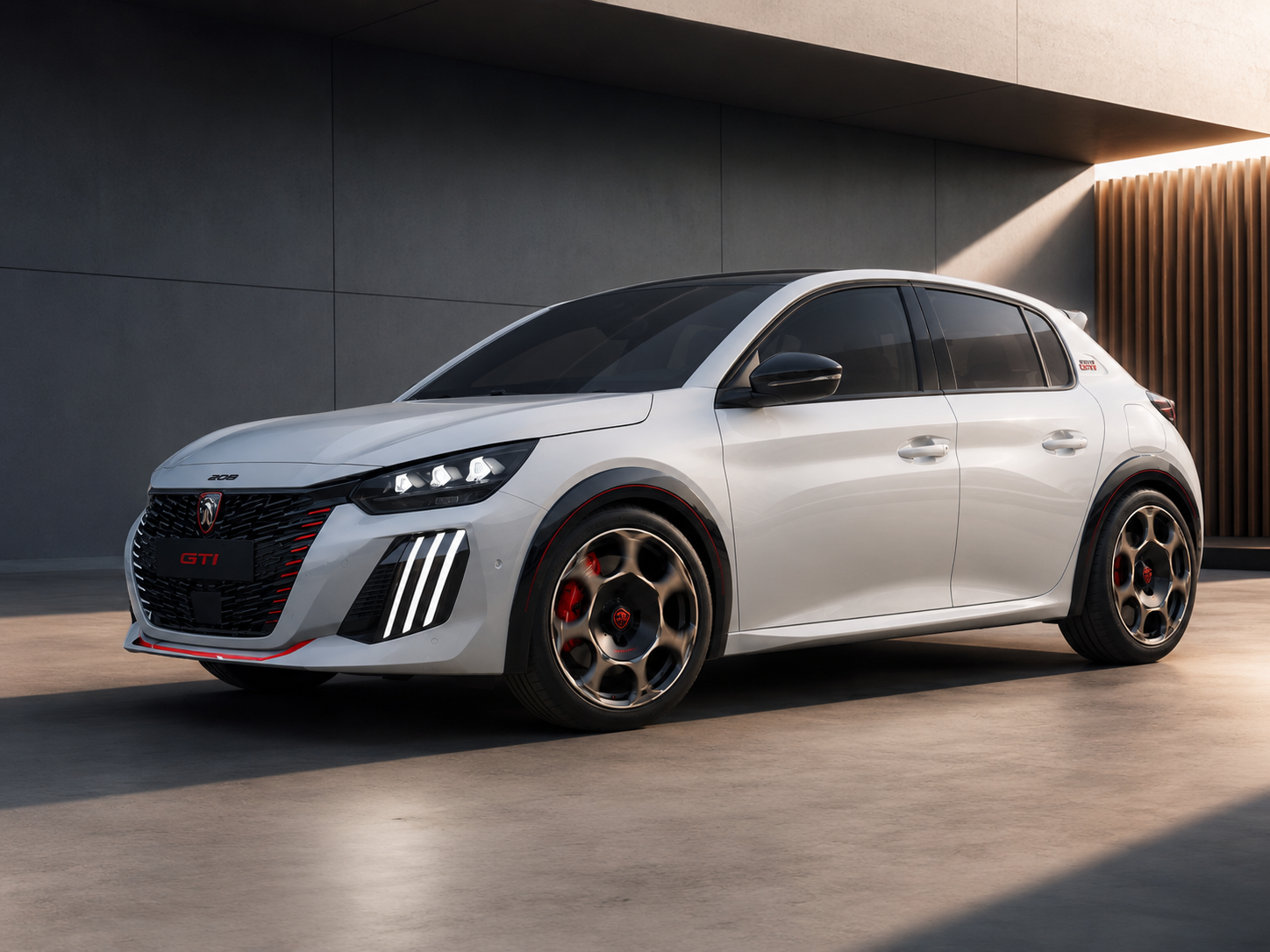
The headline figure is 280 hp. For a B-segment car, that is a very serious number. It is enough to make the E-208 GTi feel not just like a faster version of an ordinary hatchback, but like a real performance car for everyday use.
Acceleration to 100 km/h takes about 5.7 seconds. That puts it firmly in proper hot hatch territory, especially with the instant response of an electric motor.
Electric thrust changes the character
In a gasoline hot hatch, the emotion often comes from the sound, the revs, and the manual gearbox. In an electric GTi, it works differently. Here, the main effect is instant response.
Press the pedal and the car reacts immediately. No turbo lag, no waiting, no shifting. It is a different kind of enjoyment, but it can be just as vivid.
Chassis: not just power, but control
Peugeot knew that power alone would not be enough. If you simply make a compact EV quick in a straight line, it does not become a true GTi. That is why a major part of the work focused on the chassis.
The E-208 GTi gets sportier suspension tuning, a wider track, special tires, upgraded brakes, and a limited-slip differential integrated into the gearbox.
What is the point of a limited-slip differential?
In a powerful front-wheel-drive car, it is important to put traction down to the road properly. If there is too much power, the inside wheel in a corner can lose grip, and the car starts to feel nervous.
A limited-slip differential helps make better use of traction, especially when accelerating hard out of a corner. That makes the car feel more composed and easier to read.
Design: red accents and memories of older GTi models
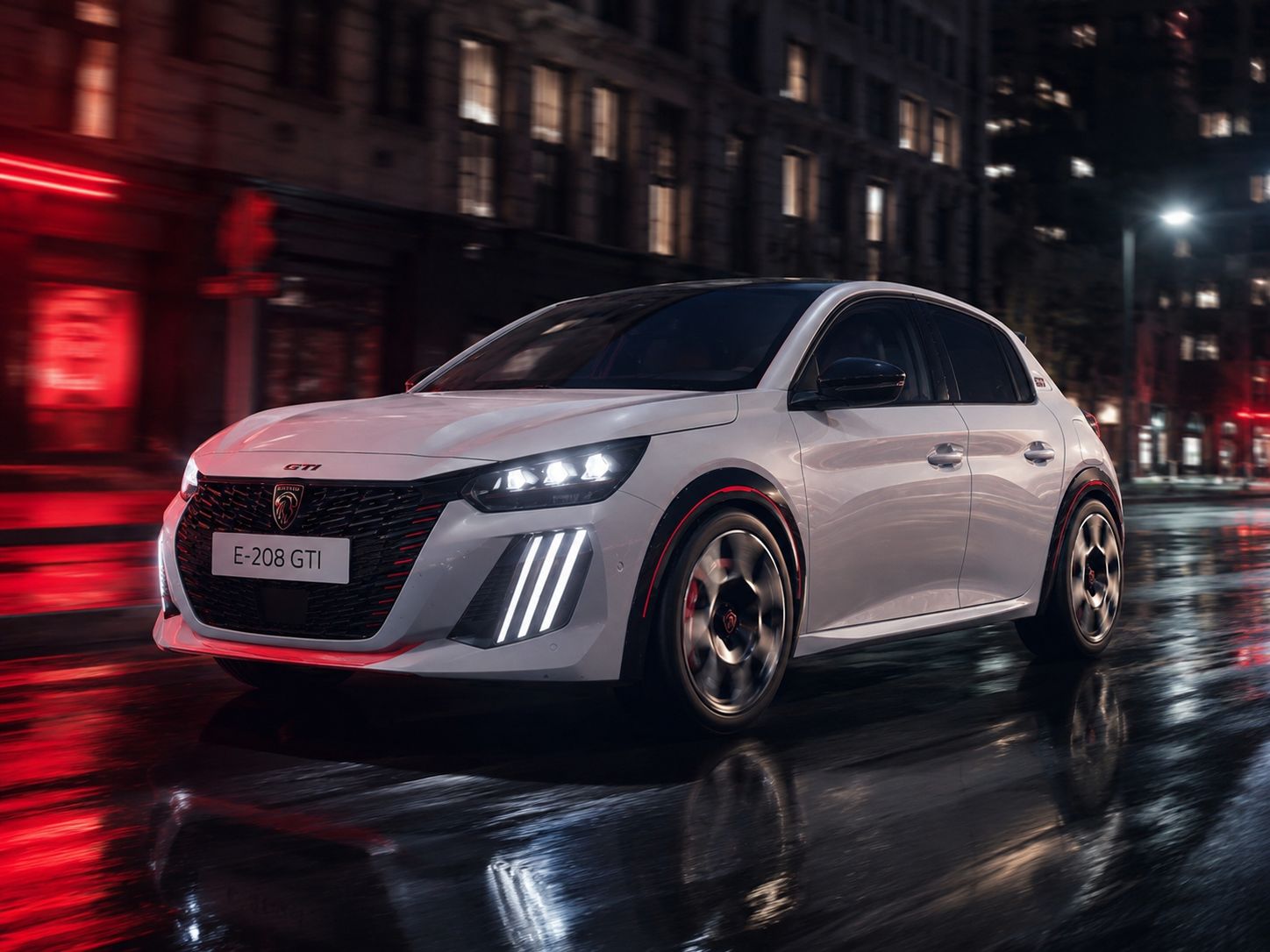
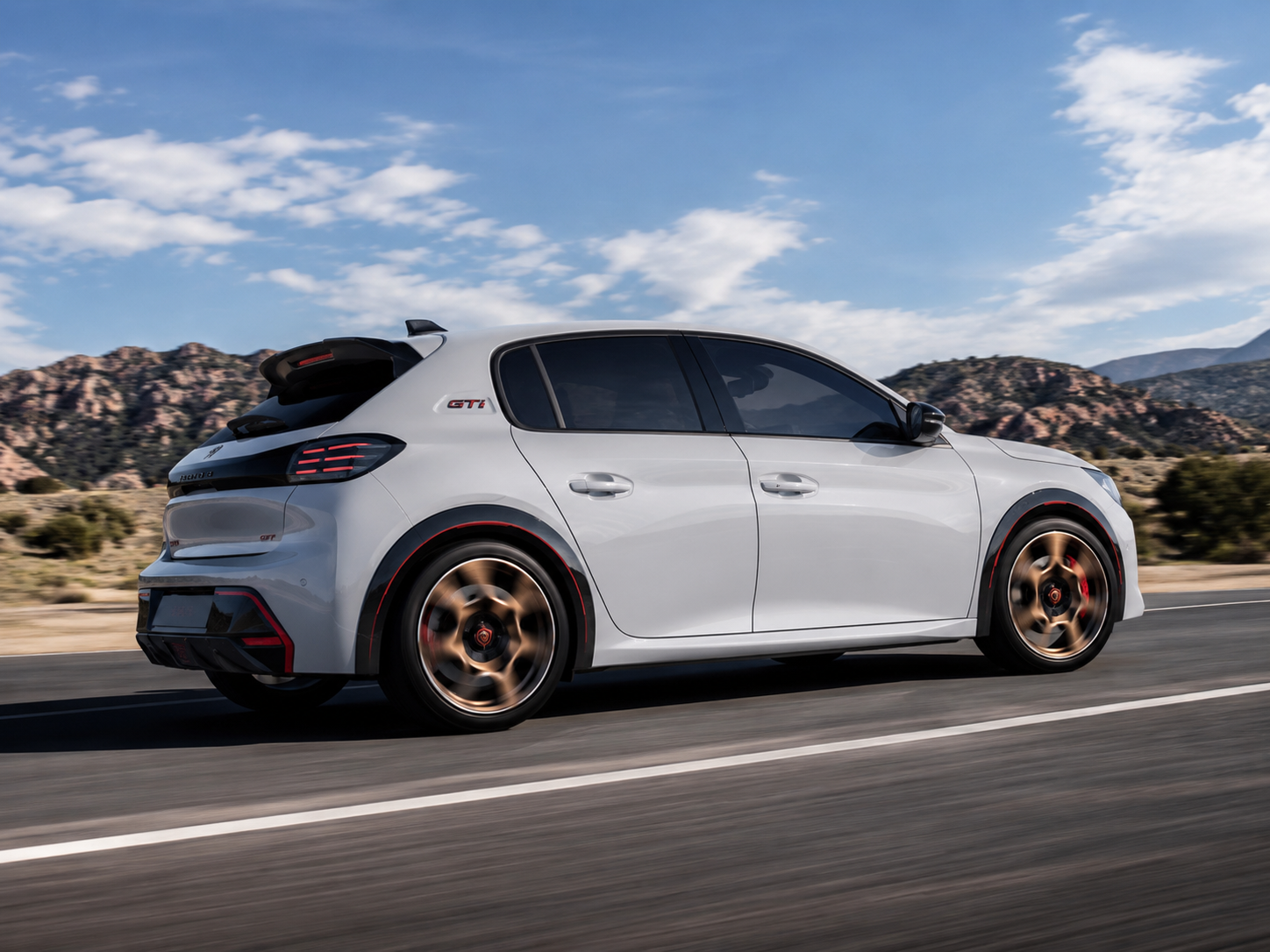
Visually, the E-208 GTi gets the expected sporty details. The car looks more expressive thanks to the wider track, 18-inch wheels, sporty body elements, red accents, and a more aggressive appearance overall.
The red color here is no accident. It is a nod to classic sporty Peugeots, especially the era of the 205 GTi.
Not retro, but a modern interpretation
Peugeot is not trying to make a direct copy of the old 205 GTi. The new E-208 GTi does not look like a retro toy. It remains a modern electric car, but one that respects its history.
That is the right approach. Nostalgia matters, but the car still has to belong to the present.
Interior: sporty atmosphere without unnecessary theatrics
The cabin of the new E-208 GTi also gets sporty touches. Red details, special materials, seats with stronger support, and Peugeot’s signature i-Cockpit atmosphere create the feeling of a car that is different from an ordinary city EV.
At the same time, the interior remains practical. This is still a five-door compact Peugeot that can be used every day.
The key is balance
Peugeot is not turning the E-208 GTi into a no-compromise track tool. This is not a car for weekends only. It still has to stay comfortable in the city, practical enough, and easy to live with every day.
That is exactly what a hot hatch should be: fast, but not detached from real life.
Range and charging
A 54 kWh battery delivers a range of about 350 km WLTP. For a sporty compact EV, that is a sensible figure.
Of course, range will drop with spirited driving. That is normal for any electric car, especially when the driver uses full power often.
Fast charging
Support for fast charging up to 100 kW means the battery can be charged from 20 to 80% in about 30 minutes. That is enough for city and suburban use, and perfectly acceptable for weekend trips if the charging network is adequate.
Price and positioning
The E-208 GTi will not be a cheap car. That should be said clearly. Sporty compact EVs require expensive components: a powerful electric motor, a battery, a reinforced chassis, brakes, and special tuning.
The price is expected to be noticeably higher than that of the regular Peugeot E-208. So the E-208 GTi will be more of a niche car for enthusiasts than a mass-market city EV.
What will buyers be paying for?
Not just for power. Buyers will pay for the GTi name, for Peugeot Sport tuning, for the sporty character, and for the feeling of a rare compact electric car designed not only for efficiency, but also for enjoyment.
Rivals and market position
The electric hot hatch segment is still taking shape. Manufacturers are cautiously looking for the right balance between price, emotion, range, and sportiness. The Peugeot E-208 GTi arrives at a very interesting moment: buyers are already used to electric cars, but many still expect more emotion from them.
The E-208 GTi could become one of the cars that helps change the way small EVs are perceived.
Why does this matter for Europe?
Europe has always loved compact fast hatchbacks. They were more affordable than sports cars, easier to use in the city, and more fun than ordinary family cars.
If the electric era keeps this format alive, car culture will not lose an important part of its soul.
The social and cultural meaning of the news
The Peugeot E-208 GTi is more than just another version of one model. It is a sign that manufacturers still care about emotion.
For younger drivers and fans of compact performance cars, that is an important signal. Electrification does not have to mean the end of driving enjoyment. Yes, the engine note is gone. Yes, manual gearboxes are becoming rare. But response, handling, design, chassis tuning, and the desire to make a car special still remain.
Without exaggeration
It would be wrong to say that the E-208 GTi will completely change the market. It is a niche model. It will not be a car for everyone.
But it can influence market sentiment. It shows that even in the compact electric class, there is still room for character, history, and a sporty identity.
Who is this car for?
The Peugeot E-208 GTi is for people who want a compact EV but do not want boring transport with no emotion.
It is a car for drivers who value:
quick response;
compact dimensions;
sporty design;
everyday practicality;
the recognizable GTi name;
modern electric technology;
driving pleasure.
It will not replace a classic gasoline GTi for those who live for engine sound and mechanical feel. But for a new generation, it could be a very interesting alternative.
Conclusion
The Peugeot E-208 GTi brings the GTi name into a new era. This is no longer a gasoline hot hatch from the past, but an electric compact car with 280 hp, a sporty chassis, bold styling, and Peugeot Sport character.
It is not trying to be a car for everyone. Its job is different: to show that an electric car can be not only rational, but emotional too.
That is why this model matters: it reminds us that even in a world of batteries, charging, and digital technology, a small sporty hatchback still has a place on the road.