
Frequently asked questions
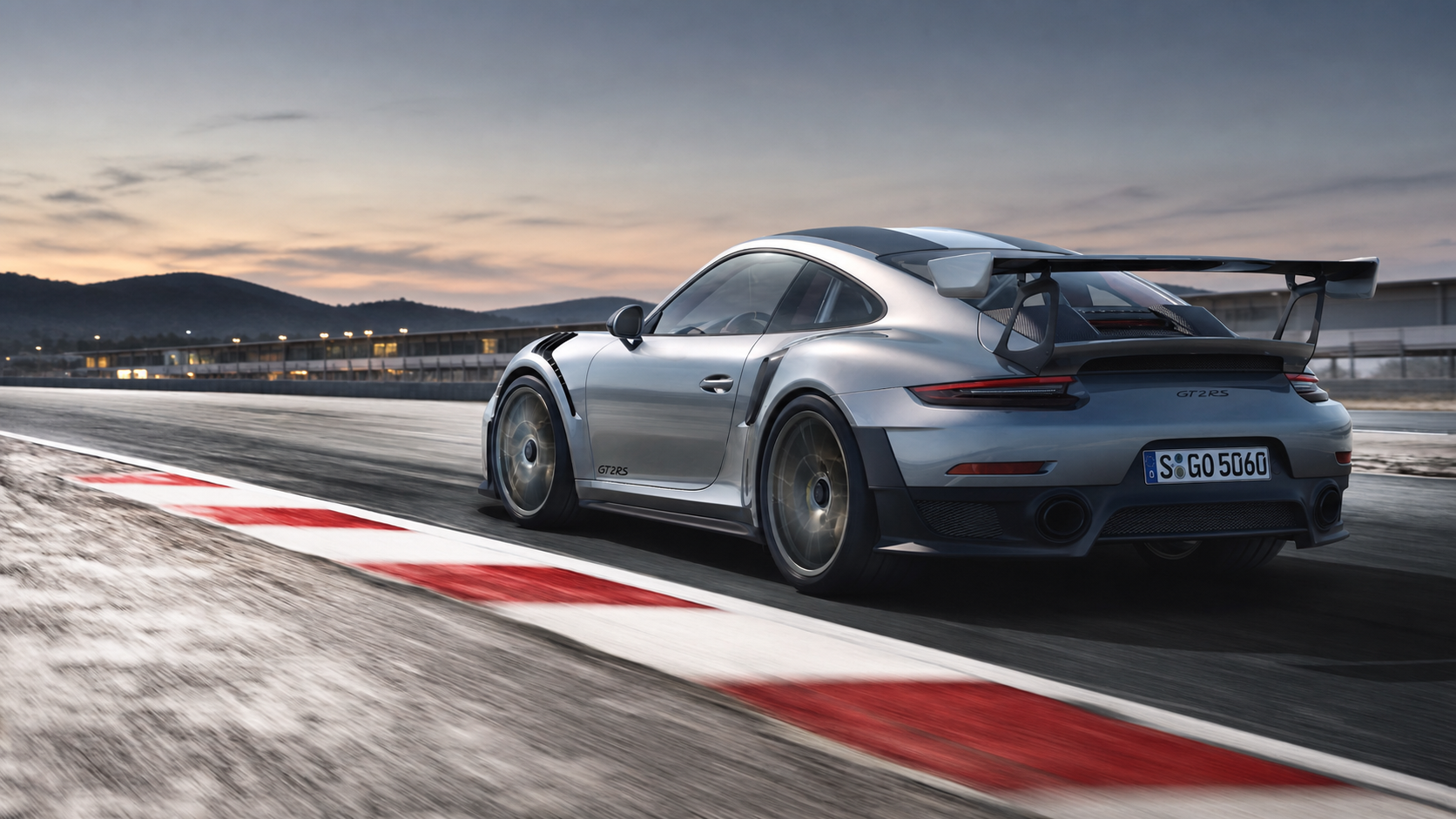
It is a one-off factory conversion created through Porsche’s Sonderwunsch division, based on a customer’s 2018 991.2-generation 911 GT2 RS with the Weissach package. It is not a new production model or a configurator option.
It has a redesigned flat-nose front end, narrow lighting elements, ventilation channels, a large adjustable rear wing and aerodynamic solutions inspired by the Manthey Performance Kit. Specialist publications report that its power and torque were not changed.
As of August 16, 2026, Porsche had not publicly disclosed its price, production quantity, separate complete specification sheet or factory Nürburgring lap time. Reports of a multi-million price are estimates rather than a Porsche price-list figure.
On August 14, 2026, specialist publications revealed the Porsche 911 GT2 Flachbau RS — a customer project from Porsche's Sonderwunsch division based on a 991.2-generation 911 GT2 RS with the Weissach package. Its appearance recalls the Porsche 935/78 “Moby Dick,” but it is not another 911 version for the catalog. The Flachbau RS is a one-off factory conversion of a specific car, not a new production Porsche model.
That distinction matters more than its unusual headlights, carbon fiber and rear wing. A production model has a price list, equipment packages and published specifications. A Sonderwunsch project starts with the owner's request, while some details remain unique to a single car. As a result, the price, production quantity, timeline and even the meaning of the Flachbau RS figures cannot be interpreted in the same way as those of a regular 911.
In brief: what is known about the Flachbau RS
Item | What is known | How to interpret it |
|---|---|---|
Status | A one-off Sonderwunsch project based on a customer's car | It is not a specification that can be selected in the configurator |
Base car | A 991.2-generation 911 GT2 RS with the Weissach package, built in 2018 | The age of the base car does not make the Flachbau RS a new 911 generation |
Engine | Specialist publications report that power and torque were not changed | Porsche has not issued a separate public specification for the Flachbau RS |
Aerodynamics | A new front end, adjustable rear wing and elements inspired by the Manthey kit | Downforce claims apply to a specific configuration and set of comparison conditions |
Price and production | Not disclosed | Reports of a “multi-million” price are estimates, not a Porsche price list |
Why the Flachbau treatment was chosen
The name is usually translated as “flat nose.” On this type of 911, the hood line extends almost to the outer edges of the body, while the headlights are repositioned. On the Flachbau RS, the idea does not come from a general retro trend. Its source is the racing Porsche 935/78, which was nicknamed “Moby Dick.”
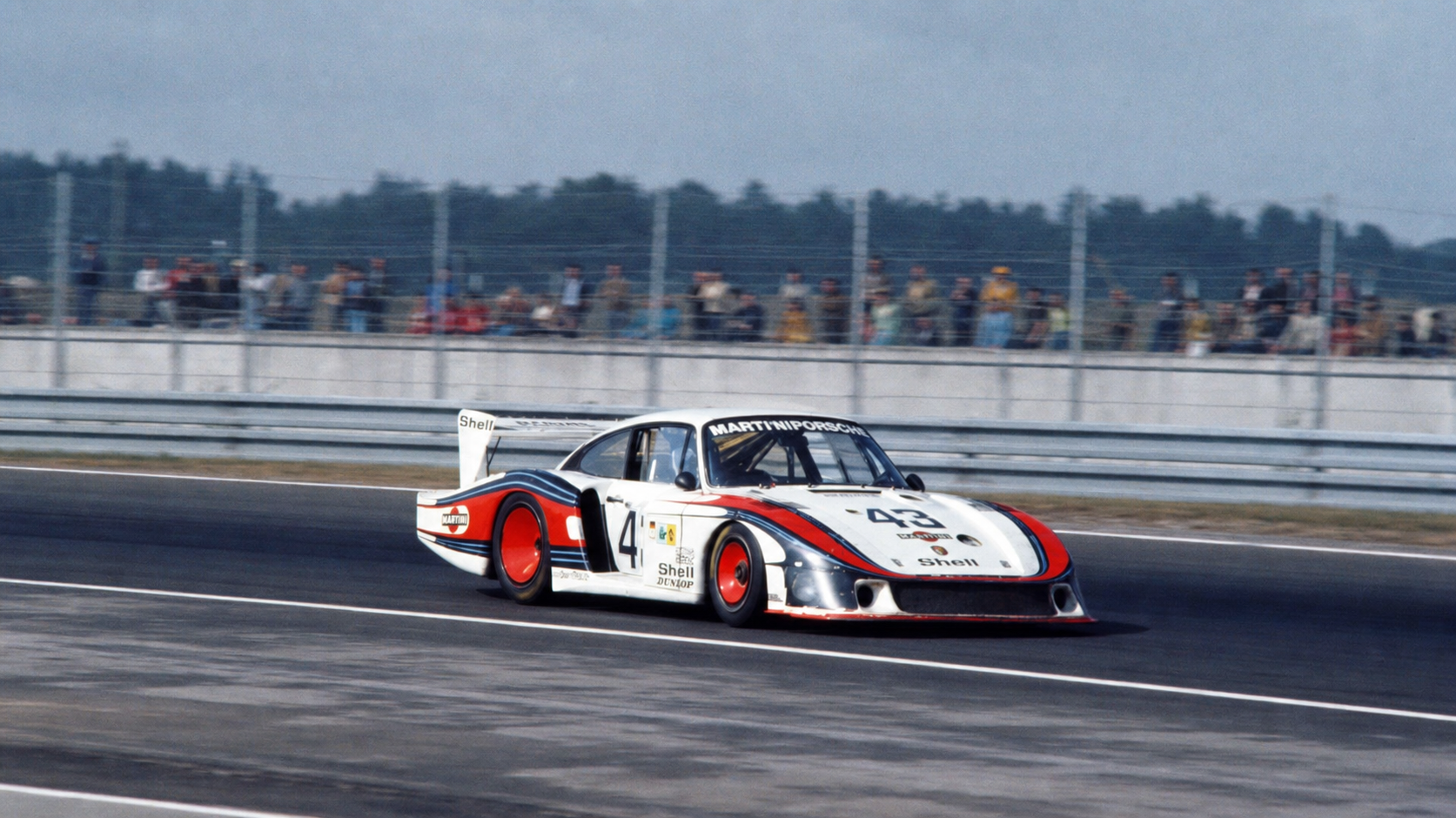
On March 30, 2026, Porsche published a historical feature marking the 50th anniversary of the 935's homologation. The company says that the 935/78 was first shown in 1978, and that its aerodynamics had already moved noticeably away from the familiar 911 silhouette. That connection is what matters for the Flachbau RS: not a literal copy of the race car, but a modern interpretation of its front-end design and approach to managing airflow.
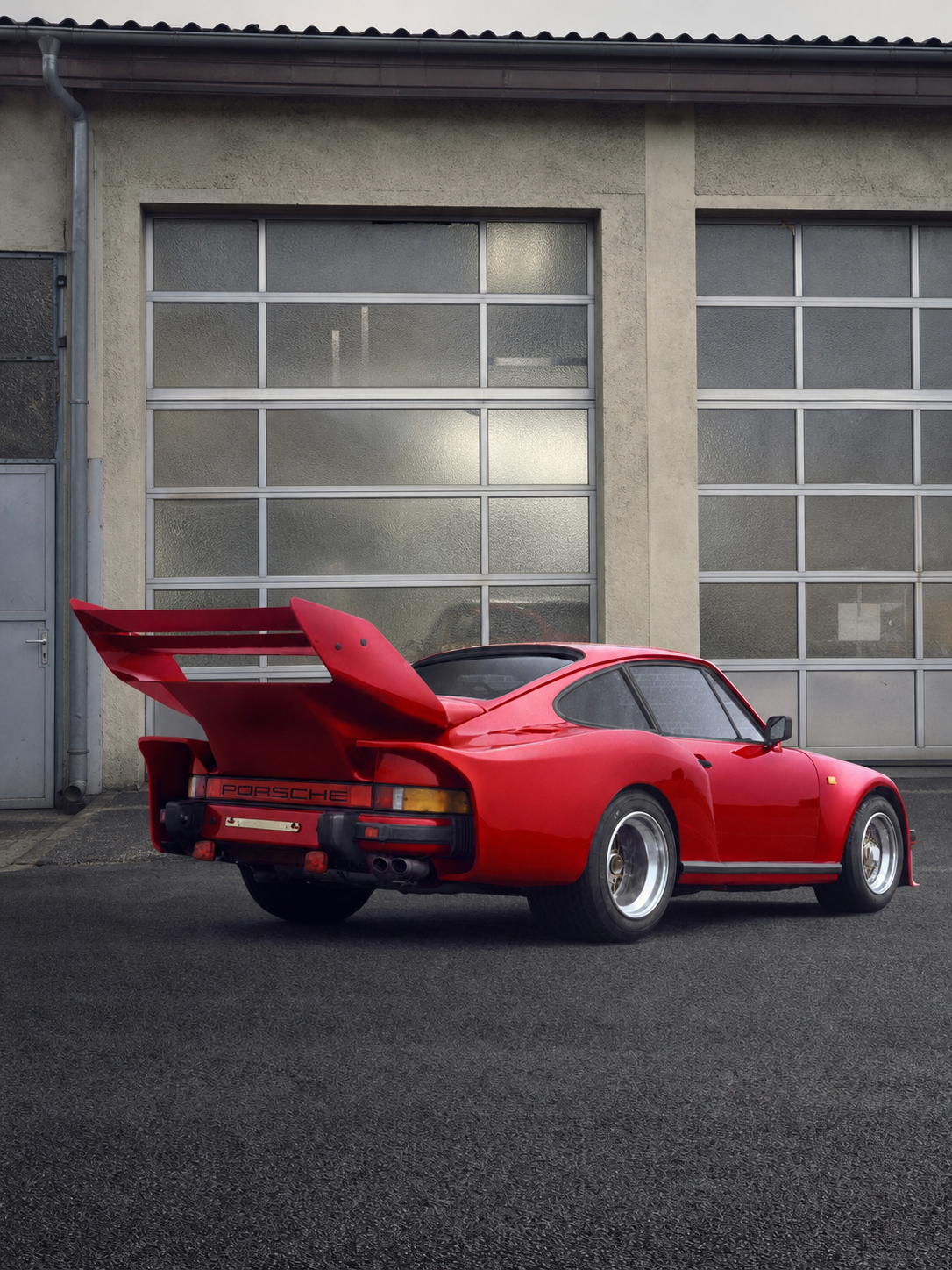
There is a factory precedent for this approach. In 1983, Porsche built a road-going version of the 935 for Mansour Ojjeh, and the car received a Flachbau body. The company describes the history of that commission and the development of its special-request program in detail in its Sonderwunsch feature. The Flachbau RS therefore continues a long-standing tradition, but it does not revive the old model as a production car.
What changed compared with the original GT2 RS
The main visual difference is the redesigned front end, with a low nose line, narrow lighting elements and ventilation channels. A large adjustable rear wing is fitted at the back, while the aerodynamics use reworked solutions from the Manthey Performance Kit. According to specialist publications, the team compared the Flachbau RS with a GT2 RS equipped with the Manthey kit in different wing positions and reported a lower drag coefficient together with greater downforce.
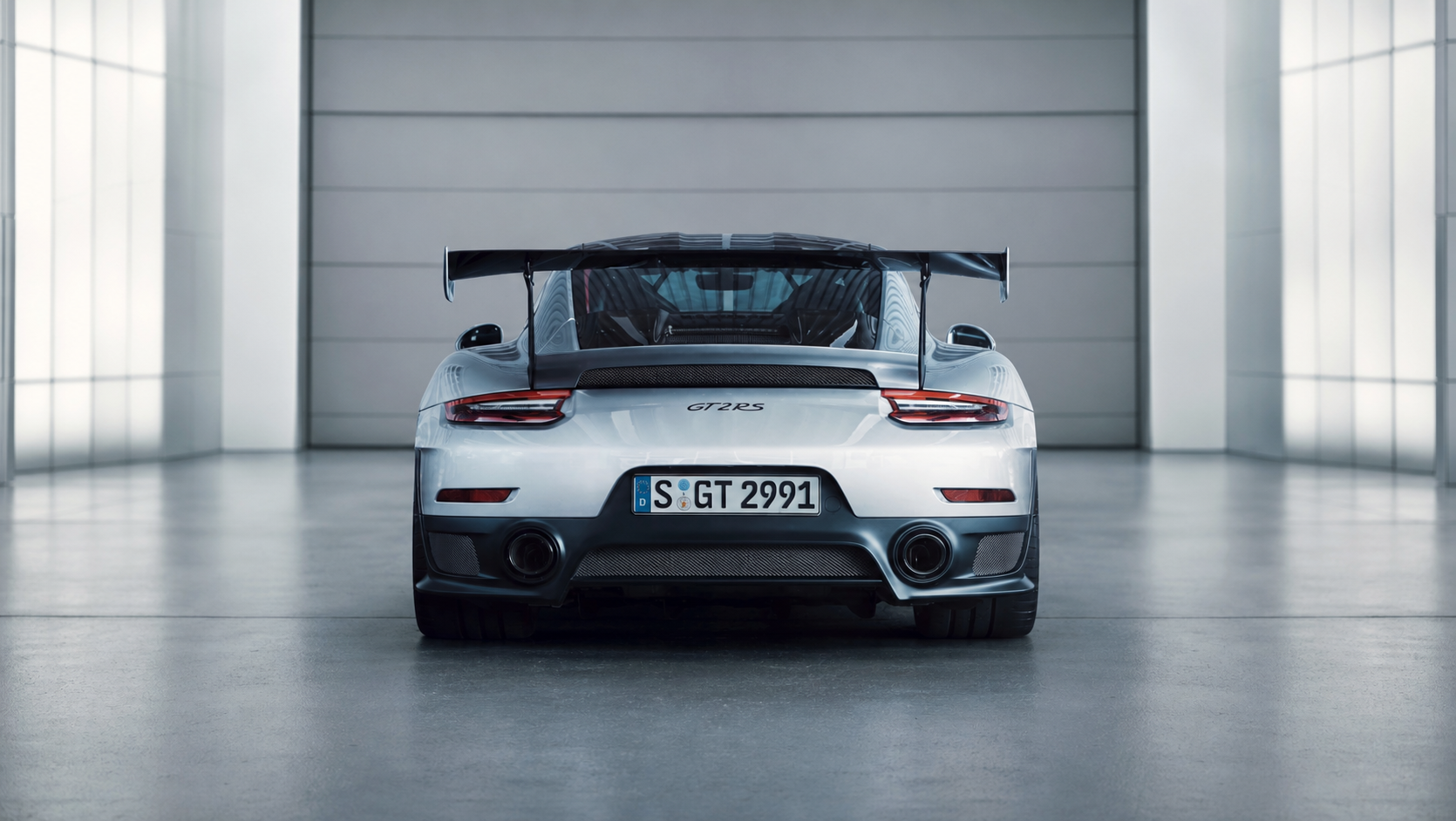
These figures should not be turned into a promise of a faster lap. They apply to a specific configuration, and Porsche has not published an official Nürburgring lap time for the Flachbau RS. Lap speed depends not only on aerodynamics, but also on the tires, temperature, setup, driver and track conditions.
The project was lightened by approximately 32 kg: the infotainment system, audio components and part of the sound insulation were removed from the cabin. This does not mean that the same arrangement will become available to owners of every GT2 RS. On an individual project, the engineering solution, materials and legal checks are tied to one specific car.
Engine: why the base model's figures matter
According to the project description in the specialist press, the conversion did not include an increase in power or torque. The reference point therefore remains the official data for the original 911 GT2 RS: on June 30, 2017, Porsche unveiled the model with a 3.8-liter twin-turbocharged flat-six producing 515 kW (700 hp) and 750 N·m of torque. The company also claimed a 0–100 km/h time of 2.8 seconds and a top speed of 340 km/h.
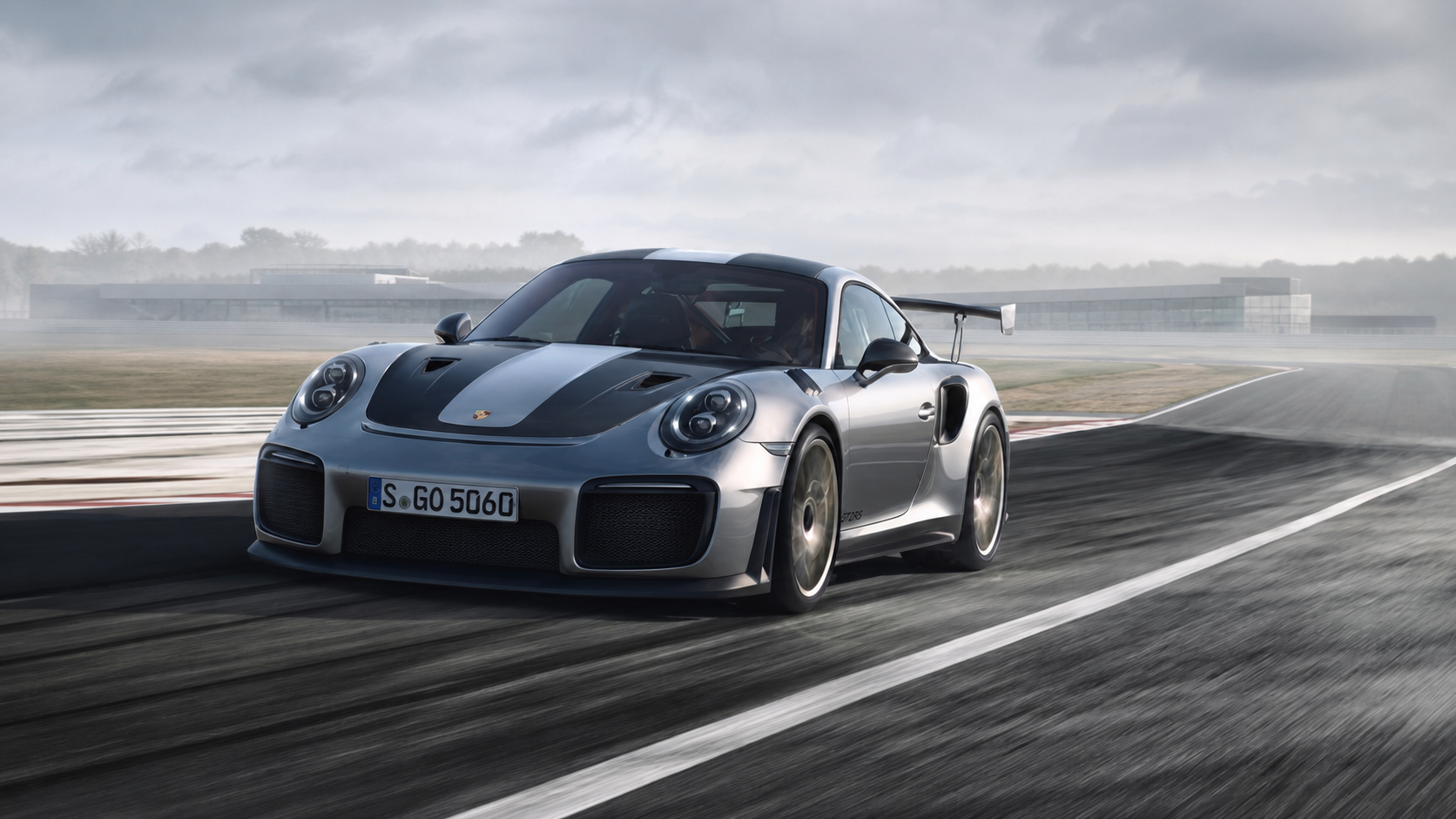
These figures apply to the 2017 production GT2 RS. The accurate way to describe the Flachbau RS is that it was built around this hardware, while automotive publications report that its output was retained. Without a separate Porsche technical sheet, the base car's figures should not be presented as independent official specifications for the Flachbau RS.
How Sonderwunsch differs from a production 911
It is built around an existing car, not produced as a series model. The Flachbau RS was created around its owner's existing 911 GT2 RS rather than being built on a separate production line as a new model version.
It involves bespoke engineering. The body panels, aerodynamics, lighting and interior are developed for a specific request, so they should not be treated as future options for all 911 models.
There is no market benchmark. Without a disclosed price or production quantity, the project provides no basis for valuing other GT2 RS cars or forecasting their collectible value.
A similar car is not automatically available. Specialist publications report that the customer was not promised absolute exclusivity of the idea, but an exact repeat of the exterior and trim will not be offered to him. That is not the same as an announcement of a new series.
How to read news about factory one-offs
Start by separating the base model from the conversion. Then check whether separate technical specifications, a price, production quantity and delivery markets have been published. If those details are missing, you are not looking at “a new car for sale,” but at the story of a specific commission and the manufacturer's capabilities.
What has not yet been disclosed
As of August 16, 2026, the available materials contain no public price for the Flachbau RS, plans for series production, a factory Nürburgring lap time or a separate complete specification sheet. It is also unclear whether a similar body shape will become a standalone Porsche program. These are significant gaps: until they are officially addressed, the Flachbau RS should be viewed as a one-off Sonderwunsch creation rather than a preview of a new 911 GT2 RS.