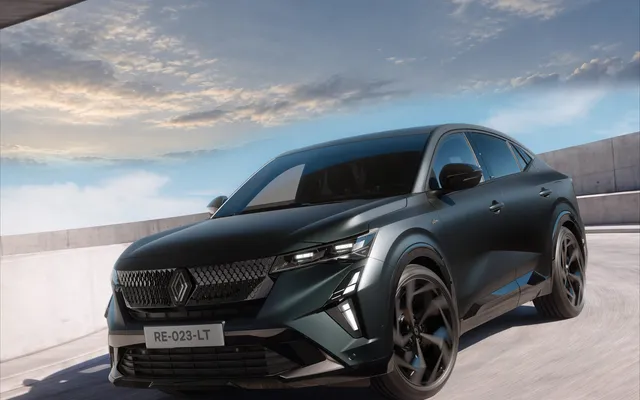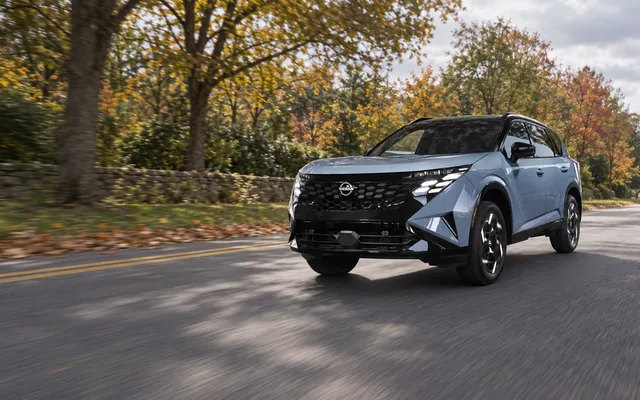

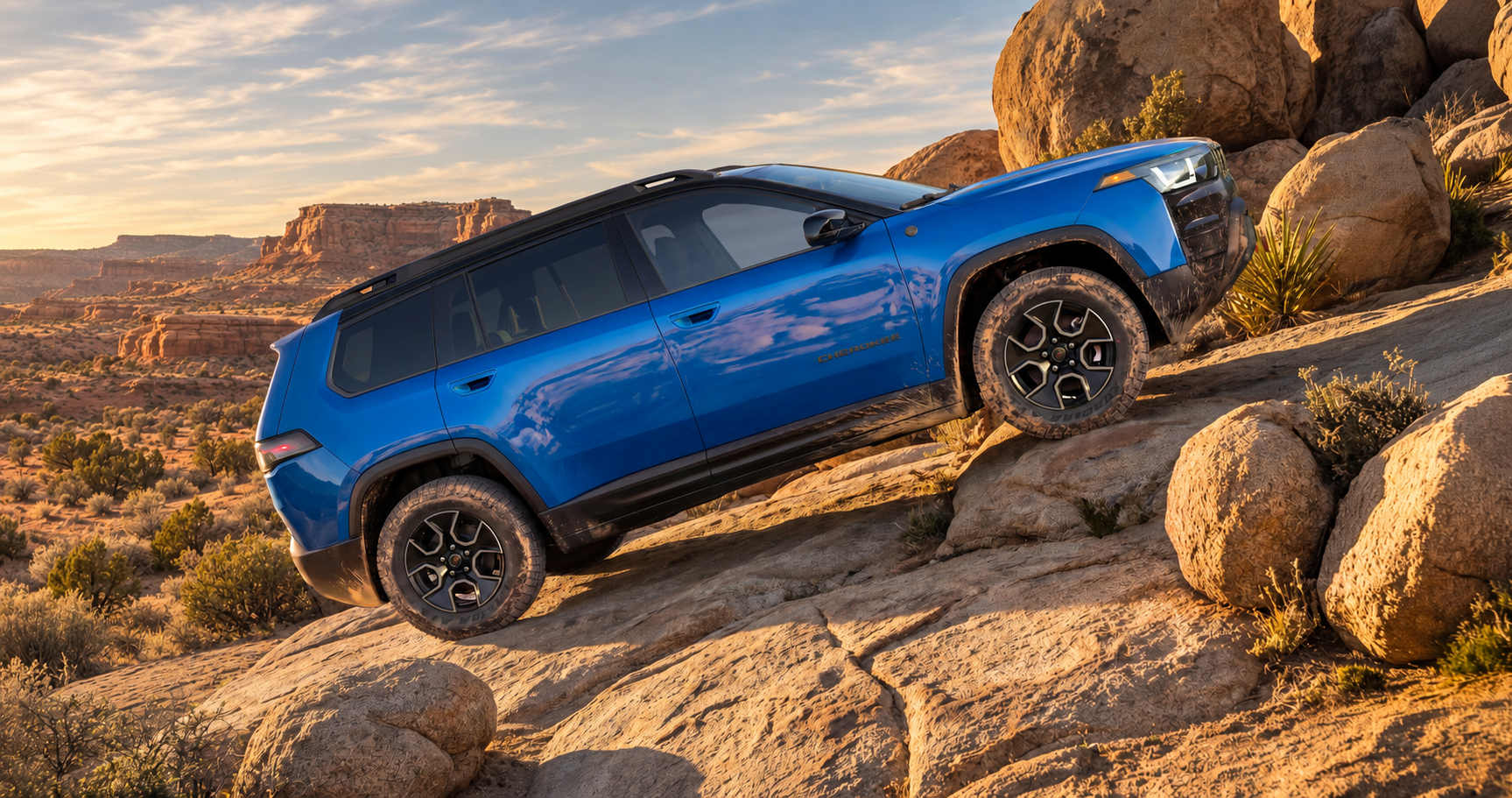
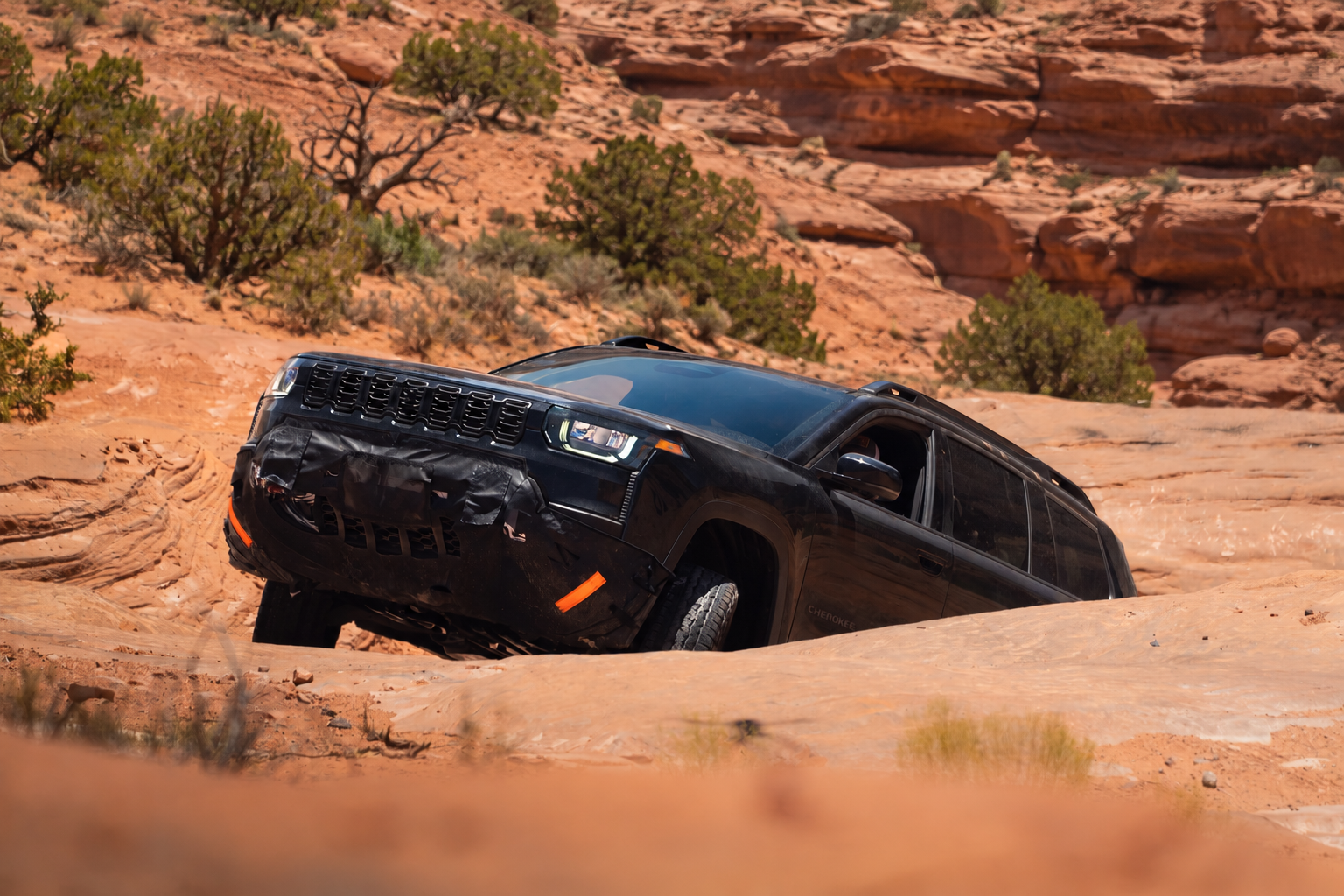
On September 30, 2026, Jeep introduced the 2027 Cherokee Trailhawk. The hybrid Cherokee now gets low-range gearing, an electronic rear axle locker, raised suspension and underbody protection. The Trailhawk’s main changes are aimed at tackling difficult terrain, while the hybrid system’s output remains unchanged at 210 hp.
From the New Cherokee to the Trailhawk’s Return
The new-generation Cherokee debuted on August 21, 2025, as a 2026 model-year vehicle. In its official description of the Cherokee, Jeep listed the Active Drive I system, eight inches of ground clearance and four drive modes: Auto, Sport, Snow and Sand/Mud. Four-wheel drive was already available at the time, but the Trailhawk off-road version arrived later.
On June 22, 2026, the brand announced that the Trailhawk would return without yet revealing its specifications. The full details were published on September 30. That is why “2027” refers to the model year rather than the premiere date.
What Changed: The Numbers Side by Side
Below are Jeep’s figures for the regular Cherokee at the generation’s launch and for the new Trailhawk version. Millimeter values have been converted from inches and rounded.
Specification | Cherokee at generation launch | 2027 Cherokee Trailhawk |
|---|---|---|
Four-wheel-drive system | Active Drive I | Active Drive II, low-range gearing and an electronic rear axle locker |
Ground clearance | 8 inches — about 203 mm | 9 inches — about 229 mm |
Approach angle | 19,6° | 28,8° |
Departure angle | 29,4° | 31,8° |
Breakover angle | 18,8° | 21,9° |
Selec-Terrain modes | Auto, Sport, Snow, Sand/Mud | The same modes plus Rock |
Why a Hybrid SUV Needs Low-Range Gearing
Active Drive II includes a two-speed power-transfer unit (PTU). Its low-range ratio is 2,92:1; Jeep lists the overall crawl ratio for slow travel over obstacles as 37,5:1.
Low-range gearing is designed for controlled movement at low speed. On a rocky climb, the driver needs to meter torque while keeping the vehicle under control. The additional reduction allows more torque to reach the wheels at a lower vehicle speed. That is a different task from accelerating quickly on the highway.
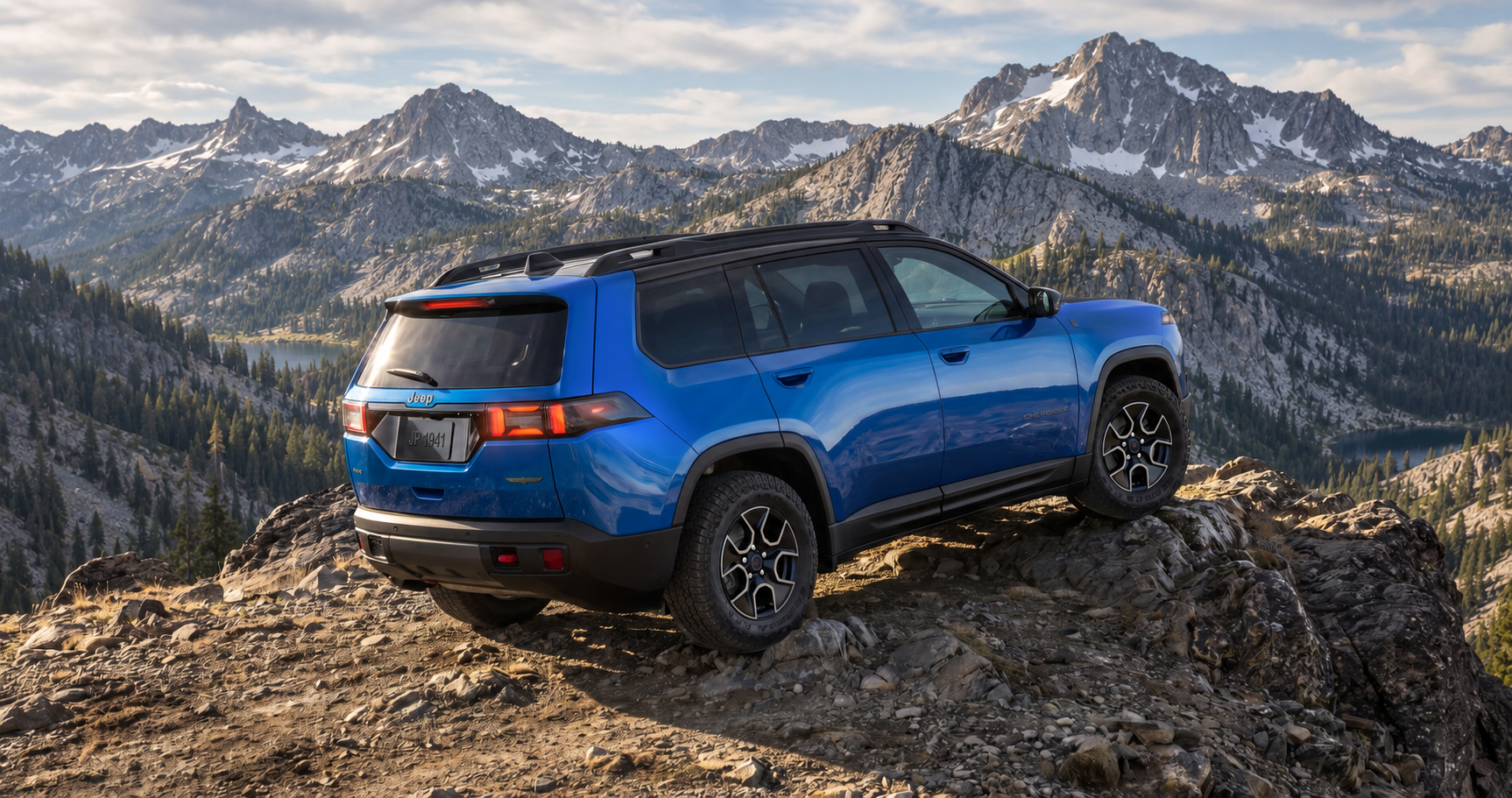
The rear axle locker complements this system. When traction differs between the rear wheels, it helps make use of the wheel that still has grip on the surface. The locker itself does not create traction, however: the result still depends on the tires and the terrain.
A One-Inch Lift: Why Did the Approach Angle Increase More?
The suspension was raised by 25,4 mm, while the approach angle increased by 9,2°. The reason is that Jeep also changed the front and rear sections of the body. When approaching a ledge, both ground clearance and the shape of the overhang ahead of the wheel matter. A tall vehicle with a low-hanging bumper can hit an obstacle sooner than the driver expects.
What Protects the Underbody and Helps the Wheels Find Grip
The Trailhawk gets dedicated spring and damper tuning, 17-inch wheels and Nexen Roadian ATX tires in size 245/65 R17. Steel skid plates protect the front axle, wiring and fuel tank, while a separate plate shields the hybrid battery.
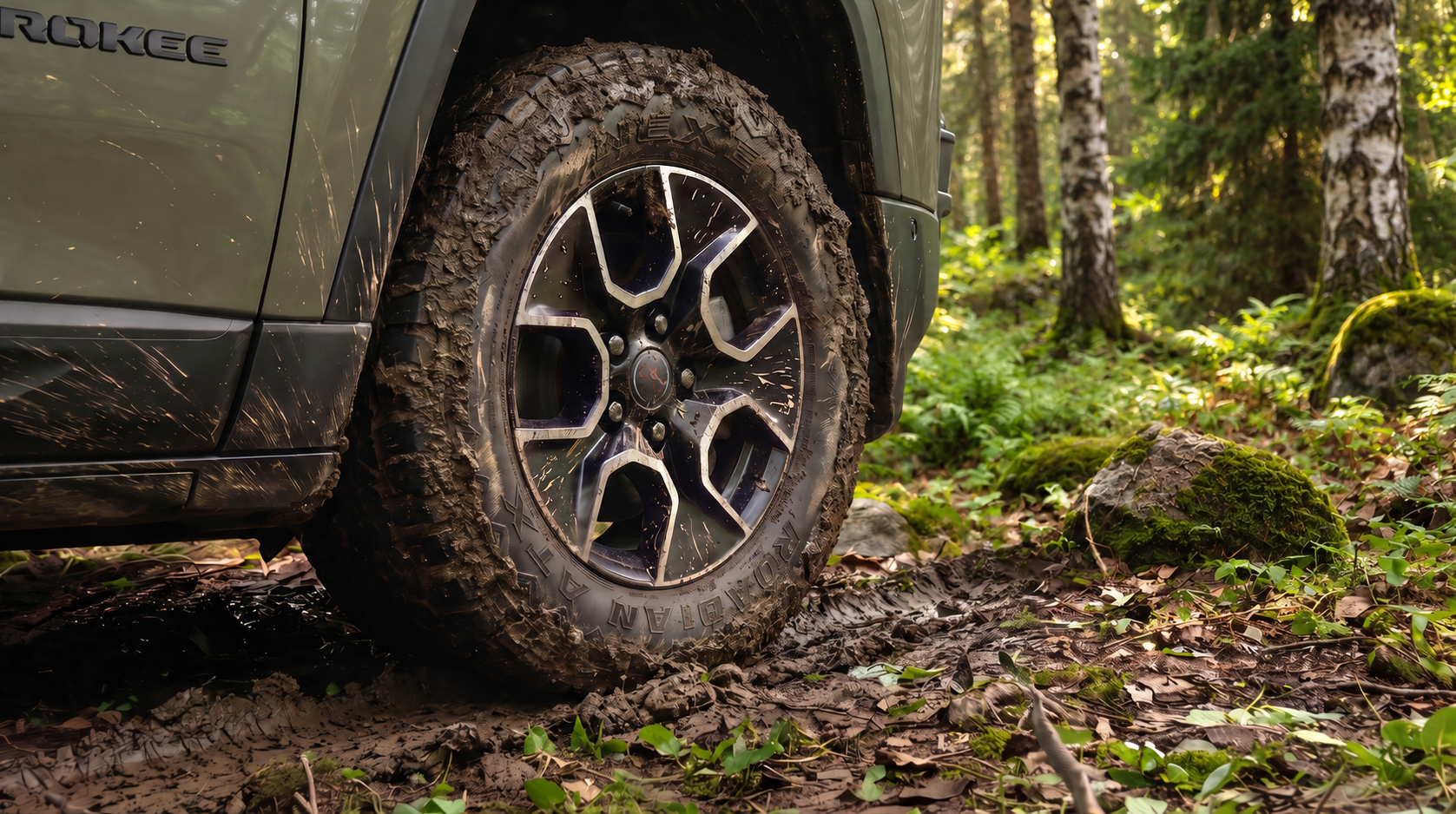
These features serve different purposes. Ground clearance helps the vehicle pass over obstacles. Suspension travel allows the wheels to maintain contact with uneven ground more effectively. Underbody protection reduces the risk of damaging covered components when they contact the terrain. None of these features replaces the others.
On its Trail Rated program page, Jeep lists five testing areas: traction, water fording, maneuverability, articulation and ground clearance. This framework helps explain why off-road capability cannot be judged by ground clearance alone.
What the Claimed 610 mm Water-Fording Depth Means
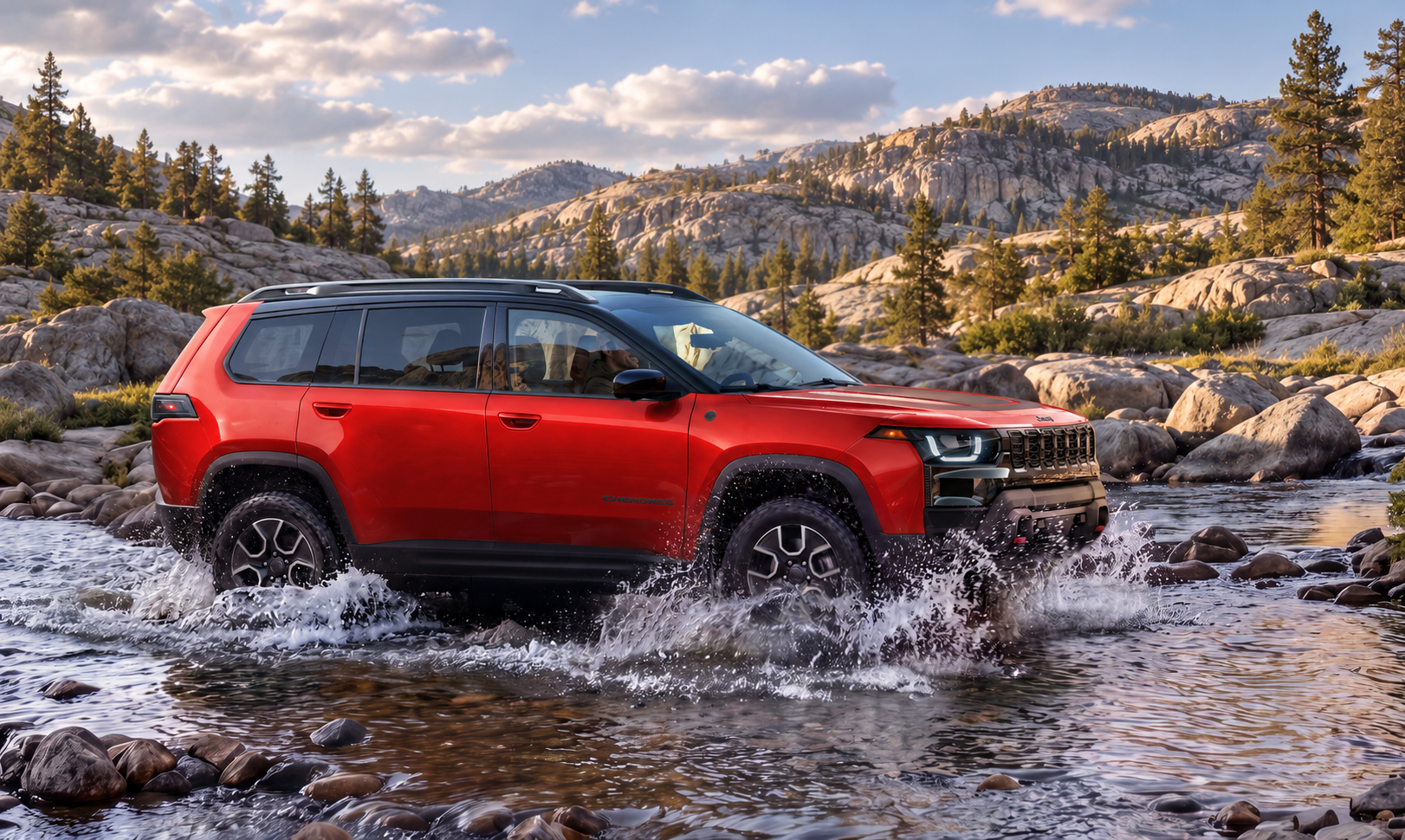
Jeep lists a 24-inch water-fording depth for the Trailhawk — approximately 610 mm. This is a vehicle specification under specified conditions, not permission to drive through water of any depth up to that figure. On the Trail Rated page, the manufacturer says drivers must know the water depth and follow the limitations in the owner’s manual. It also states that damage caused while crossing water may not be covered by the warranty.
The Hybrid Remains, but Claimed Economy Changes
The Trailhawk uses a hybrid powertrain with a 1,6-liter turbocharged engine. Jeep estimates its combined fuel economy at 31 mpg, compared with 37 mpg for the regular Cherokee at the generation’s launch. In more familiar units, that is approximately 7,6 and 6,4 l/100 km respectively; the conversion uses the U.S. gallon.
Both figures are manufacturer estimates. They provide a basis for comparison but do not guarantee that fuel consumption on a trip will match them. The additional off-road equipment also means fuel economy cannot be judged solely by engine output.
Orders Are Open, but Production Is Still Ahead
In its September 30, 2026, release, Stellantis announced that orders were open and listed a U.S. starting price of $44,625, including $1,995 for vehicle delivery to the dealer. Production at the plant in Toluca, Mexico, is scheduled to begin by the end of 2026. The announcement did not give an exact launch date or delivery timelines for other countries.
When choosing a Cherokee, it is worth looking at the complete equipment package of the specific version. For regular trips over rocks and difficult terrain, the Trailhawk’s differences are significant: low-range gearing, the axle locker, revised overhangs and underbody protection each address a different challenge. If most journeys are on paved roads, consider separately how often this equipment will be needed and whether the fuel economy suits your use.