 EN
EN

Frequently asked questions
No. It is a one-off Sur Mesure project based on the open-top W16 Mistral, focused on bespoke design and materials rather than different output or a new powertrain.
Real KPM Berlin porcelain is used for exterior elements such as the EB emblem, filler caps and engine-cover inserts, and for interior parts including speaker trim, gear-selector housings, an armrest insert and window-switch buttons.
The article says it has no separate engine, different suspension or new chassis setup. It retains the Mistral’s 8.0-liter quad-turbo W16 producing 1,600 hp.
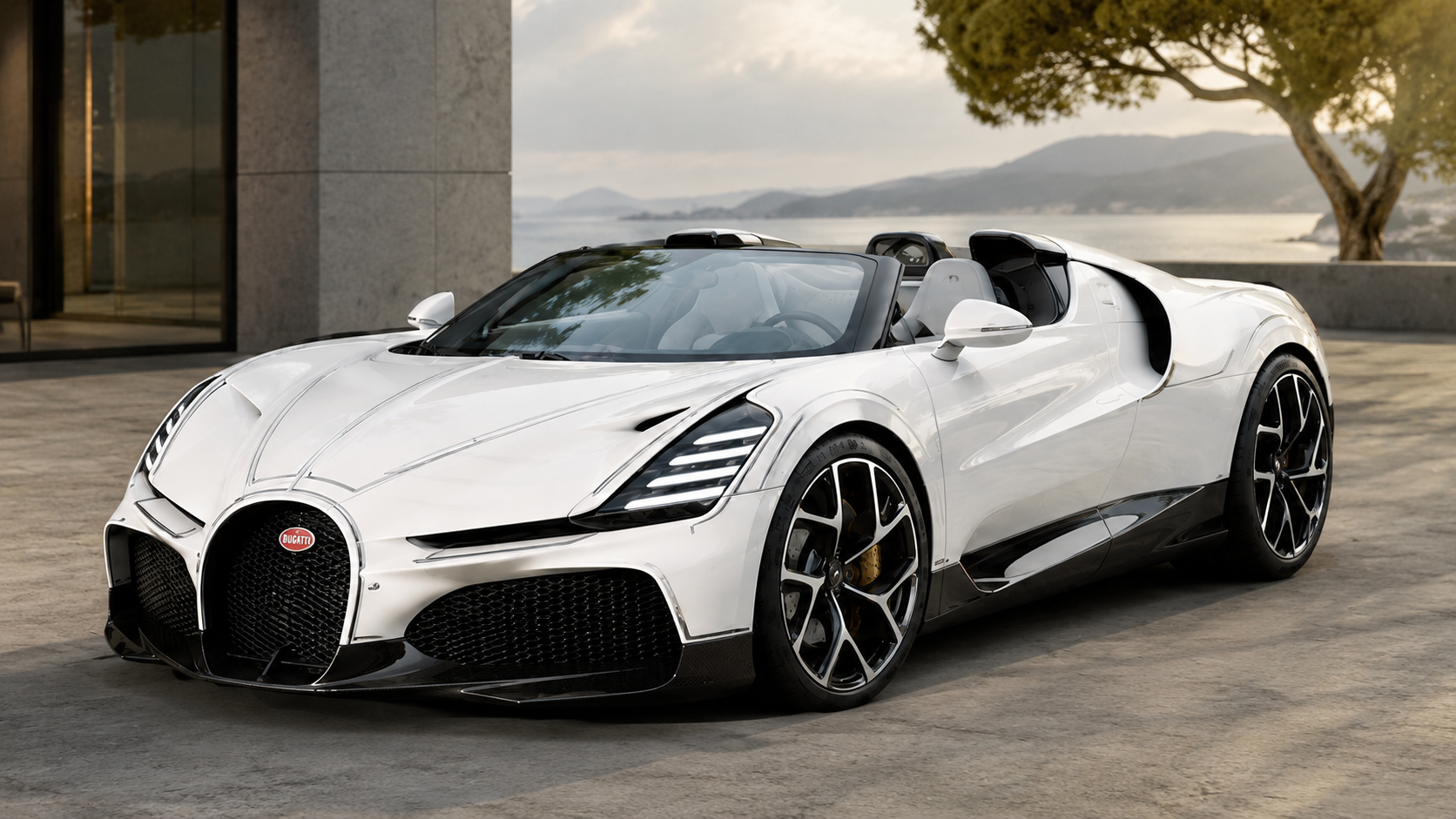
On July 1, 2026, Bugatti unveiled the W16 Mistral Blanc Éternel, a one-off roadster created through the Sur Mesure program together with Berlin porcelain manufacturer KPM. This is not a new production version of the Mistral or a technical update: the point of the project is the material, the graphics and the handcraft with which Bugatti closes the road-going chapter of the W16 engine.
From the outside, Blanc Éternel looks almost monochrome: the white body is crossed by thin black lines. But this is not just decoration. They echo the digital structure of the surfaces from which the designers built the car’s shape. Inside and on the body, real porcelain details have appeared, from emblems and covers to window switch buttons and parts of the gear selector.
Blanc Éternel in three questions
Is this a new W16 Mistral version?
No. Blanc Éternel is a one-off created under Bugatti’s Sur Mesure program based on the open-top W16 Mistral. Technically, it is not a separate variant with different output or a different powertrain, but a bespoke project focused on design and materials.
What has changed?
The body received a white finish with thin black graphics that follow the car’s digital surface structure. Real KPM Berlin porcelain pieces have been added to the exterior and interior: emblems, covers, controls and decorative inserts.
Why did Bugatti choose the Mistral?
The W16 Mistral is the marque’s final road car with the W16 engine. That is why Blanc Éternel is not trying to set a new record or introduce new technology. It is one of the last bespoke projects on the W16 platform, where Bugatti puts the emphasis on handcraft and unusual materials.
The continuation of a story that began 15 years ago
Blanc Éternel did not come out of nowhere. About 15 years ago, Bugatti and KPM had already worked together on the Veyron Grand Sport L’Or Blanc, a car inspired by white porcelain and blue lines on ceramic. In the new project, Bugatti did not simply recreate the old pattern. Instead, the designers took the idea of a pure surface and translated it into the language of digital modeling.
The official Bugatti release on the W16 Mistral Blanc Éternel explains the link directly: the roadster is a new interpretation of the collaboration with KPM and, at the same time, the brand’s farewell to the era of road-going W16s.
The body as a digital model blueprint
The graphic is not based on a drawing-style effect, but on the actual way the designers work. The shape of the W16 Mistral was created in a digital environment using NURBS surfaces - mathematically defined sections that together form the body volume. Normally, only the development team sees their boundaries. On Blanc Éternel, they have been brought to the surface as thin black lines.
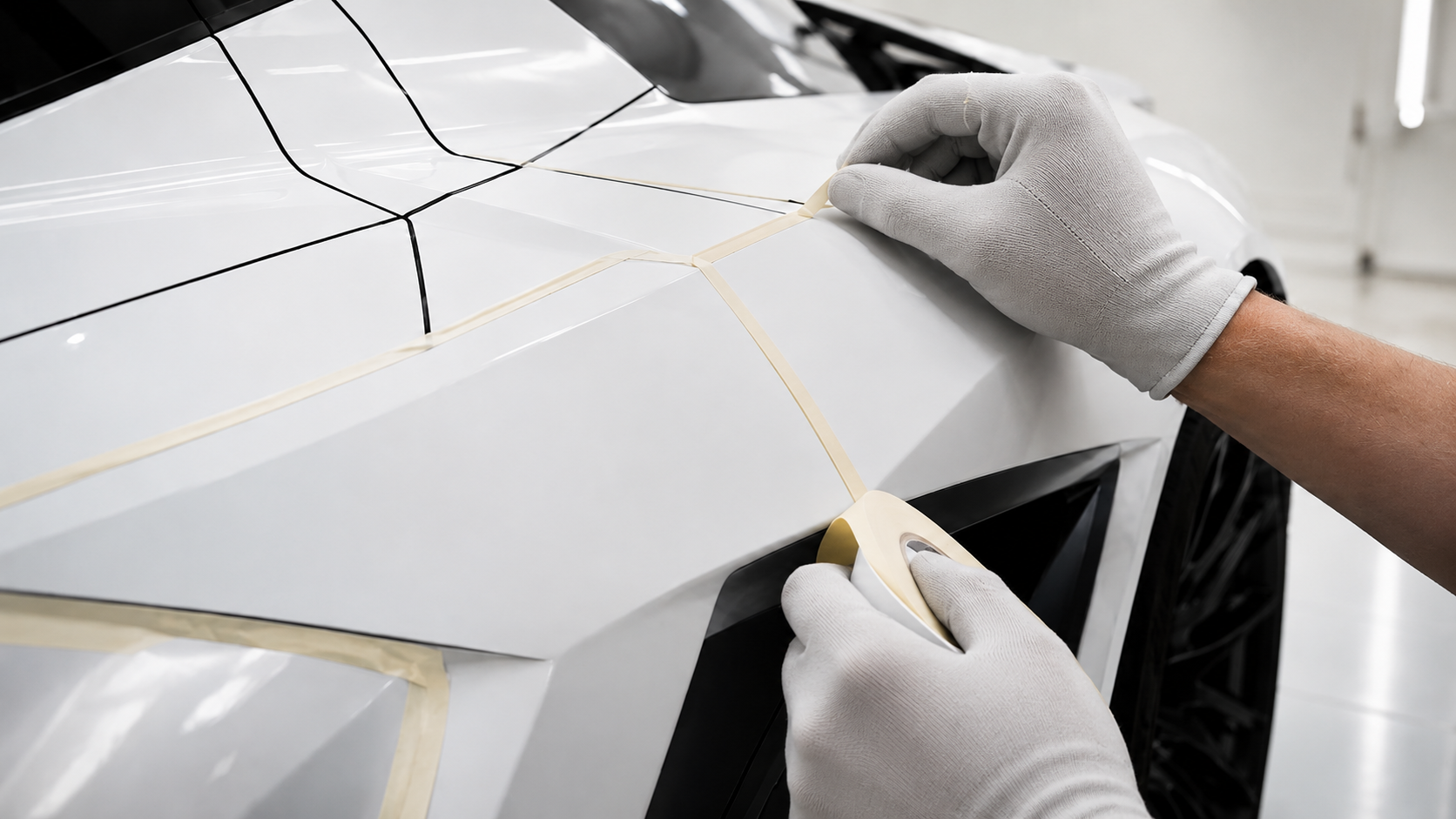
The digital origin of the graphic did not make it “computer-made” in production. After the body was painted pure white, craftsmen marked out the lines by hand with tape, masked the surrounding surfaces and then painted the exposed areas black. That is why the pattern does not look like a layer applied on top of the body: it follows the grille, the fender line, the brand’s signature C-line and the air intakes.
What is new in Blanc Éternel, and what stayed the same
What is new in this car
White graphics built on the digital structure of the body; porcelain inserts in the exterior and interior; a special process for applying the pattern to white leather.
The base remains the Mistral
This is not a separate model or a new power version. Blanc Éternel is built on the W16 Mistral, the roadster Bugatti calls the final road-going expression of the W16.
The porcelain is not just for display
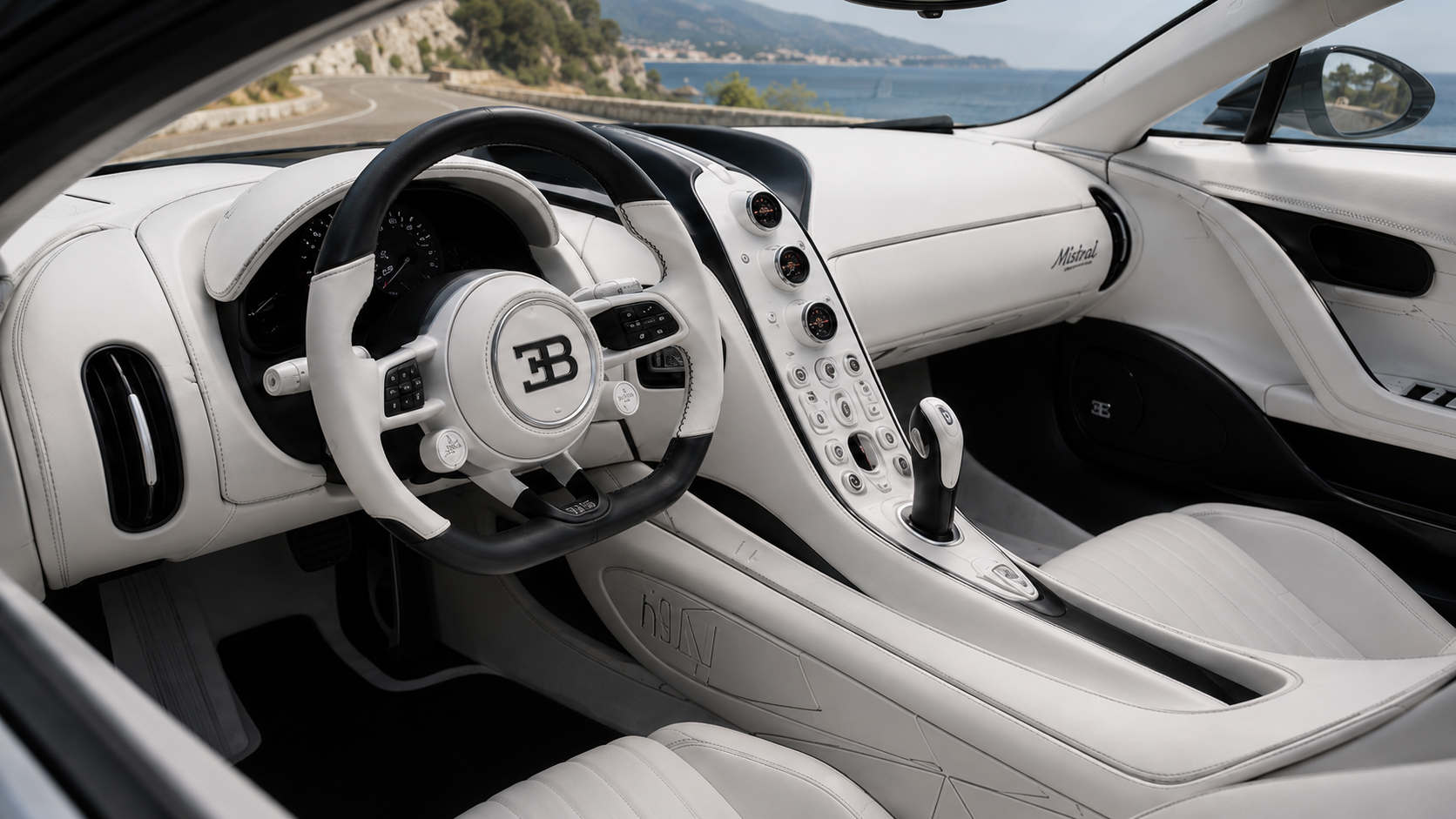
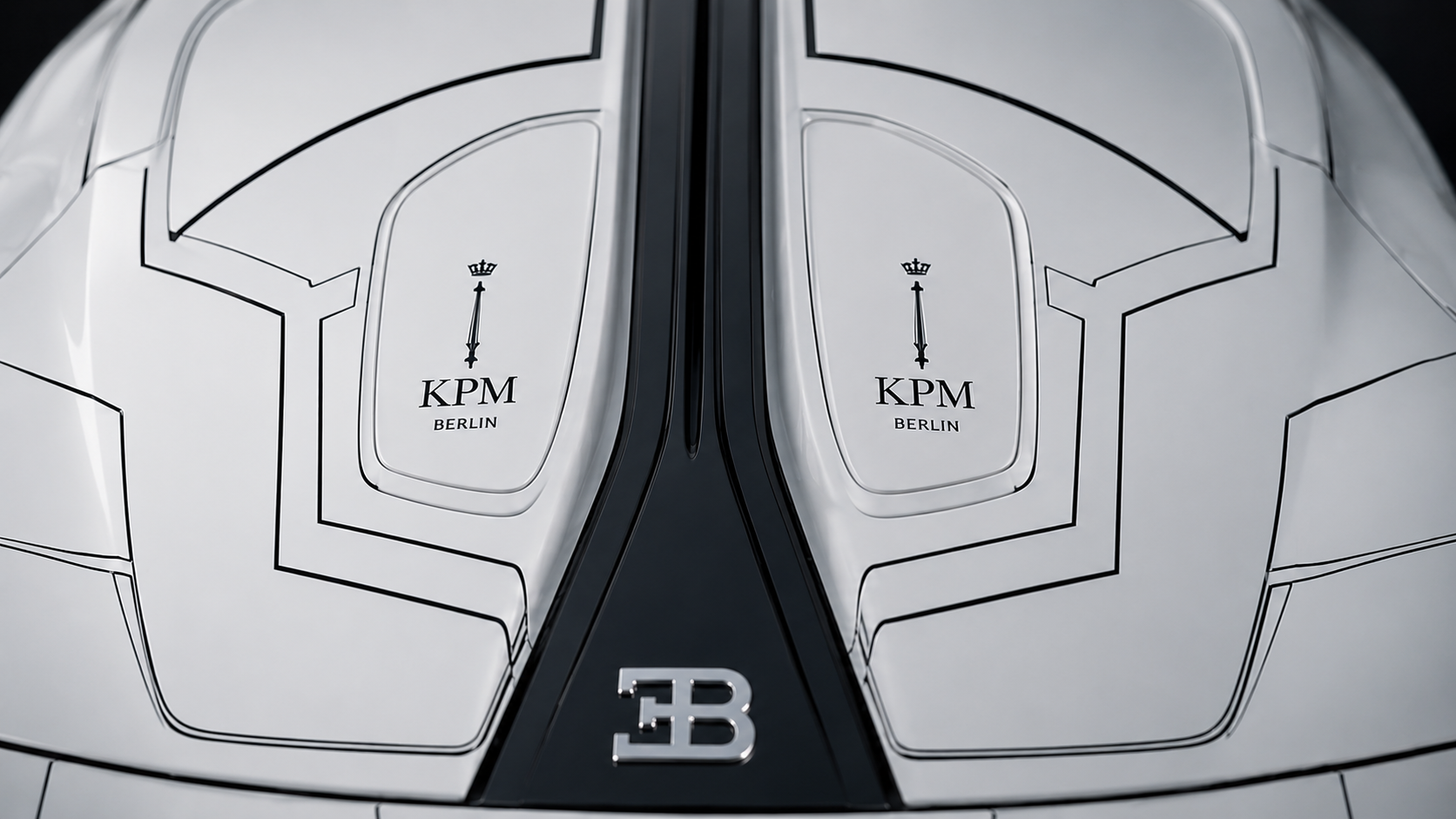
The most unusual part of the project is the real porcelain elements. On the outside, they finish the EB emblem, the fuel and oil filler caps, as well as two inserts on the engine cover with the signature KPM Berlin scepter. Inside, porcelain is used for the speaker trim, two knee inserts, the gear selector housings, the center-console armrest insert and the window switch buttons.
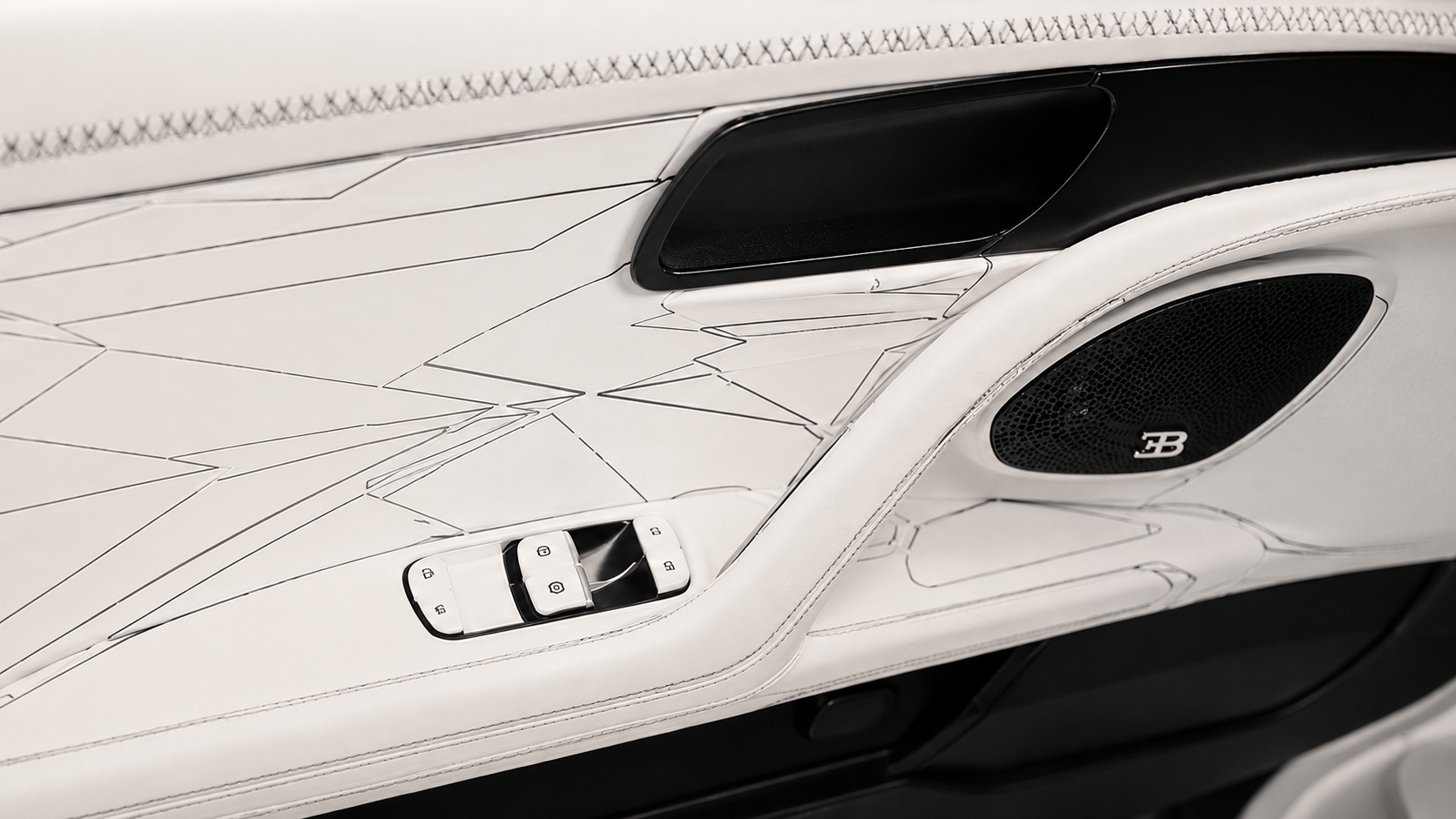
Using such a material in a car requires separate engineering work. After firing, porcelain shrinks by about 17%, so the final size of the part has to be calculated before the initial form is even made. In Blanc Éternel, that matters especially: the pieces have to fit precisely into the body panels and controls, not exist as separate souvenirs.
The partnership extended beyond the car itself. KPM released the project-themed Blanc Éternel porcelain collection with the To-Drive cup and the Aviator Cup in two sizes. Each item is limited to 1,000 handcrafted examples.
Video: in Bugatti’s official clip, you can take a closer look at the body lines, the porcelain details and the process of integrating them into the interior. Watch the Bugatti W16 Mistral Blanc Éternel video on YouTube.
What remains from the original W16 Mistral
Blanc Éternel did not receive a separate engine, different suspension or a new chassis setup. At its core remains the W16 Mistral with an 8.0-liter quad-turbo W16 producing 1,600 hp. This is the version Bugatti calls the final road-going expression of the W16 engine.
In total, Bugatti planned 99 W16 Mistral examples, and the entire run was sold before deliveries even began. In 2024, the model set a speed record for open-top cars at 453.91 km/h. Against that backdrop, Blanc Éternel matters not for new performance, but because it turns an already extremely rare hypercar into a one-off car with its own material language and graphics.
Why the Mistral
The W16 Mistral already holds a special place in the brand’s history: it is an open car and Bugatti’s final road model with the legendary W16. Blanc Éternel uses that status not to chase another record, but to show another side of the car - its use of materials and bespoke craftsmanship.
That is why the project is not just a white body with contrasting graphics. Here, the digital model design, hand-applied paintwork and porcelain craftsmanship all serve one idea: to reveal the car’s internal geometry and make the material part of the experience with it. In Blanc Éternel, porcelain is not imitated - it is genuinely touched when changing gears, opening a window or getting into the cabin.
The bottom line
The Bugatti W16 Mistral Blanc Éternel is not a new modification, but a one-off Sur Mesure creation unveiled on July 1, 2026. Its value lies not in new power figures, but in the way the brand brought together the final road-going W16 platform, digital graphics and real KPM porcelain. For Bugatti, it is both a continuation of the L’Or Blanc story and one of the most unusual final accents of the W16 era.