 EN
EN

Frequently asked questions
Its shifter and clutch pedal send electronic commands rather than mechanically controlling the gearbox. The car uses an eight-speed dual-clutch automated transmission with clutch-by-wire and shift-by-wire systems.
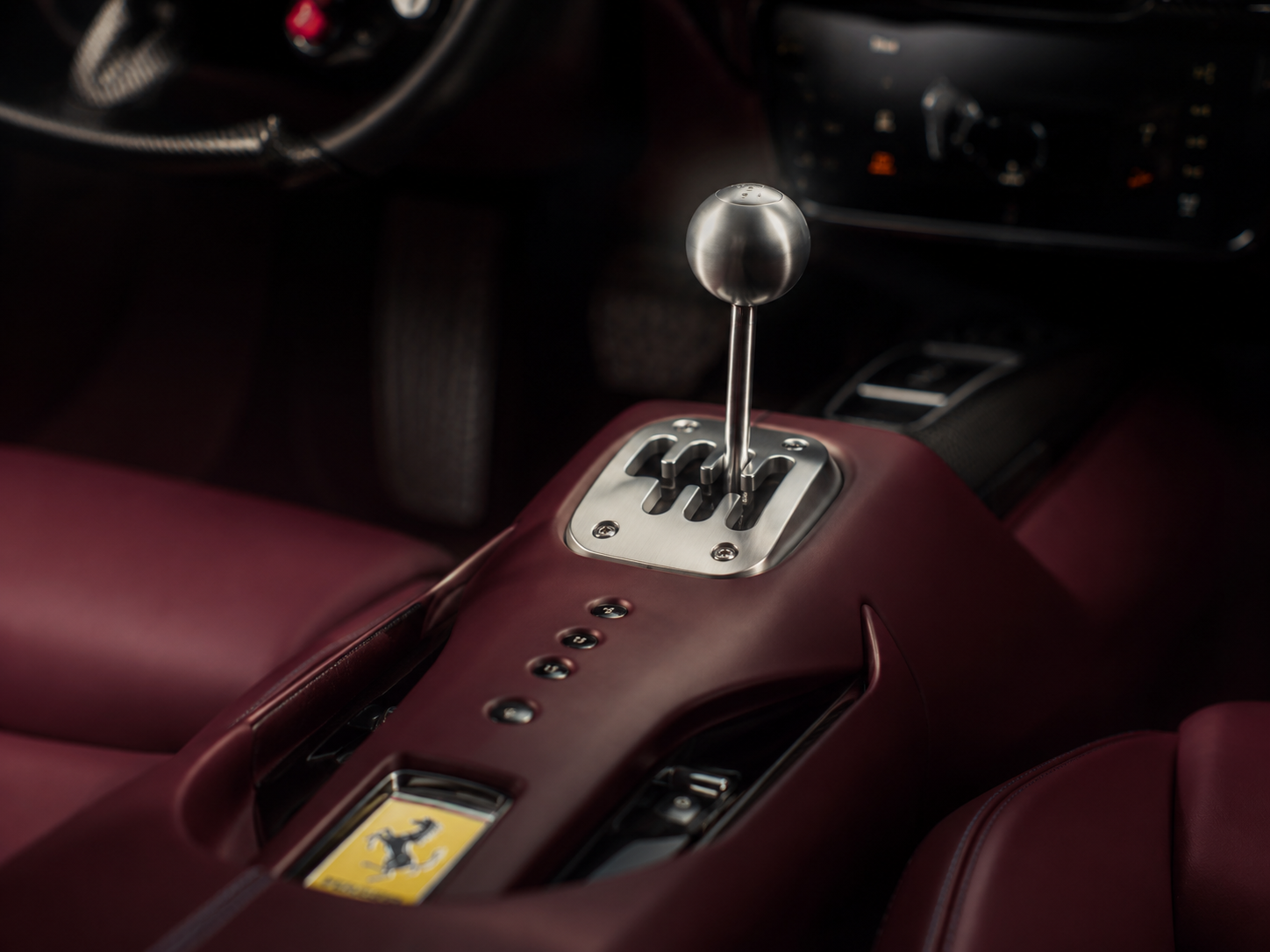
In manual mode, the driver uses the clutch pedal and open H-pattern shifter to select gears one through six. Electronics control the DCT clutches and engine-speed matching, while seventh and eighth gears are available only in automatic mode.
Yes. Ferrari designed the clutch pedal to imitate a bite point, so releasing it too abruptly can stall the engine, even though the transmission remains a modern electronically controlled DCT.
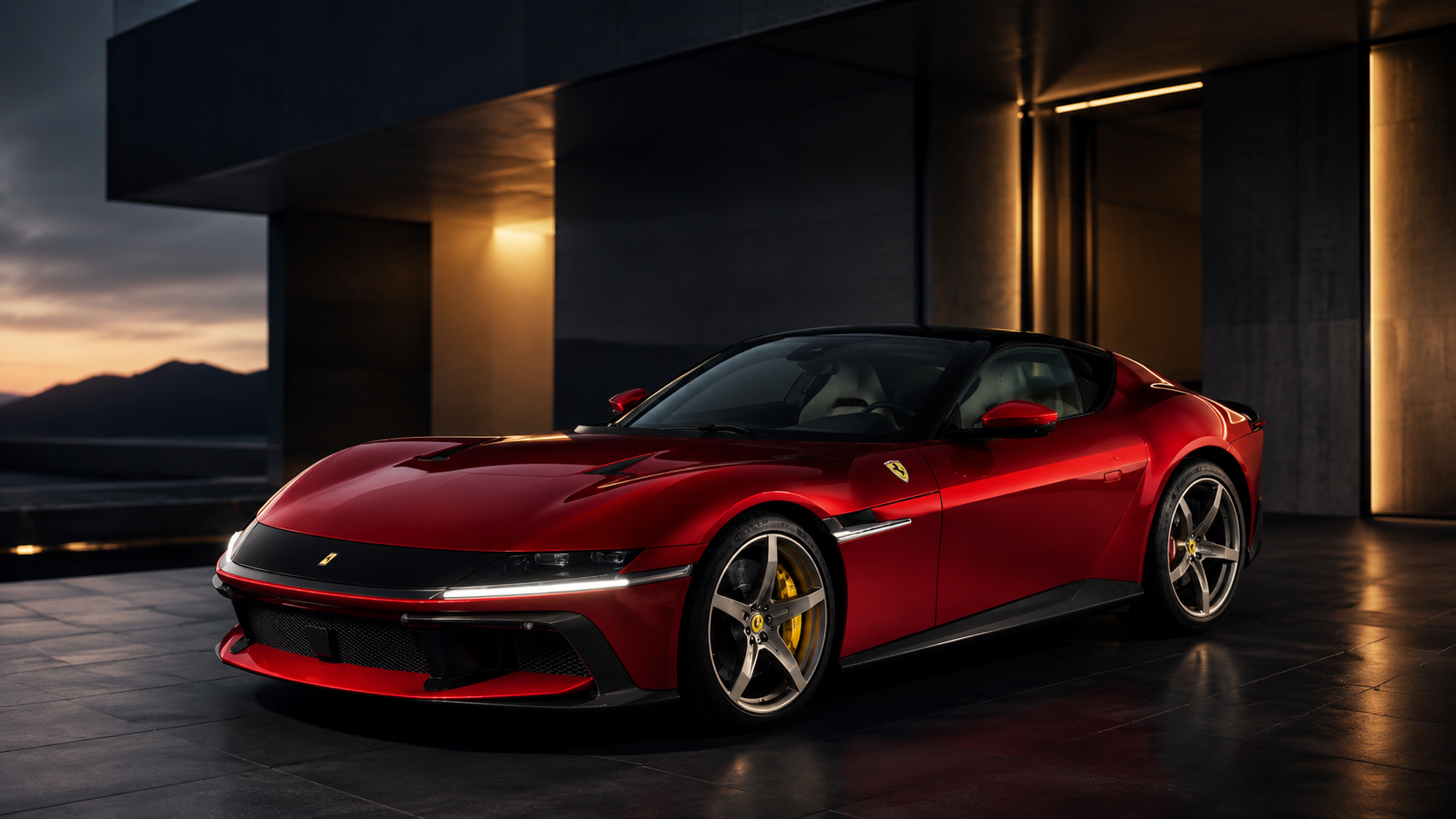
On 03.07.2026, Ferrari unveiled the 12Cilindri Manuale - a limited V12 grand tourer with a third pedal and an open H-pattern shifter. Visually and in feel, it is an attempt to bring back the ritual of a classic Ferrari with a manual gearbox. But in technical terms, this is not a traditional manual: there is no direct mechanical connection between the driver's hand, the clutch pedal and the transmission.
For Ferrari, this is more than a design nod to older models. The 12Cilindri Manuale is the first car from Maranello with an open H-pattern gate since Ferrari ended production of the Ferrari 599 GTB Fiorano in 2012. The feel of a Ferrari V12 with a manual gearbox was the benchmark for developing the new system.
Ferrari calls the system Manuale by Wire. The lever and pedal send electronic commands, and those commands are executed by an eight-speed dual-clutch automated gearbox. In manual mode, the driver has access to six gears laid out in a familiar H pattern; seventh and eighth are available only in automatic mode.
What exactly is fitted in the Ferrari 12Cilindri Manuale
Element | How it is implemented | What it means for the driver |
Base transmission | Eight-speed DCT with two clutches | Torque delivery is handled by automated mechanisms, not a conventional manual gearbox |
Manual mode | Six gears in an H-pattern layout | You can select gears 1-6 yourself using the shifter and clutch pedal |
Clutch pedal | Clutch-by-wire with sensors and electronic control | The pedal creates resistance and lets you modulate take-off, but it is not mechanically linked to the gearbox |
Seventh and eighth gears | Available in automatic mode | For relaxed driving and high speed, the car returns to DCT logic |
Paddle shifters | Not provided | Ferrari has left the driver with only the lever and the pedal as the main manual controls |
How Manuale by Wire works
Here, the shifter does not move rods and shift forks the way a classic manual gearbox does. Sensors read its position, after which the electronics send a command to the transmission. The pedal works the same way: it does not act on the clutch directly, but tells the system how far the driver has pressed it.
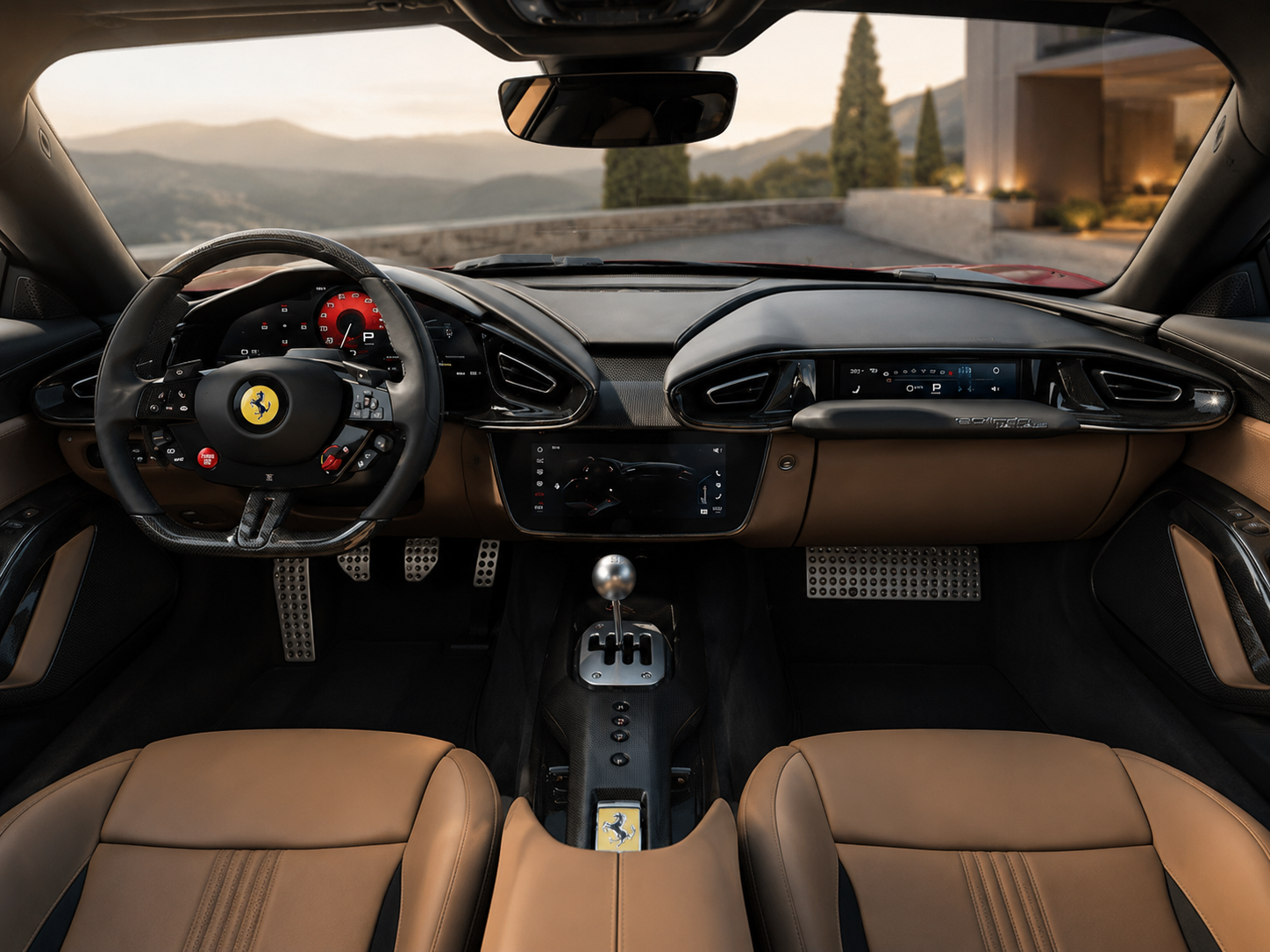
Ferrari did not stop at a simple electronic selector. The lever uses mechanical elements that create effort and define the detents between positions. The pedal is also calibrated so the driver can feel the clutch engagement point. The goal of the system is to recreate the driver's physical involvement, not just add a decorative lever to an automatic.
Manual mode is activated by pressing the clutch pedal at speeds of around 100 km/h or below. After that, the driver can select the first six gears through the H-pattern shifter. To move into seventh or eighth, you need to press the D button on the centre tunnel: the car leaves manual mode and goes back to automatic operation.
The 12Cilindri Manuale has no paddle shifters. Ferrari deliberately kept only two familiar controls - the clutch pedal and the lever in the open gate.
The driver selects one of six gears, while the electronics control the DCT clutches and match engine speed. To move to seventh and eighth, you need to engage automatic mode with the button on the centre tunnel. On the official 12Cilindri Manuale page, Ferrari describes this architecture directly as a combination of manual shift-by-wire and clutch-by-wire.
Can you stall a Ferrari with a “virtual manual”
Yes, and that is part of Ferrari's idea. The clutch pedal has a position sensor that helps the system imitate the bite point. If the pedal is released too abruptly, the engine can stall - just like in a car with a conventional manual gearbox.
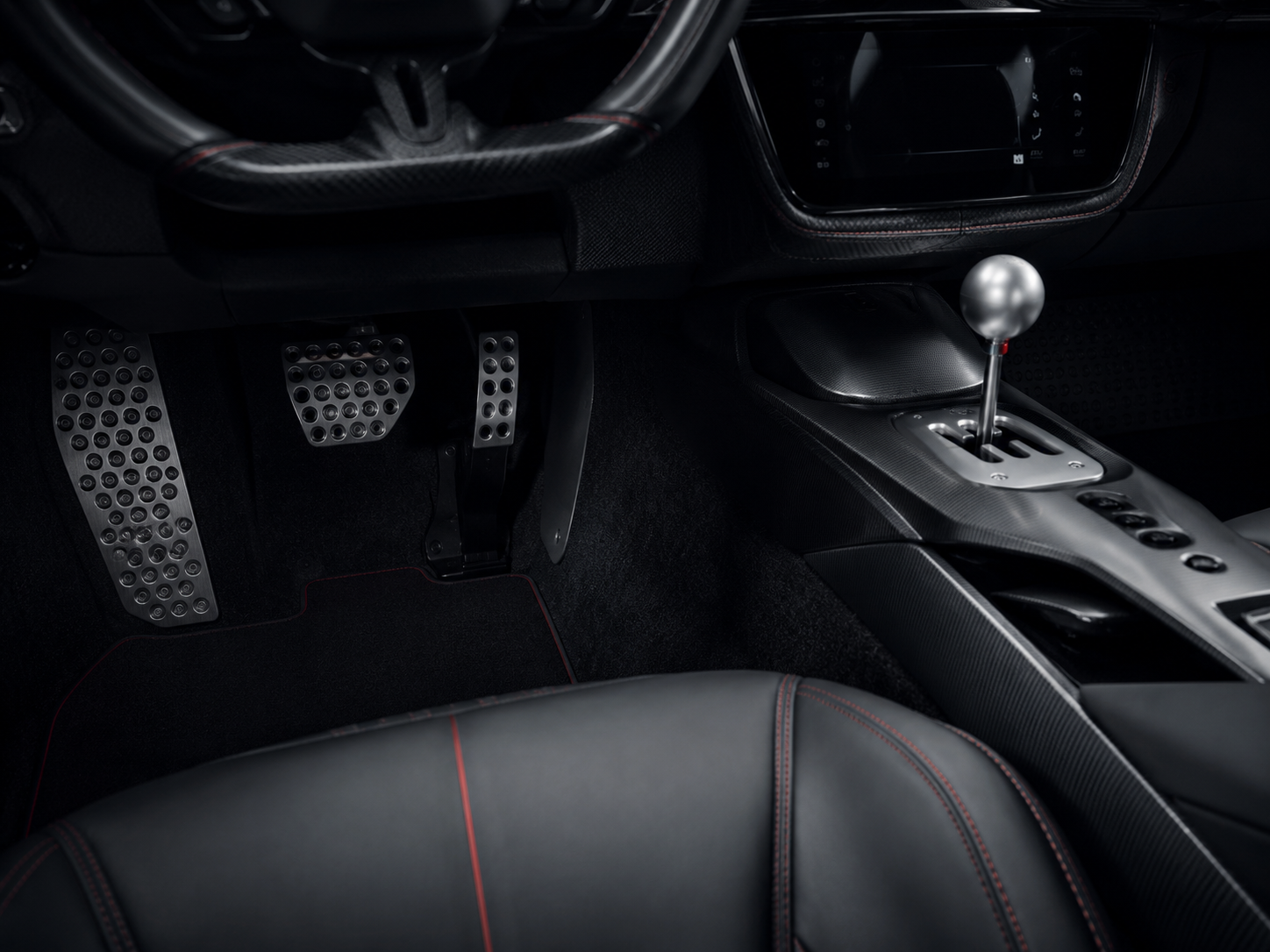
At the same time, the car does not become a fully analog machine. The electronics continue to control the two clutches and match the V12's revs to the selected gear. The driver is allowed to make mistakes in the actions that create the feeling of manual control, but the transmission remains a modern DCT.
Why this is not an ordinary manual gearbox
In a traditional manual transmission, the driver physically controls the clutch and gear selection through the pedal and shifter. In the Ferrari 12Cilindri Manuale, those actions pass through an electronic layer: the system interprets the input and only then actuates the transmission.
That leads to two key differences. First, the car can protect the hardware from incorrect inputs: the electronics should not allow an unsuitable gear to be engaged at dangerous revs. Second, the feel of a “live” manual gearbox is created by the pedal effort, sensors and software. Even the ability to stall the engine through clumsy pedal work is part of the system's built-in logic, not a direct mechanical link between the pedal and the clutch.
That is why Manuale by Wire is more accurately described not as the return of an old gearbox, but as a new control interface for a modern DCT. It preserves the familiar sequence of actions: press the pedal, guide the lever through the gate, feel the resistance, release the pedal and modulate the pull. But technically, the command travels by wire.
What remains of the standard Ferrari 12Cilindri
The model still starts with a front-engine coupe and a naturally aspirated 6.5-litre V12. Ferrari claims 830 cv at 9,250 rpm, 678 Nm at 7,250 rpm and a 9,500 rpm redline. These figures match the standard model specifications published on the official Ferrari 12Cilindri page.
Manuale is not about extra power. The point of the version is a different way of interacting with the car. In the regular 12Cilindri, the driver mainly controls the DCT through electronics and paddle shifters; in the Manuale, they are invited to work the drivetrain more slowly and deliberately, even though the transmission itself remains automated.
Production run, price and delivery timing
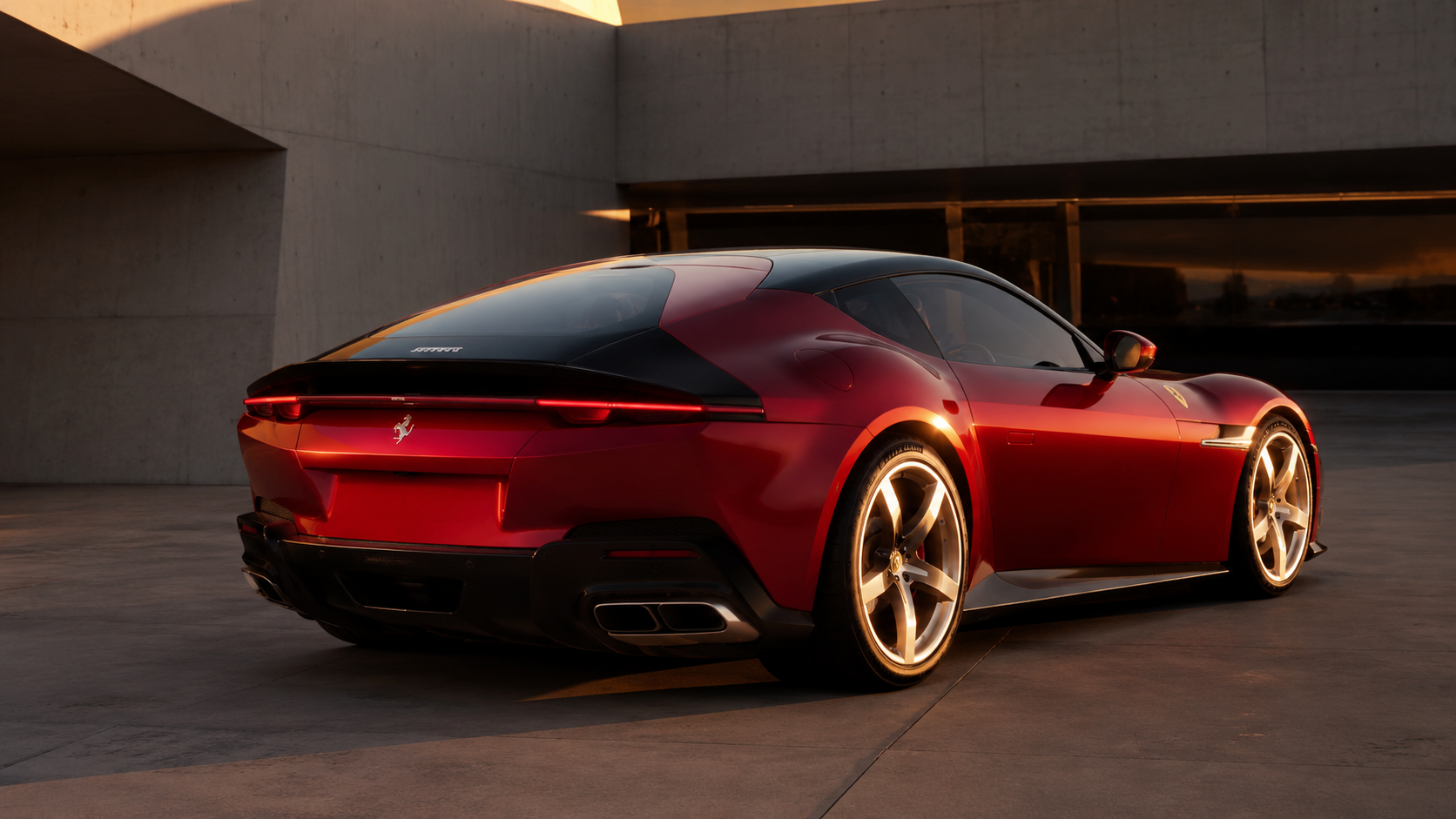
Ferrari will build only 1,499 examples of the 12Cilindri Manuale, and the series will be available exclusively as a coupe. The starting price in Italy is 590,000 euros, excluding individual options and local taxes.
Ferrari plans to begin first customer deliveries in the first quarter of 2027. For a car like this, the price matters as more than just a reference point: the Manuale was not created as a new mass-market version of the 12Cilindri, but as a limited series for buyers who value a V12, three pedals and the physical process of shifting gears.
Why this difference matters
For a Ferrari 12Cilindri Manuale buyer, it is important not to confuse the visual image with the construction. The open gate and three pedals do not turn the car into a classic manual. This is a limited run of 1,499 cars in which Ferrari combines a naturally aspirated V12, a modern DCT and an interface inspired by earlier models from the brand.
The Ferrari 12Cilindri Manuale does not bring back the classic manual gearbox in the literal sense. It brings back the sequence of actions: press the pedal, choose the gear by hand, feel the lever's resistance and control the take-off yourself.
All of that tactile feel is built on top of a digital transmission. So Manuale by Wire is not an attempt to abandon technology, but a way to make a modern DCT more engaging for the driver.