
Frequently asked questions
The European launch version uses 3.0-liter diesel V6 engines rated at 245 or 299 hp, while the U.S. 2027 Q7 is presented with a 2.9-liter gasoline turbo V6 producing 429 hp. Seating also differs: five seats are standard in Europe, while seven seats are standard in the U.S.
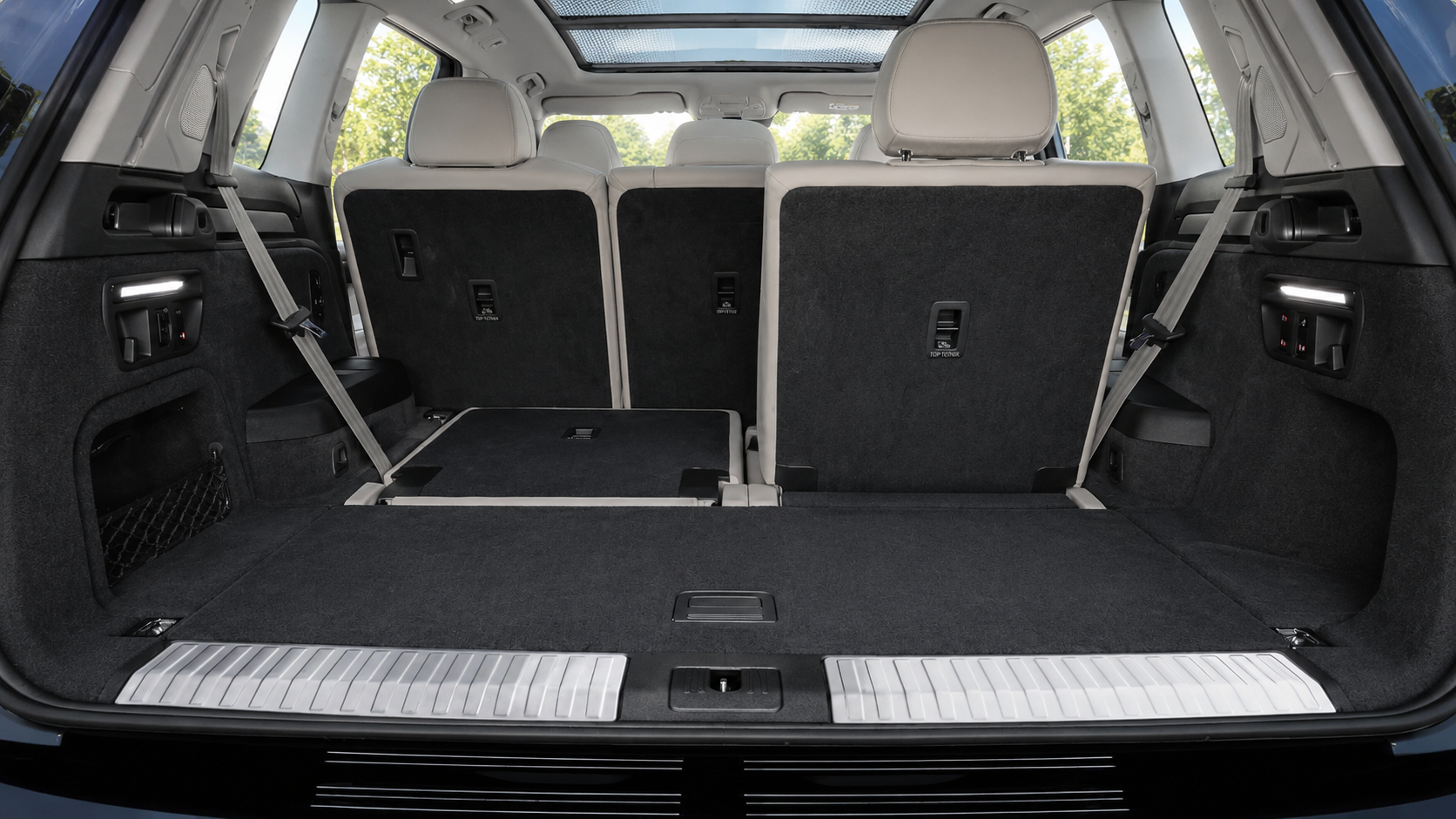
The European Q7 has five seats as standard, with optional six-seat or seven-seat layouts. The five-seat version offers up to 806 liters of cargo space, or up to 2,075 liters with the second row folded. The seven-seat version offers up to 722 liters behind the second row and up to 1,980 liters behind the first.
No. The European diesel figures of 7.1–8.0 liters/100 km use the WLTP cycle, while U.S. figures use EPA methods. The engines are also different, and the official U.S. model page does not yet list an EPA rating.
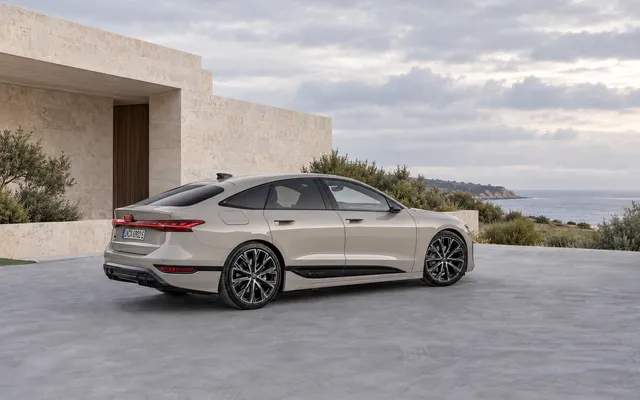
Audi has introduced the third generation of the Q7. Externally, it is still a large premium SUV with three rows, but inside and under the skin the model has changed noticeably: new seating options, digital lighting, expanded parking functions and a redesigned cabin have arrived. However, early reports about the Q7 can be misleading: the European and American cars do not match in engines, basic layout or how their specs are presented.
For Germany, Audi has announced diesel V6 engines with a mild-hybrid system, while in the U.S. the new Q7 is presented as a 2027 model-year gasoline version with a 2,9-liter turbo V6. So power figures, fuel economy, equipment and price cannot be carried over from one market to another without checking the local version.
What changed in the third Audi Q7
The new Q7 is once again built in Bratislava, where the previous two generations were also assembled. Audi has kept the model’s familiar idea: a car meant to combine long-distance travel, family duties and everyday use. At the same time, the third generation has a different cabin layout and a broader set of digital features.
In the European specification, the default layout remains five seats. For an extra charge, six seats are available with two separate second-row chairs, or seven seats with a three-seat bench. In the latter setup, Audi says it is possible to fit three child seats side by side in the second row. All seats have power adjustment.
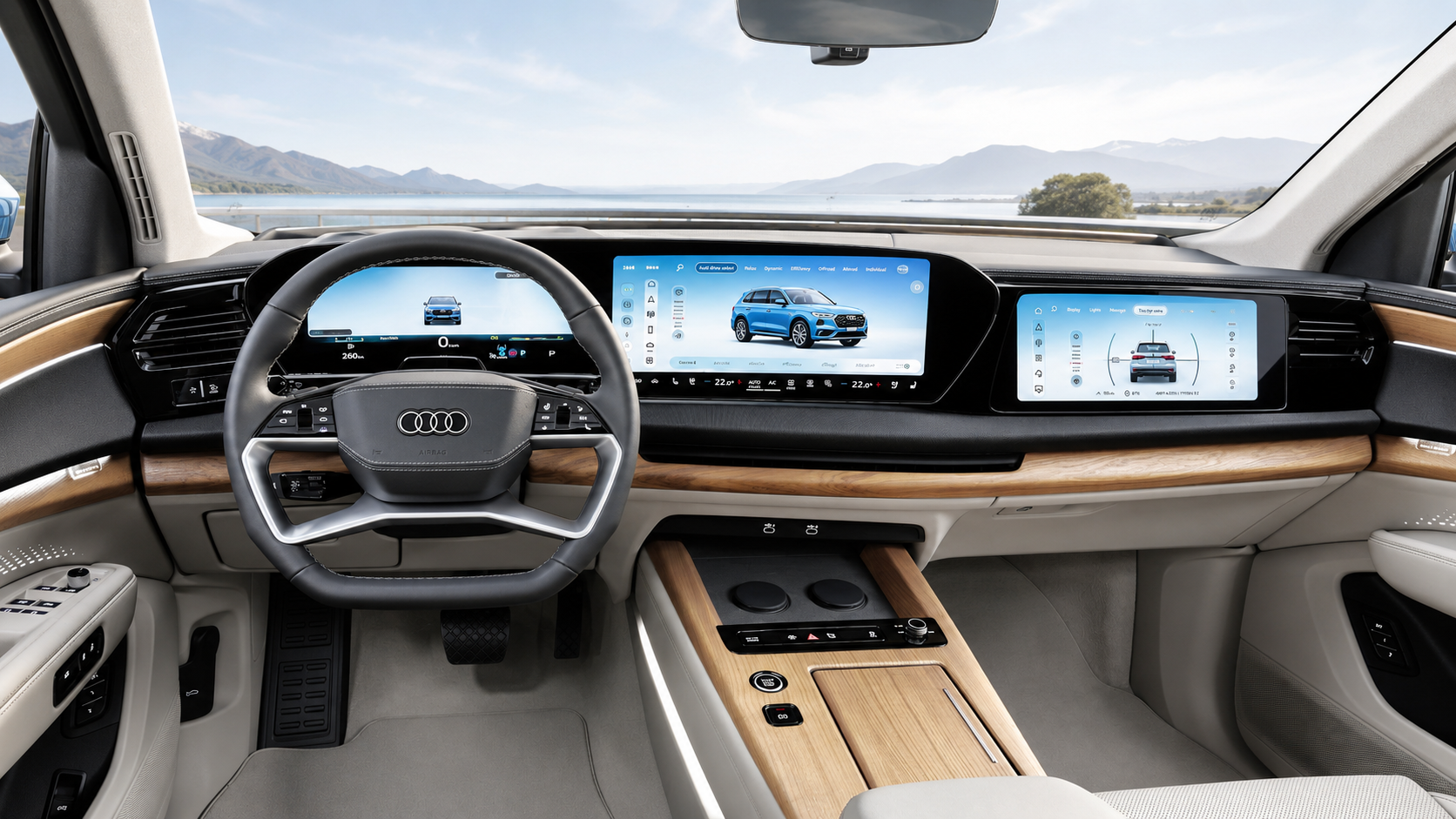
The updated interior gets the Audi MMI panoramic display, a new center tunnel with space for two smartphones with Qi2.2 wireless charging and large cupholders. Higher trims offer a panoramic roof with adjustable transparency. Audi shared details on the European version in the official press release for the new Q7.
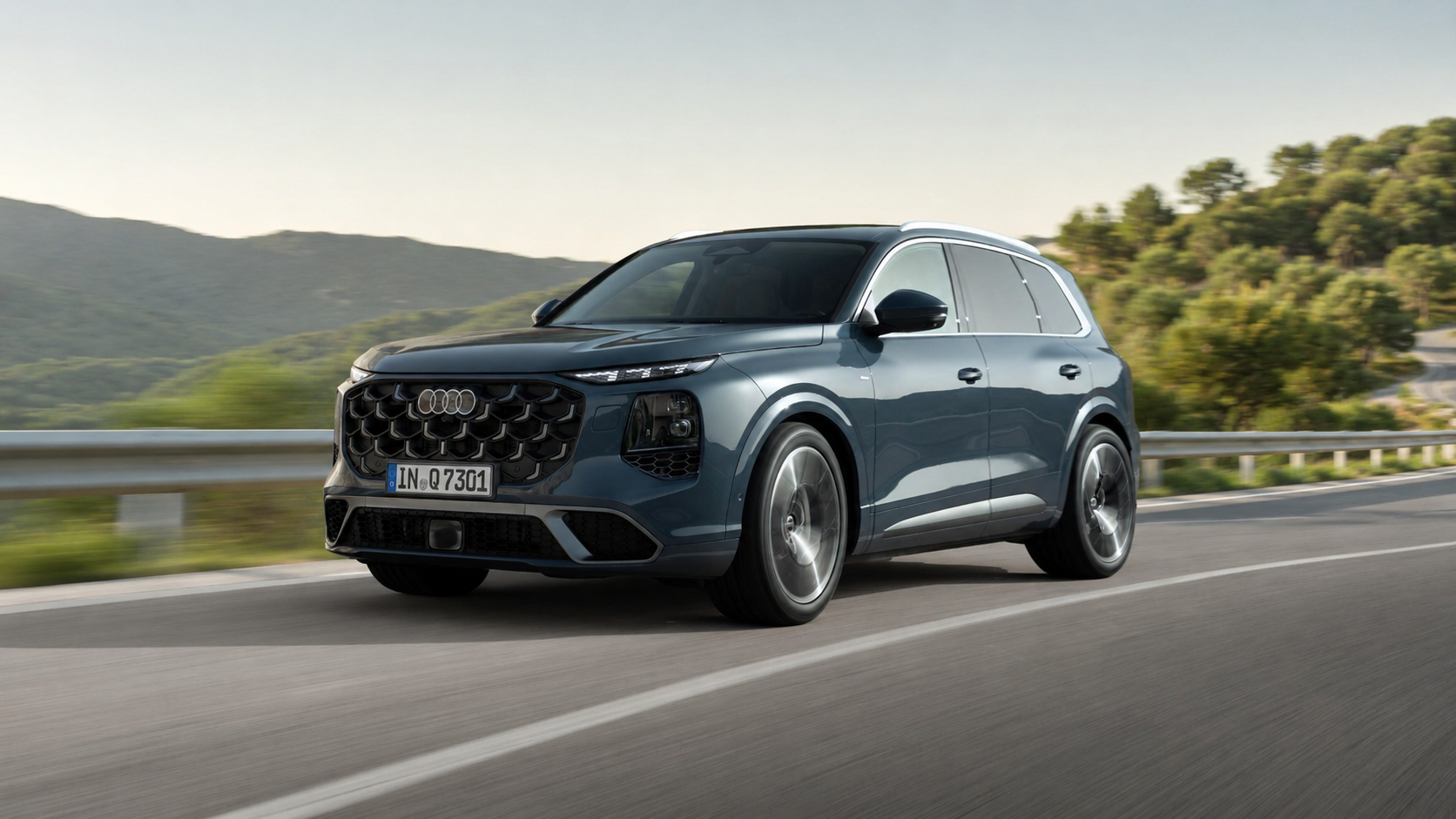
The main technical highlight on the outside is the available digital Matrix LED headlights with micro-LED modules and third-generation digital OLED taillights. They support different light signatures and can work together with the driver-assistance systems. For example, the turn signals can project a light signal onto the road after dark. This is not a decorative detail, but part of a new logic linking lighting and driver assistance systems.
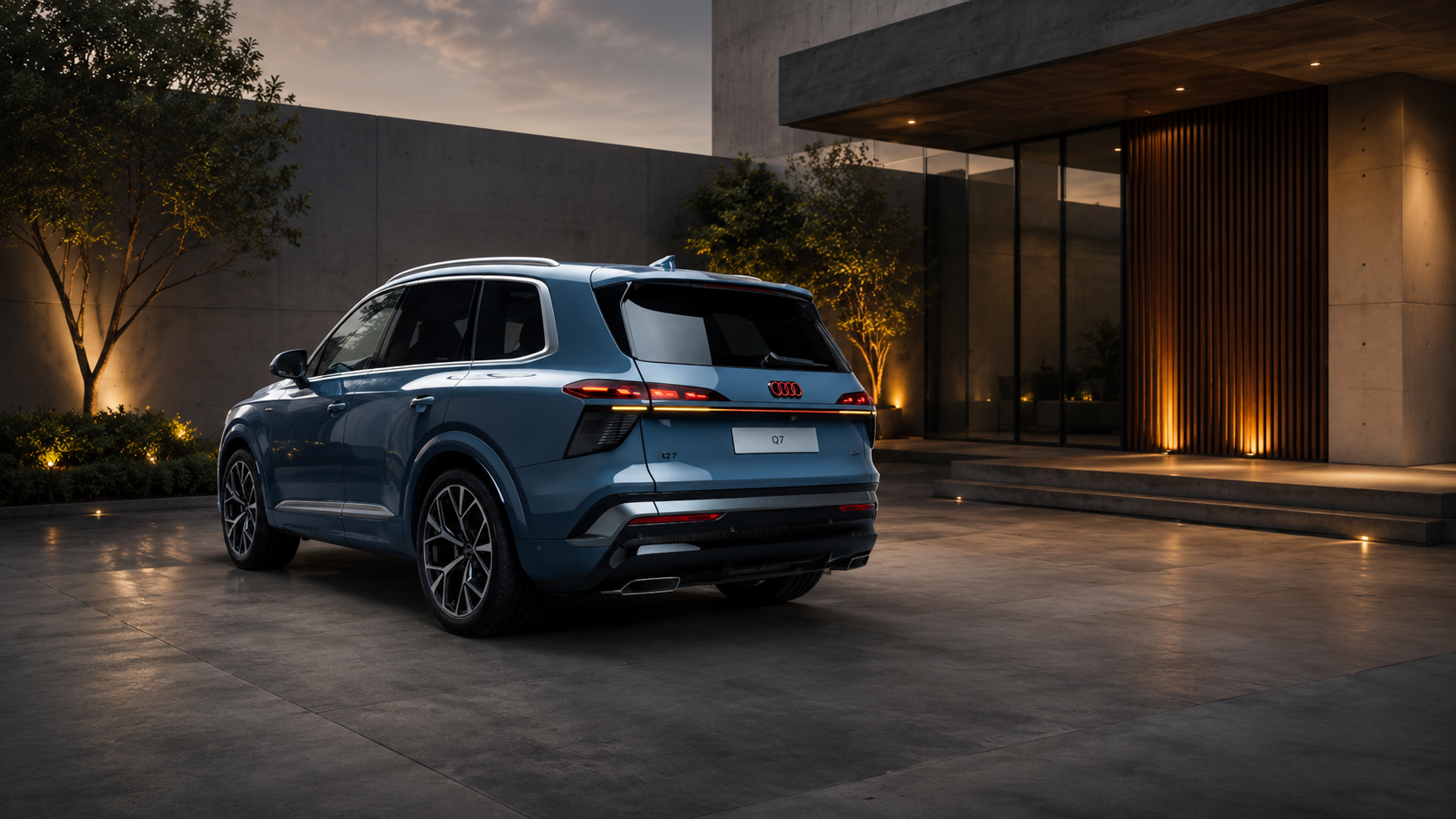
Technology and practicality: what is known about the European Q7
At launch in Germany, Audi offers a 3,0-liter diesel V6 in two outputs: 180 kW (245 hp) and 220 kW (299 hp). Both come with MHEV plus and an electric compressor designed to improve throttle response. The hybrid part can briefly add up to 18 kW (24 hp).
The diesel is paired with an eight-speed Tiptronic and permanent quattro all-wheel drive. Audi also announces a new center limited-slip differential with preload. Steel suspension comes standard, while adaptive air suspension and its sport version are optional.
Cargo capacity depends on the chosen layout. The five-seat European Q7 holds up to 806 liters, and with the second row folded it reaches up to 2075 liters. The seven-seat version is quoted at up to 722 liters behind the second row and up to 1980 liters behind the first. These numbers are useful as a reference, but they should not be compared directly with American data: the markets use different configurations and units of measurement.
Why European and American Q7 specs do not match
Parameter | Germany and the European launch version | U.S.: Audi Q7 2027 |
Designation | New third-generation Audi Q7 | All-new Audi Q7 2027 |
Engine | 3,0-liter V6 TDI: 245 or 299 hp; MHEV plus | 2,9-liter gasoline turbo V6 with 429 hp |
Transmission and drive | 8-speed Tiptronic, permanent quattro | 8-speed Tiptronic, quattro |
Seating | 5 seats standard; 6 or 7 optional | 7 seats standard; 6 seats with individual second-row chairs optional |
Cargo space | Up to 2075 liters in the five-seat version with the second row folded | Up to 78,1 cu. ft. with the second and third rows folded |
Fuel economy | 7,1-8,0 liters/100 km WLTP for diesel versions at launch | The official model page does not yet list an EPA rating |
Price | From 87 900 euros for the 245-hp version in Germany | Price not listed on the official model page |
The key difference is the powertrain. For Europe, Audi showed a diesel Q7, and for the U.S. a gasoline one. These are not two ways of calculating the output of the same engine, but different versions of the model. The manufacturer has not explained the split in the published material, so linking it to buyer preferences, taxes or emissions rules without separate confirmation would be wrong.
The American official Audi Q7 2027 page confirms 429 hp from the 2,9-liter V6, quattro all-wheel drive, an eight-speed transmission, seven seats as standard and an optional six-seat cabin. There Audi also makes it clear that some images show the European car and that specifications may differ. That is a good reference point: appearance and individual features do not yet mean that a specific trim will be available in another country.
WLTP, EPA and why fuel economy cannot be converted by eye
The European 7,1-8,0 liters/100 km figures apply to the diesel versions and were obtained under the WLTP cycle. In the U.S., fuel economy and efficiency are published under EPA methods, which use their own test cycles and calculation rules. The EPA itself describes the dynamometer drive schedules used for fuel-economy and emissions testing.
So the WLTP fuel consumption of the European diesel should not be translated into an "expected EPA figure" for the American Q7. First, the engines are different; second, the measurement methods are different. A proper comparison is only possible between versions with the same engine and official data from the same market.
Which features may be shared
Despite the difference in engines and basic seating, some new features are shared between the European and American Q7. These include digital lighting, OLED taillights, expanded parking capabilities, large displays and quattro all-wheel drive. In the U.S., Audi also mentions a memory function for parking maneuvers that can later be repeated through the vehicle interface or the myAudi app.
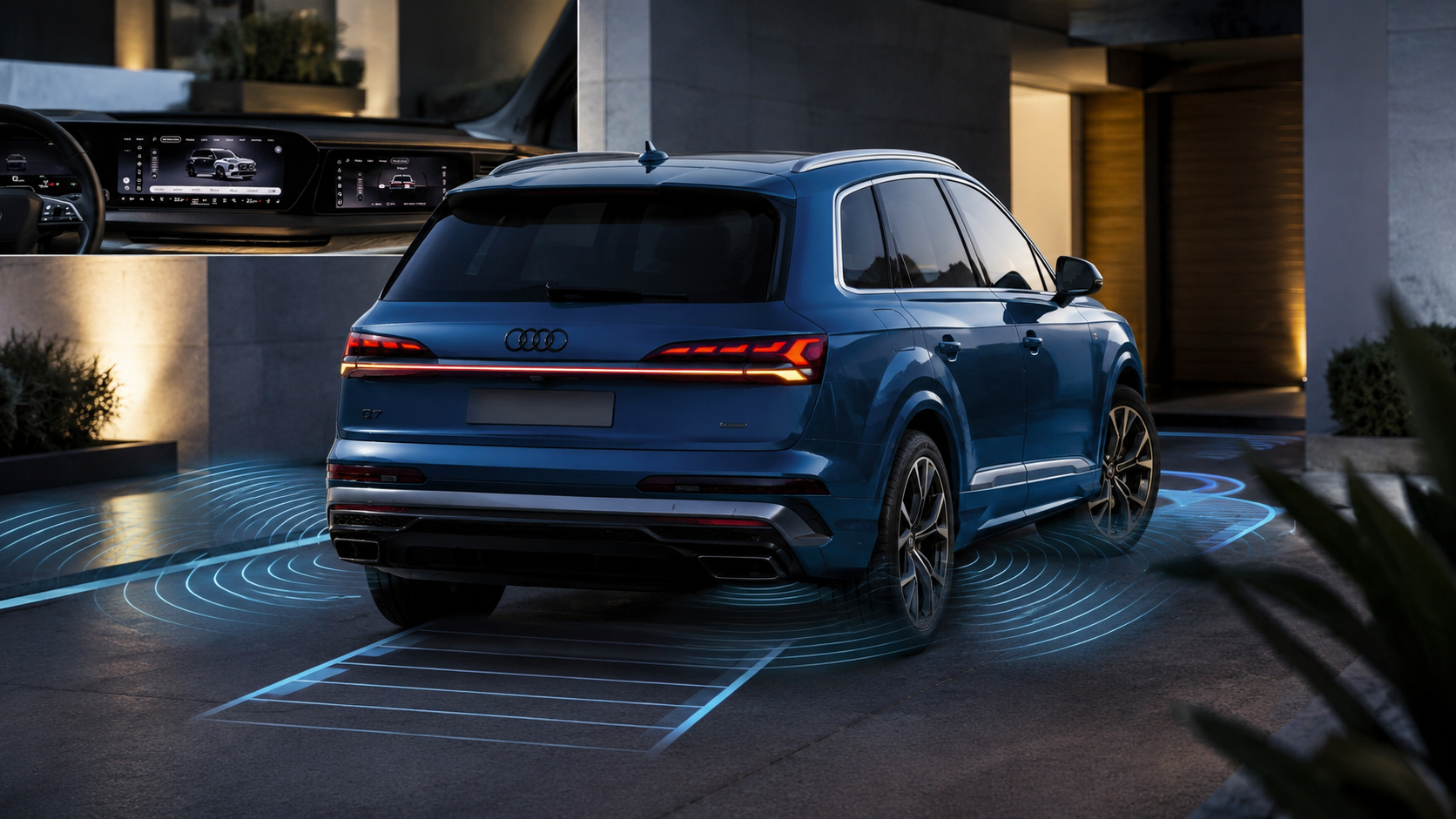
Even here, though, you need to look closely. Lighting functions, seats, air suspension, audio system, cameras and driver aids may depend on trim level, local certification and the start date of sales. Early reviews in particular should be treated carefully: they often mix European and American specifications in one article.
What is still not disclosed for other countries
At the time of publication, Audi has described the launch version for Germany in detail and separately introduced the model for the U.S. For other markets, local prices, engine line-up, standard equipment, delivery timing and option packages cannot yet be treated as confirmed. Local specifications for Romania, Moldova, Kazakhstan and other countries have also not been announced; the Q7 may arrive there with a different engine range or equipment list.
Buyers considering the car in another country or browsing international listings should check not only the name "third-generation Audi Q7" but also the exact vehicle details: delivery market, engine type, number of seats, driver-assistance package, wheel size and official warranty status. For the new Q7, those details are what determine whether you are looking at a European diesel, an American gasoline version or another local specification.