 EN
EN


Frequently asked questions
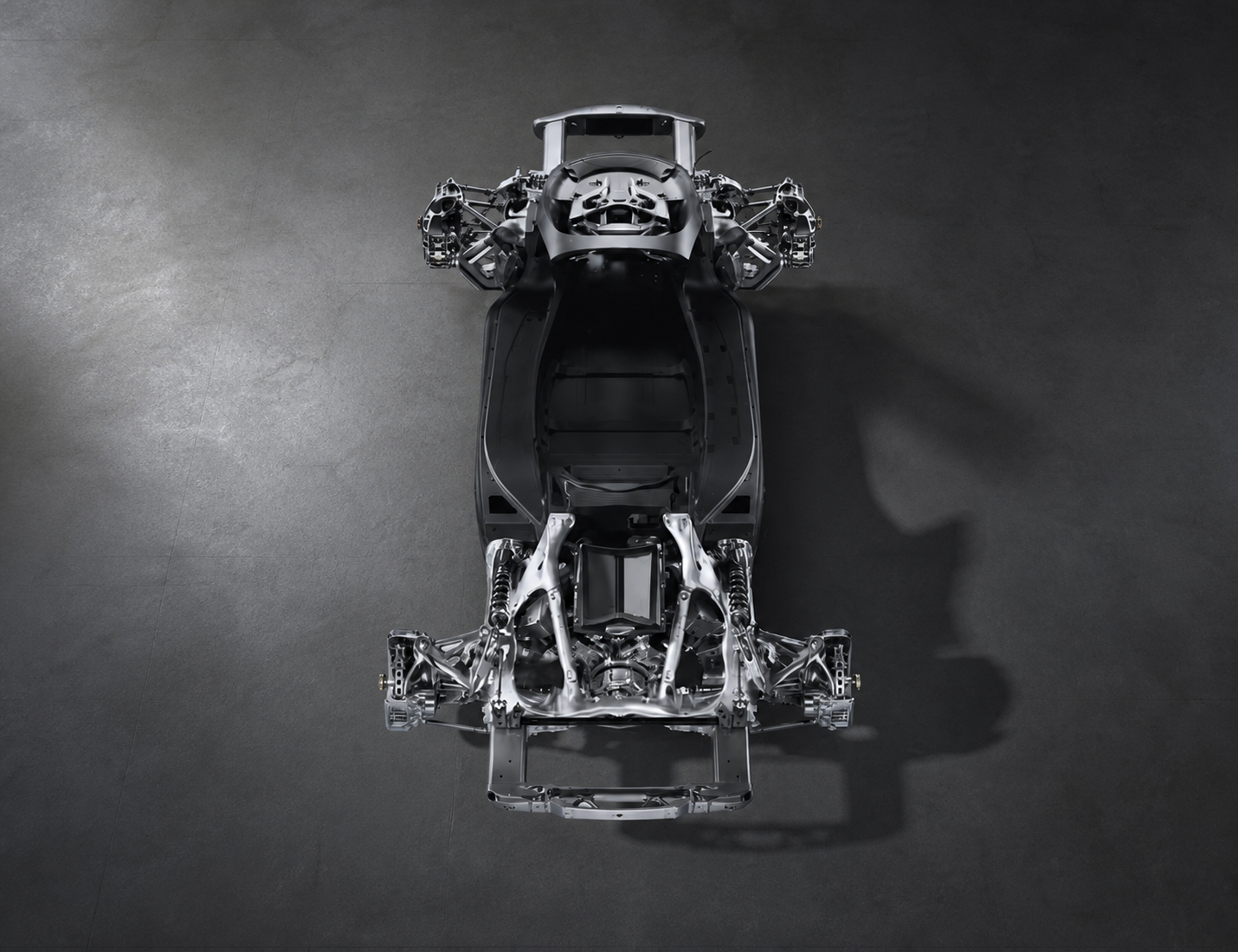
The vehicle uses additive manufacturing for components including BrakeNode, BioLogic Chassis parts, NeuralNode, the steering wheel, and some engine components. The carbon-fiber monocoque and body panels are not 3D-printed.
BrakeNode is a single aluminum structure that combines the steering knuckle, brake caliper, and internal brake-fluid channels. Czinger claims it is lighter and stiffer than a conventional multi-part design, but independent measurements of braking distance and service life have not been published.
Czinger says 23% of the vehicle’s structure is topologically optimized and additively manufactured. The company has not specified whether this percentage refers to mass, volume, or the share of individual parts, so it should not be interpreted as 23% of the car by weight.
On August 14, 2026, American company Czinger unveiled the 21C Spyder, an open-top version of its hybrid hypercar. The missing roof is not the main story here. The Spyder is the first 21C version to feature BrakeNode, a single 3D-printed metal brake and suspension assembly. It clearly shows where 3D printing is already being used in vehicle construction and where it remains little more than a convenient term in the description.

The 21C Spyder is not entirely 3D-printed. It has a carbon-fiber monocoque and carbon-fiber body panels. Additive manufacturing is used for specific structural and functional components whose shapes would be difficult or impossible to produce through casting, forging, or machining.
In brief: what is genuinely new here
BrakeNode combines the steering knuckle, brake caliper, and brake-fluid channels. NeuralNode combines elements of the front fascia, the instrument cluster, ventilation, and controls. In both cases, the idea is not simply to “print a part,” but to replace several parts with one engineered assembly.
What is known about the Czinger 21C Spyder
The main technical data is published on the official 21C Spyder page. The performance figures and aerodynamic downforce listed below are the manufacturer's claims, not the results of independent testing.
Parameter | Data and explanation |
|---|---|
Debut date | August 14, 2026, Monterey Car Week |
Powertrain | Hybrid: a 2.88-liter twin-turbo V8 and an 800 V electric system |
Power | 1 250 hp total; the V8 produces 750 hp, while the electric motors add another 500 hp |
Claimed performance | 0–62 mph (0–100 km/h) in 1.9 seconds and a top speed of 205 mph (around 330 km/h) |
Dry weight | 1 620 kg |
Additive components | Czinger says that 23% of the vehicle's structure is topologically optimized and additively manufactured |
The official page does not specify whether the 23% figure refers to mass, volume, or the share of individual parts. It is therefore more accurate to repeat the company's wording than to turn it into a claim that “23% of the car is 3D-printed by weight.”
BrakeNode: one assembly instead of several
BrakeNode is the most significant 3D-printed component in the Spyder. The company combines the steering knuckle, caliper, and internal brake-fluid channels in a single aluminum structure. In a conventional design, these are separate parts connected by fasteners and external lines.
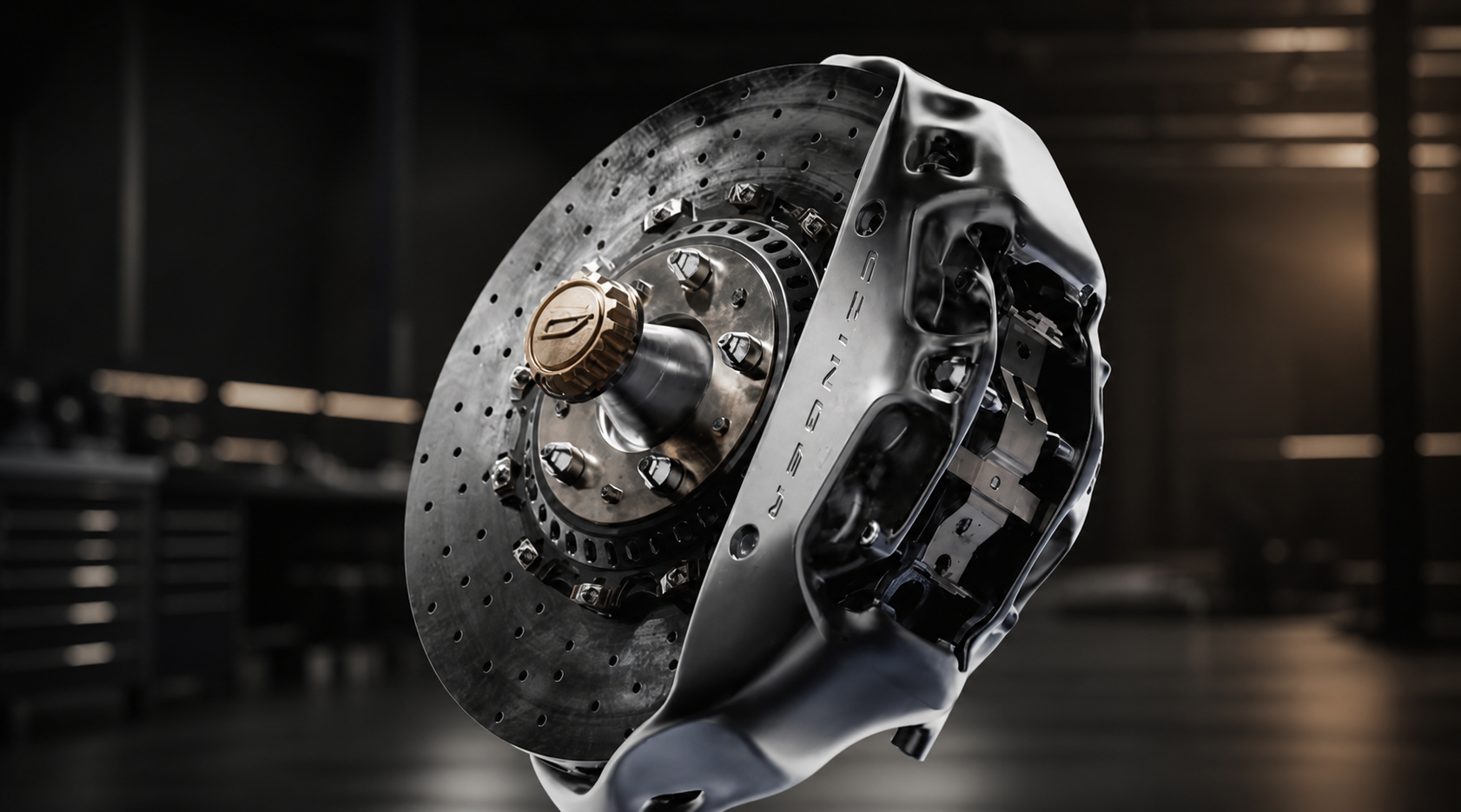
This integration has two clear engineering goals: reducing unsprung mass and securing the caliper more rigidly in relation to the brake disc. Unsprung mass is the mass of the wheel, brakes, and part of the suspension that moves with the wheel over uneven surfaces. The lower it is, the easier it is for the damper to keep the tire in contact with the road.
Czinger claims that BrakeNode is lighter and stiffer than a conventional multi-part solution. No independent measurements of braking distance or the assembly's service life have yet been published, so these advantages should be treated as manufacturer claims. The company explains BrakeNode's technical design in detail in its official material.
Why the caliper looks biological
BrakeNode's shape does not follow the familiar logic of flat walls and straight ribs. First, an algorithm calculates where loads actually pass through the component, then creates a geometry with material only in the required areas. Metal 3D printing makes it possible to produce this complex shape layer by layer. With conventional manufacturing, some of these internal channels and connecting webs would be inaccessible.
What else is additively manufactured
BioLogic Chassis components
According to Czinger, the BioLogic Chassis includes 3D-printed components for the transmission housing, steering rack, electric-motor housings, suspension, crash structures, and rear subframe. These parts are connected to the carbon-fiber monocoque. The monocoque itself is not 3D-printed.
NeuralNode in the cabin
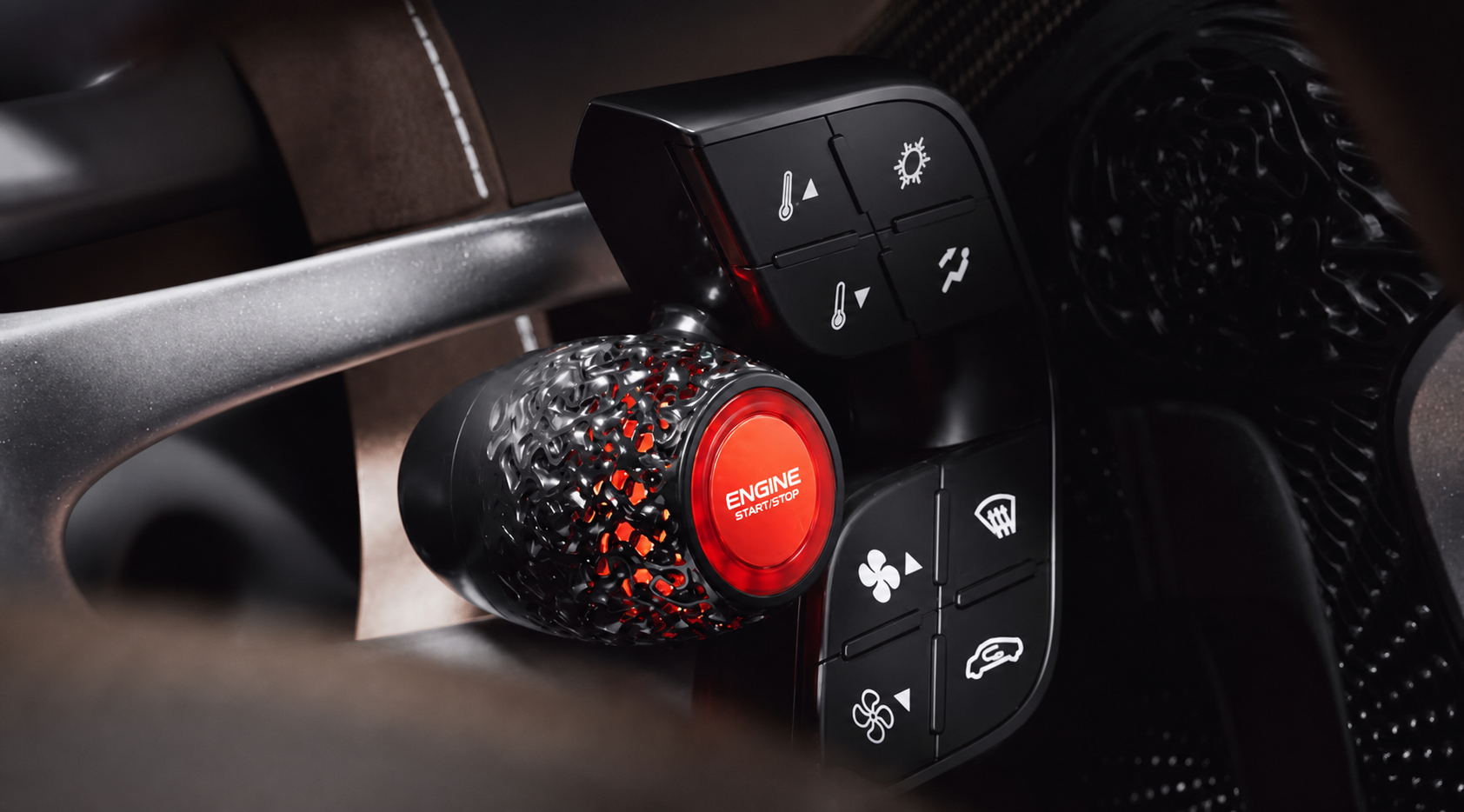
NeuralNode is a single load-bearing structure for the front section of the cabin. It integrates the dashboard, ventilation, displays, and some of the controls. Air flows through internal channels in the component itself, while the side levers carry buttons. The steering wheel is also additively manufactured, but the manufacturer has not published a complete list of its materials and manufacturing processes.
Engine components
The twin-turbo 2.88 V8 is Czinger's own design. The company says it makes extensive use of additive components in the engine, but it has not disclosed a complete list of 3D-printed parts. Calling the entire engine “3D-printed” would therefore be inaccurate.
Where technology ends and marketing begins
Confirmed by the manufacturer: the BrakeNode layout, the list of BioLogic Chassis components, the NeuralNode design, the powertrain, and the Spyder's main claimed specifications.
Claimed by the manufacturer but not confirmed by independent testing: acceleration, top speed, aerodynamic downforce, and BrakeNode's effect on braking.
Not yet disclosed: the precise method used to calculate “23%,” the complete list of 3D-printed engine components, BrakeNode's service life in real-world use, and the cost of replacing it.
Czinger's approach is based on digital design and additive manufacturing developed together with Divergent Technologies. The company's BioLogic Engineering and Area 21 page explains how it describes this production model and the hand assembly of its cars in Los Angeles.
What this changes for ordinary cars
For now, the 21C Spyder is an ultra-low-volume hypercar: automotive publications report plans to build 30 examples priced from $2.75 million. Such a production run does not prove that similar components will appear in mass-market crossovers tomorrow.
The principle is still significant. With a small production run, engineers can revise a component's geometry without creating dedicated casting or stamping tooling. For a mass-market vehicle, the decisive factors remain cost, production speed, serviceability, and consistent quality. Those issues will determine whether the technology can move beyond expensive cars.
The 21C Spyder matters not because of the amount of metal printed, but because it offers a clear example of functional integration. When a single layer-manufactured component replaces several parts and connections, 3D printing becomes part of the engineering rather than a decorative feature in a press release.