 EN
EN

Frequently asked questions
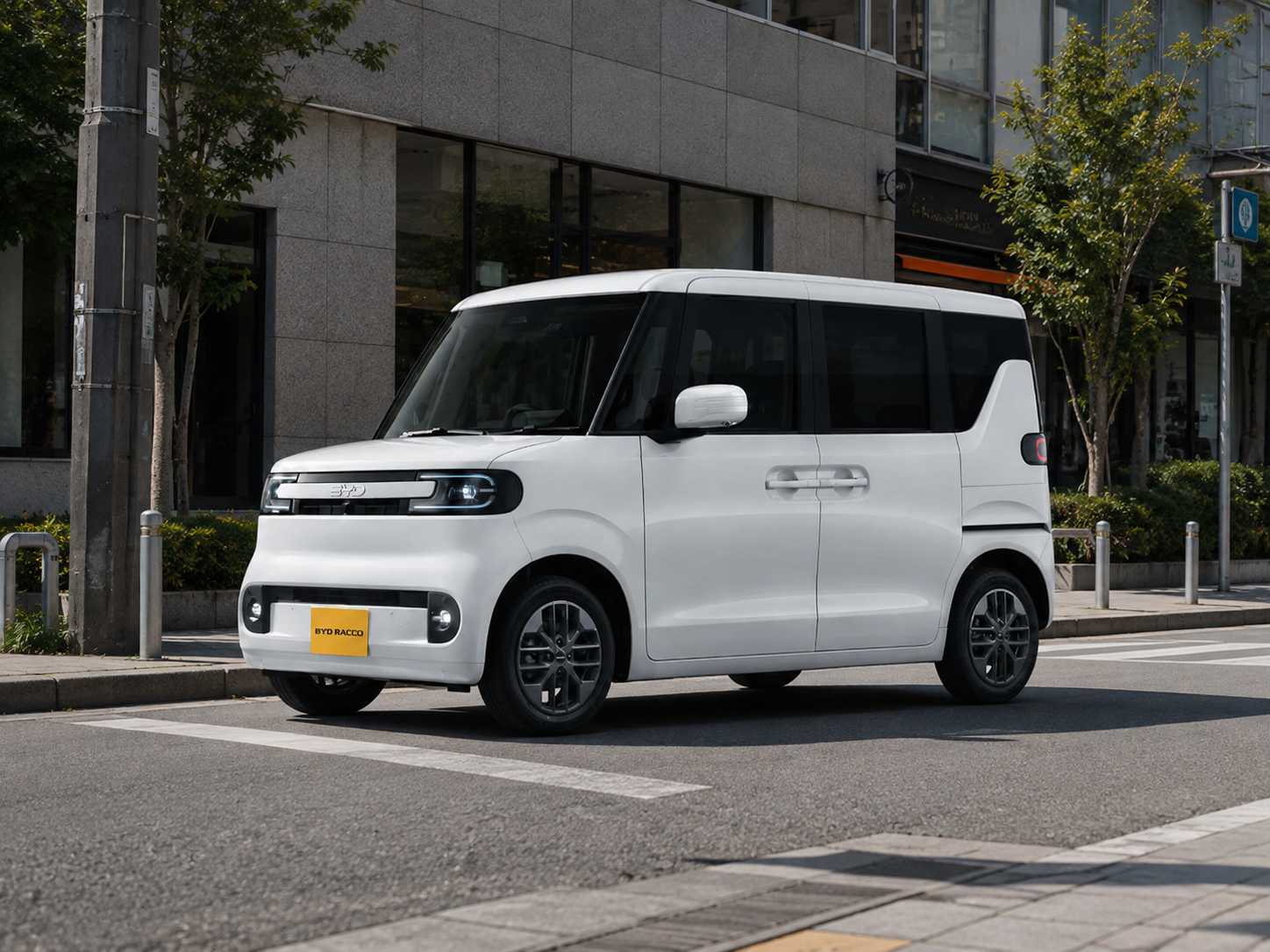
BYD describes Racco as its first electric vehicle developed specifically for Japan’s kei-car class. It has front-wheel drive, power-operated sliding doors, and dimensions of 3395 × 1475 × 1800 mm with a 2520 mm wheelbase.
The Japanese release states a range of 210–320 km on a single charge, depending on the version and measured under Japan’s transport-ministry assessment method. Real-world results can vary with temperature, speed, terrain, cabin heating and charging power.
No. Automarket, citing Nikkei Asia, reported that Racco’s technology could form the basis of a future compact EV for international markets, but BYD has made no official announcement. The model’s name, launch timing and sales markets remain unknown.
When electric vehicles come up, attention usually goes to large crossovers with big batteries. City driving follows a different set of rules: parking space, the width of residential streets, ease of access and the ability to charge often affect daily use more than the acceleration figure on the spec sheet. BYD Racco is interesting not as just another small EV, but as a car designed around strict size limits.
On February 16, 2026, BYD Auto Japan launched the Racco information website, and on July 28 it began selling the model in Japan. This is not a downsized version of an existing crossover: the manufacturer describes Racco as its first electric vehicle developed specifically for Japan's kei-car class. On August 29, Automarket, citing Nikkei Asia, reported that the model's technology could form the basis of a future compact EV for international markets. BYD has made no official announcement about such a vehicle, so its name, launch timing and sales markets remain unknown.
Three dates that provide the context
Date | What happened | How to interpret it |
|---|---|---|
16.02.2026 | BYD Auto Japan disclosed the basic Racco concept: front-wheel drive, sliding doors and two estimated driving ranges. | Official information released during the pre-launch phase. |
28.07.2026 | BYD began selling Racco in Japan and published figures of 210–320 km under the local testing cycle. | Official data for the Japanese market. |
29.08.2026 | A report emerged about the possible use of Racco's architecture in a future urban EV for other markets. | A press report, not confirmation from BYD. |
Size is not a secondary specification here
Japan's kei-car class sets a very narrow framework: a maximum length of 3.4 m, maximum width of 1.48 m and maximum height of 2 m. These limits are listed by the regional bureau of Japan's Ministry of Land, Infrastructure, Transport and Tourism. BYD's materials list Racco's dimensions as 3395 × 1475 × 1800 mm, with a 2520 mm wheelbase. In other words, the model almost completely fills the permitted length and width envelope.
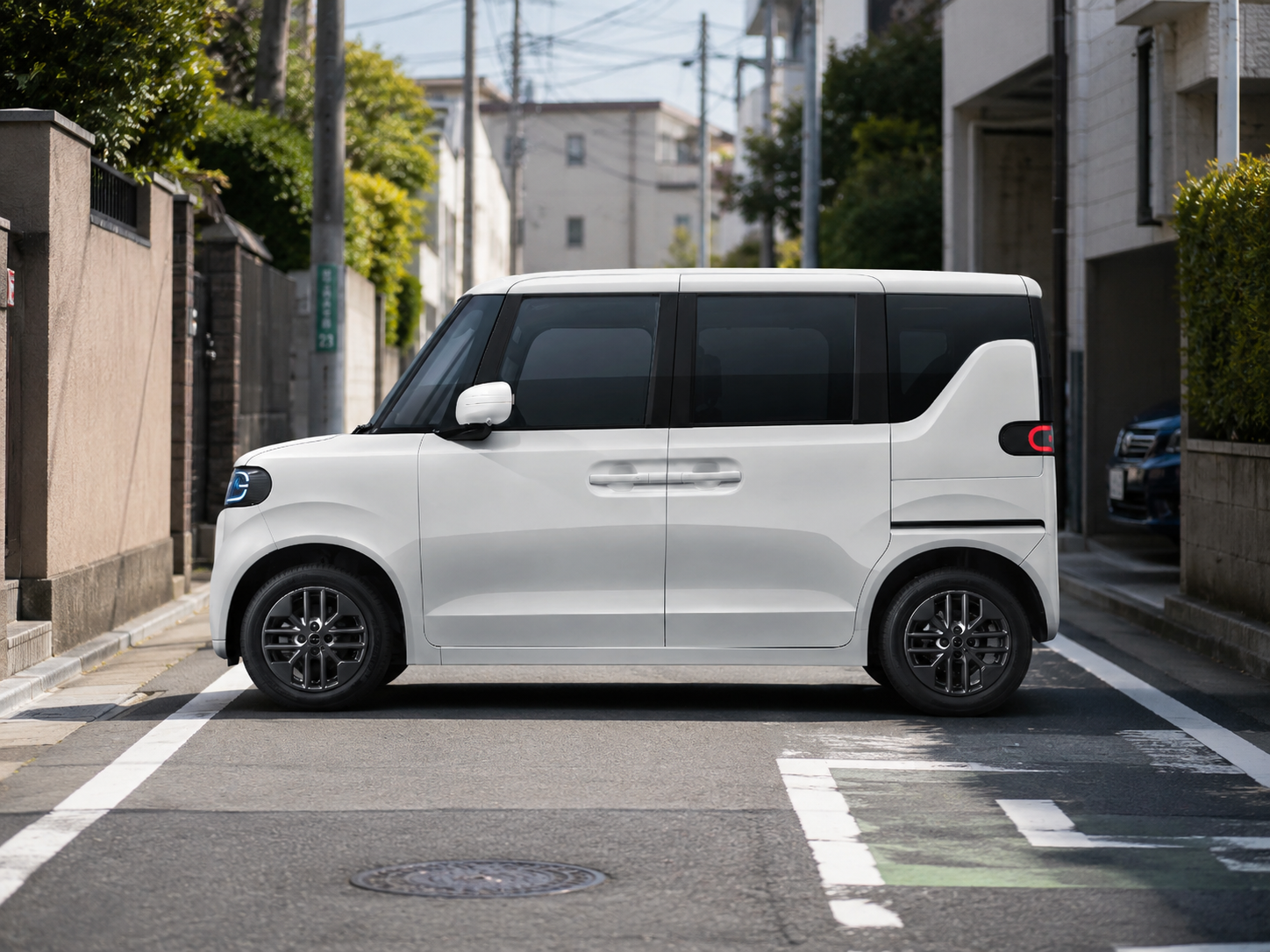
Small exterior dimensions do not automatically mean a small cabin. In a conventional city car, crumple zones, the powertrain, battery, heating system, electronics and passengers all compete for space. That is why, in a compact EV, battery capacity matters less on its own than the location of the components. Racco's tall body and power-operated sliding doors favor easy access, carrying items and driving through narrow streets rather than trying to create a miniature copy of a large SUV.
What X-PACK demonstrates
BYD developed the X-PACK system for Racco. It combines the traction battery, control units, DC/DC converter, onboard charger and some high-voltage electronics in a single battery module. According to the manufacturer, this makes it possible to distribute space more efficiently between the front section of the body, the cabin and the zone designed to absorb crash energy.
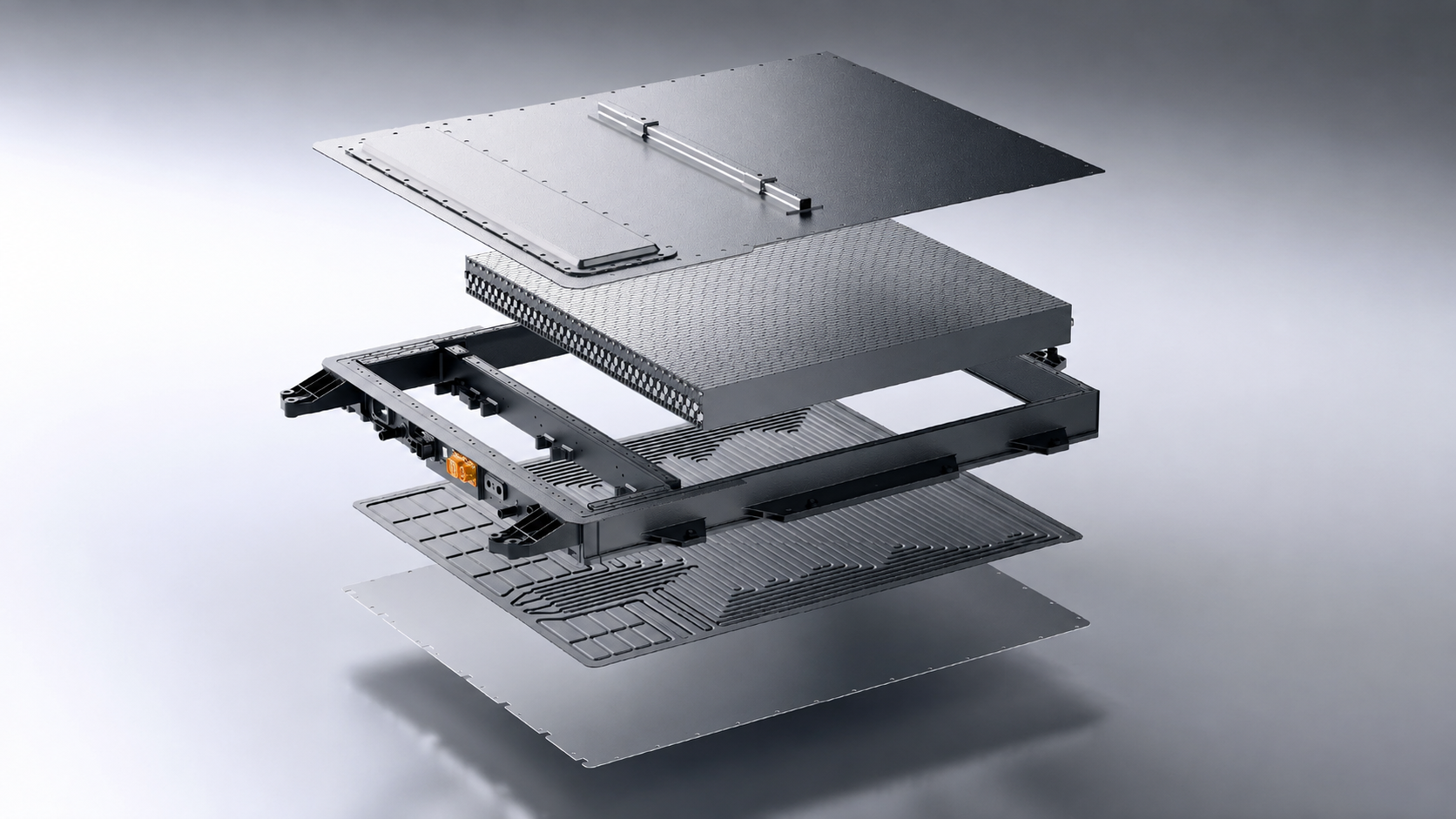
That is not a reason to assign future models a specific range or price in advance. The engineering logic is clear, however: in a 3.4 m-long car, simply adding a larger battery affects both safety and practicality. BYD provides a detailed description of the X-PACK layout in its official Racco technical materials. For an urban EV, this type of integration may be more valuable than a record battery capacity because it frees up space that drivers and passengers use every day.
Keep facts separate from expectations
Confirmed: Racco has been sold in Japan since July 28, 2026, with two range versions, front-wheel drive and the X-PACK architecture.
Not confirmed by BYD: the launch of a separate international model, its name, European certification, price, debut date and specifications. These points should not be copied from a press report into listing pages or model comparisons.
Range matters, but it must be viewed in context
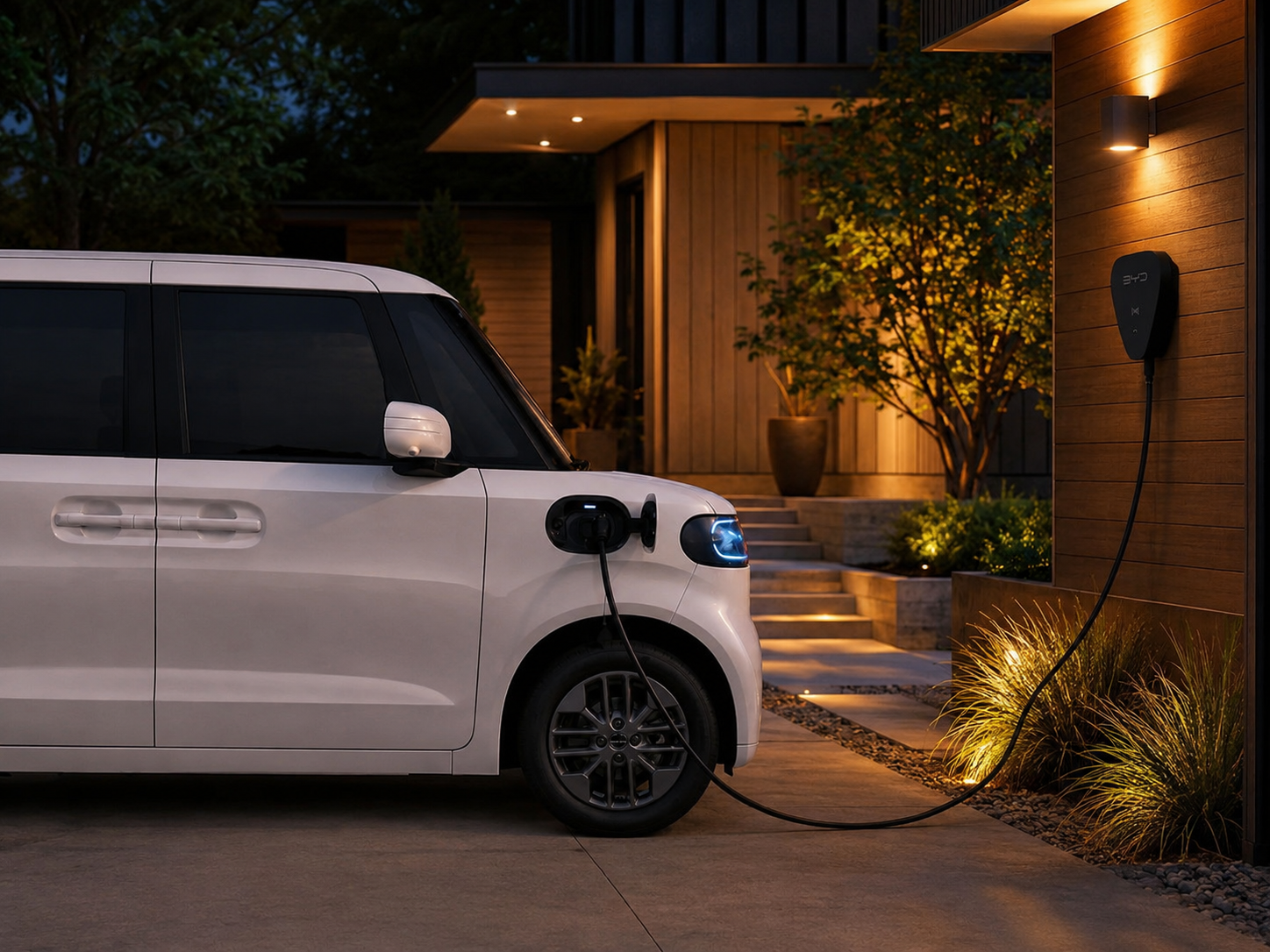
The Japanese release dated July 28 states a range of 210–320 km on a single charge, depending on the version and measured under the assessment method used by Japan's transport ministry. That is a reasonable starting point for a daily commute, but not a universal figure for an owner in another country. Temperature, speed, terrain, cabin heating and charging power all affect the real-world result. Even with Racco, it makes more sense to compare not only driving range but also your own weekly mileage, access to overnight charging and parking time.
The approach to software is also notable. BYD describes Racco as a kei-car designed as a software-defined vehicle, with over-the-air updates. The feature does not automatically make a car better, but in a compact EV it could help keep the interface and individual functions current after purchase. Before choosing a car, find out which updates are available in the local market, who is responsible for installing them and whether important systems remain usable without a paid subscription.
Four questions to ask about any urban EV
Will it fit your actual routine? Measure a normal week rather than your longest holiday trip: work, school, shopping and parking at home.
Where will it charge? A public fast-charging station is useful on a journey, but it does not always replace convenient overnight charging at home or work.
How much cabin space remains after the battery is installed? Check second-row headroom, door openings, floor flatness, boot space and whether you can fit a child seat.
How is support organised? The battery warranty, coverage for high-voltage components, assistance in the event of a flat battery and the software update process matter more than an attractive specification in the first listing.
In the Japanese market, BYD states that Racco comes with a six-year or 150,000 km general warranty, an eight-year or 160,000 km warranty for high-voltage and traction components, and a battery warranty covering retention of at least 70% of its original capacity over the same period. These terms apply to Japan and should not be assumed to apply in other countries. Current specifications and conditions for the Japanese version are listed on the official BYD model page.

Why this experience matters beyond Japan
Racco does not prove that every city is waiting for kei-cars. Japanese regulations, parking conditions and buyer habits cannot be transferred directly to Europe, Moldova or the United States. The model does show something more broadly applicable: an urban EV becomes more convincing when it is designed around the constraints of real life rather than created by shrinking an existing large platform.
If BYD does apply part of this architecture to an international compact EV, the key question will not be the battery size quoted in a press release. More important is whether the car retains a practical cabin, clear warranty terms, compatibility with local charging infrastructure and predictable servicing costs. Until an official announcement, these are simply the points worth checking, not a forecast of the vehicle's specifications.