 EN
EN

Frequently asked questions
Volkswagen says the ID. California Cruise will be available as a short-wheelbase model with a 79 kWh battery and a long-wheelbase model with an 86 kWh battery. Separate WLTP range figures for each version have not yet been disclosed.
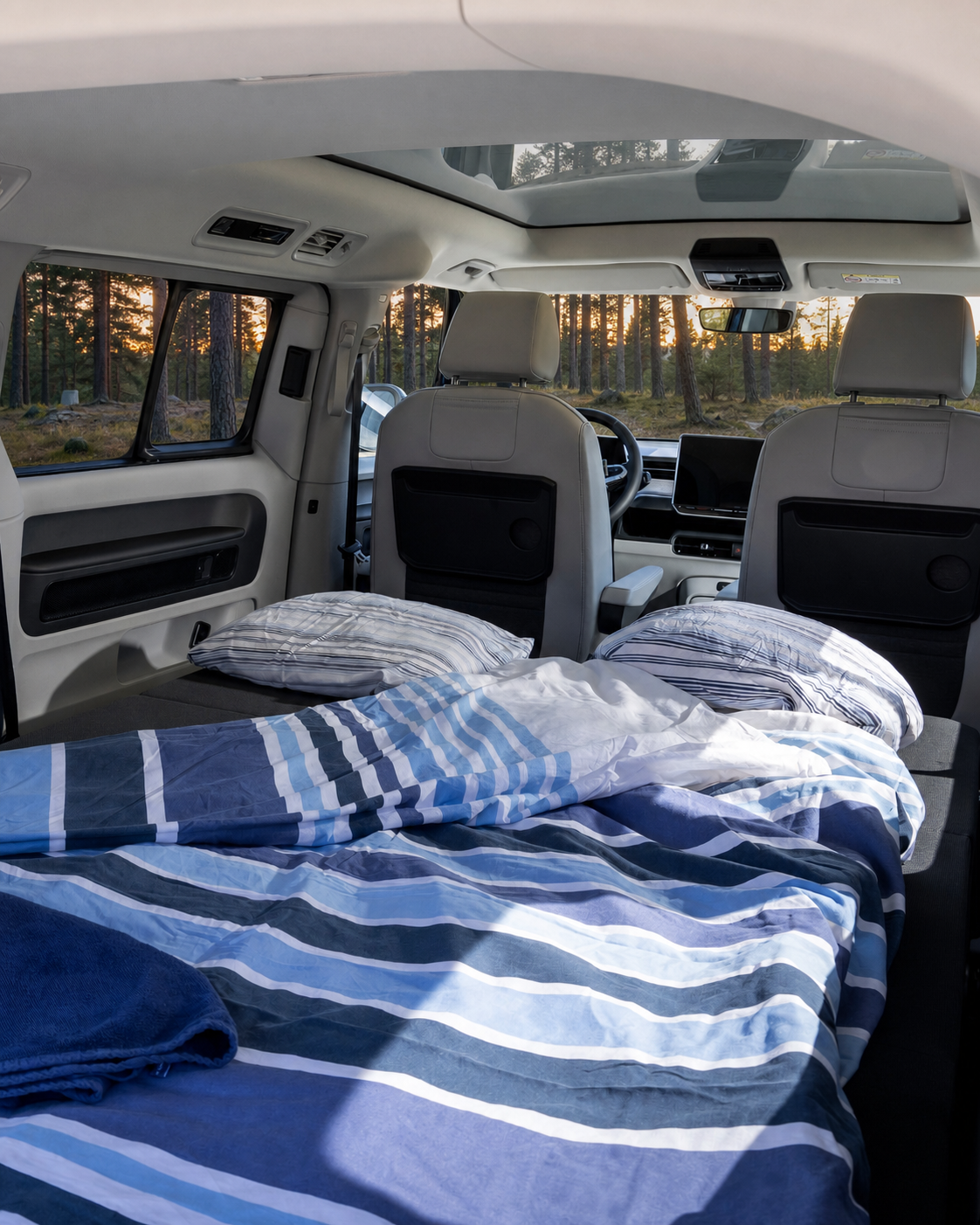
Its rear seats convert into a 2030 × 1200 mm sleeping area with a 9 cm mattress. California mode controls lighting and comfort functions, keeps USB ports active, and the climate system can heat or cool the cabin for up to 48 hours, depending on battery charge and the interior-to-exterior temperature difference.
Volkswagen quotes up to 2 kW of continuous power and up to 3.6 kW of peak power. This can support equipment such as lighting, a refrigerator, a laptop, or compact kitchen equipment, although available energy remains a limitation.
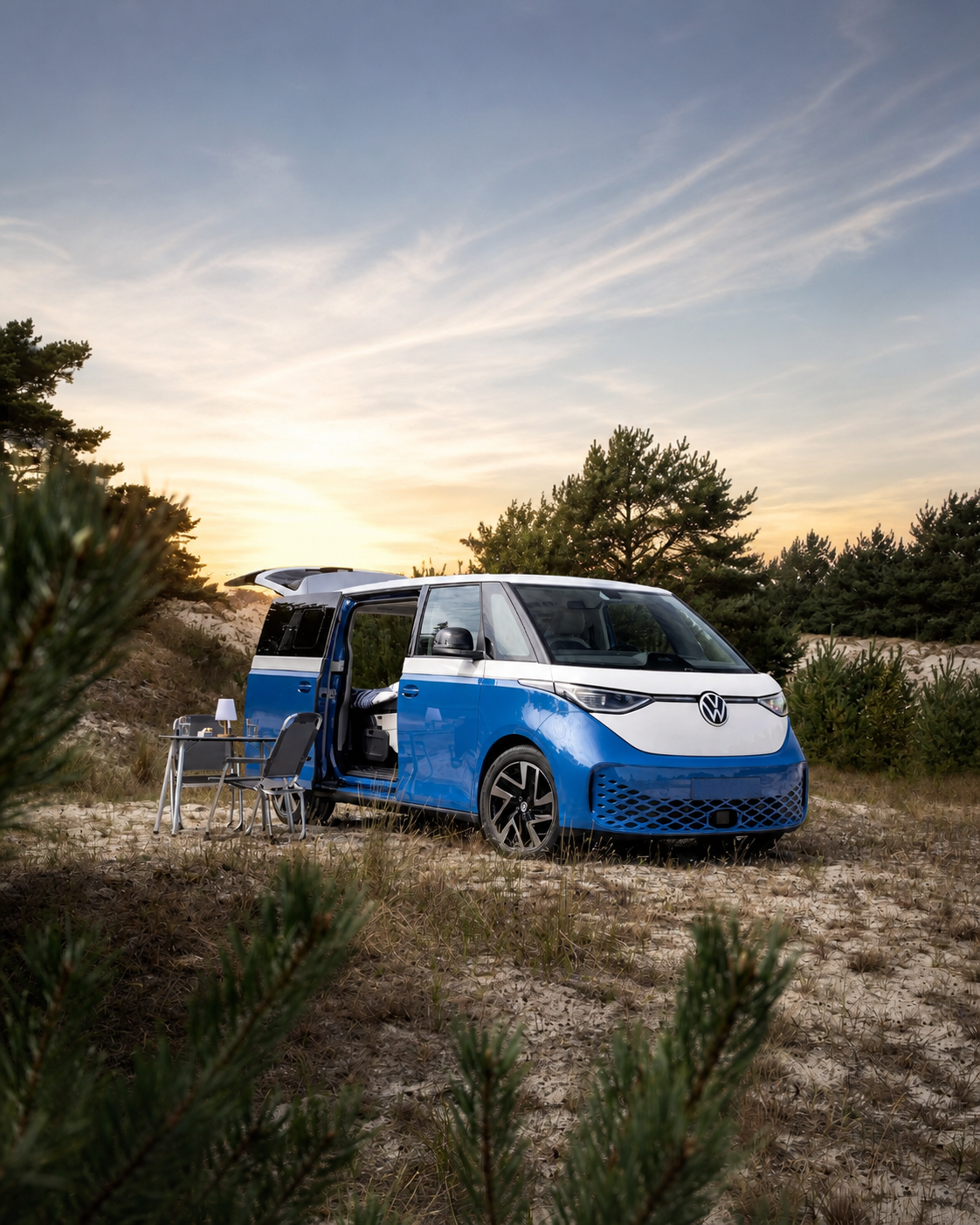
On August 28, 2026, Volkswagen Commercial Vehicles introduced the ID. California Cruise — the first fully electric camper in the California family. The premiere took place at the CARAVAN SALON in Düsseldorf, held from August 28 to September 6. The new model is based on the ID. Buzz, but the California badge is not the main story here: Volkswagen is trying to solve the practical challenge of an electric camper — how to drive, sleep, and use equipment without turning every stop into a search for a charging point.
The ID. California Cruise has already been shown, but the manufacturer has not yet disclosed some figures that matter for real-world use. Here is what is known so far, and what still needs to be confirmed for production vehicles.
More Than an ID. Buzz with a Mattress
The camper is based on the rear-wheel-drive ID. Buzz Pro with a 286 hp electric motor. Volkswagen says there will be two versions: a short-wheelbase model with a 79 kWh battery and a long-wheelbase model with an 86 kWh battery. For reference, the official ID. Buzz page shows that the standard electric van differs not only in dimensions, but also in its claimed range and fast-charging time.
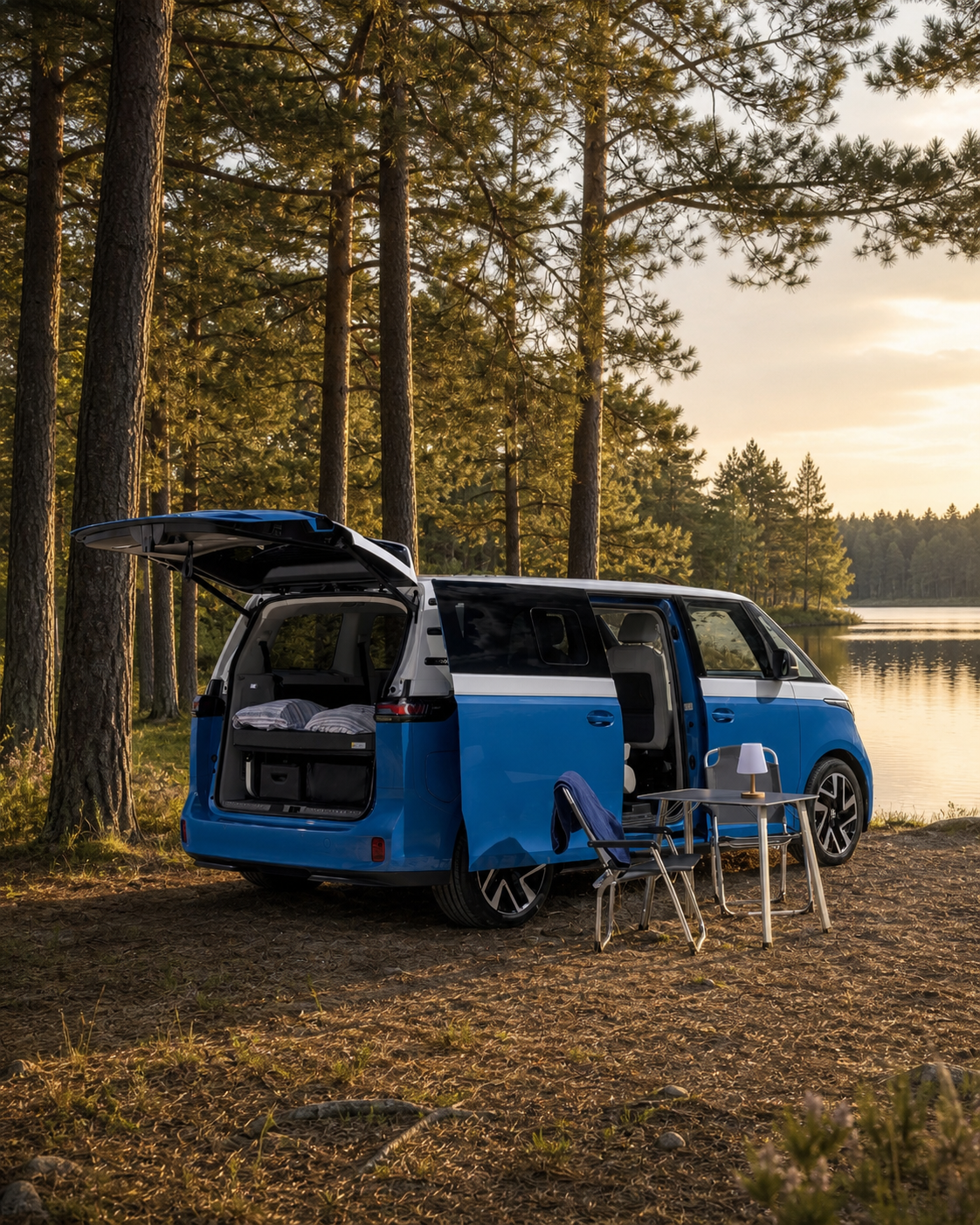
The published description focuses on sleeping inside the vehicle: the rear row folds into a two-person sleeping area. According to the available information, the mattress is 9 cm thick, while the sleeping surface measures 2030 × 1200 mm. The equipment also includes two folding camping chairs and a table.
What is known | Why it matters on a trip | What has not been disclosed |
|---|---|---|
Two batteries: 79 and 86 kWh; short and long wheelbases | You can match the interior size and energy supply to a familiar route | The separate WLTP range of the ID. California Cruise for each version |
The rear seats convert into a 2030 × 1200 mm bed | Overnight stops do not require a separate tent | Luggage capacity in sleeping configuration and the permitted load |
California mode, climate control, and V2L | The vehicle can power devices and maintain comfort while parked | Actual overnight energy consumption in different weather conditions |
California App and route planning | Helps coordinate overnight stops with charging locations | The full list of functions for the new model and availability by country |
What Changes When You Park
For overnight stays, Volkswagen has provided a dedicated California mode. It controls lighting and comfort functions while also keeping the USB ports active. The manufacturer says the climate system can heat or cool the cabin for up to 48 hours. This is not a universal figure: it depends on the battery charge and the difference between the interior and exterior temperatures.
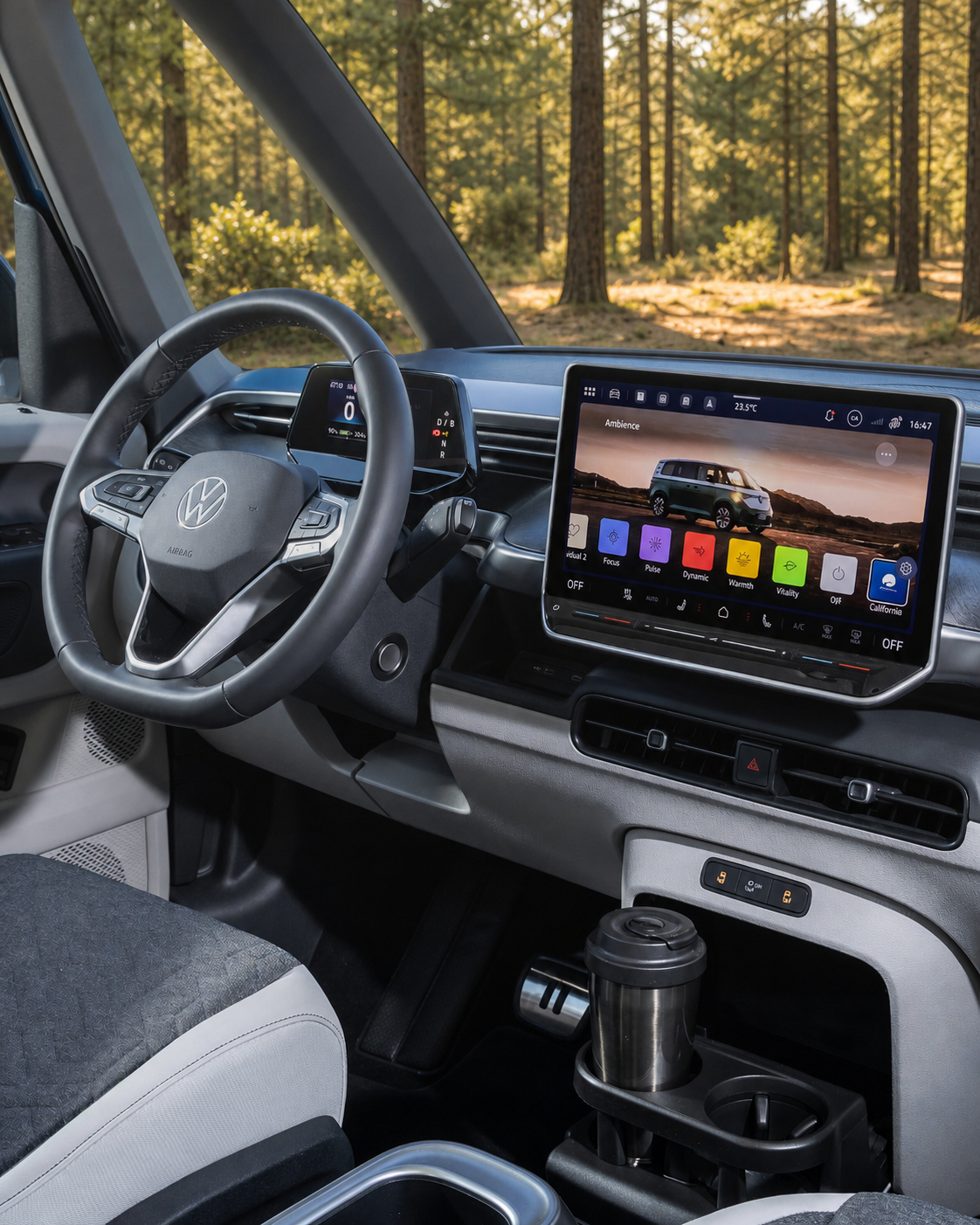
The key question for an electric camper is not just the distance to the next charger. After the evening stop, the battery also powers overnight needs: climate control, lighting, device charging, and household appliances.
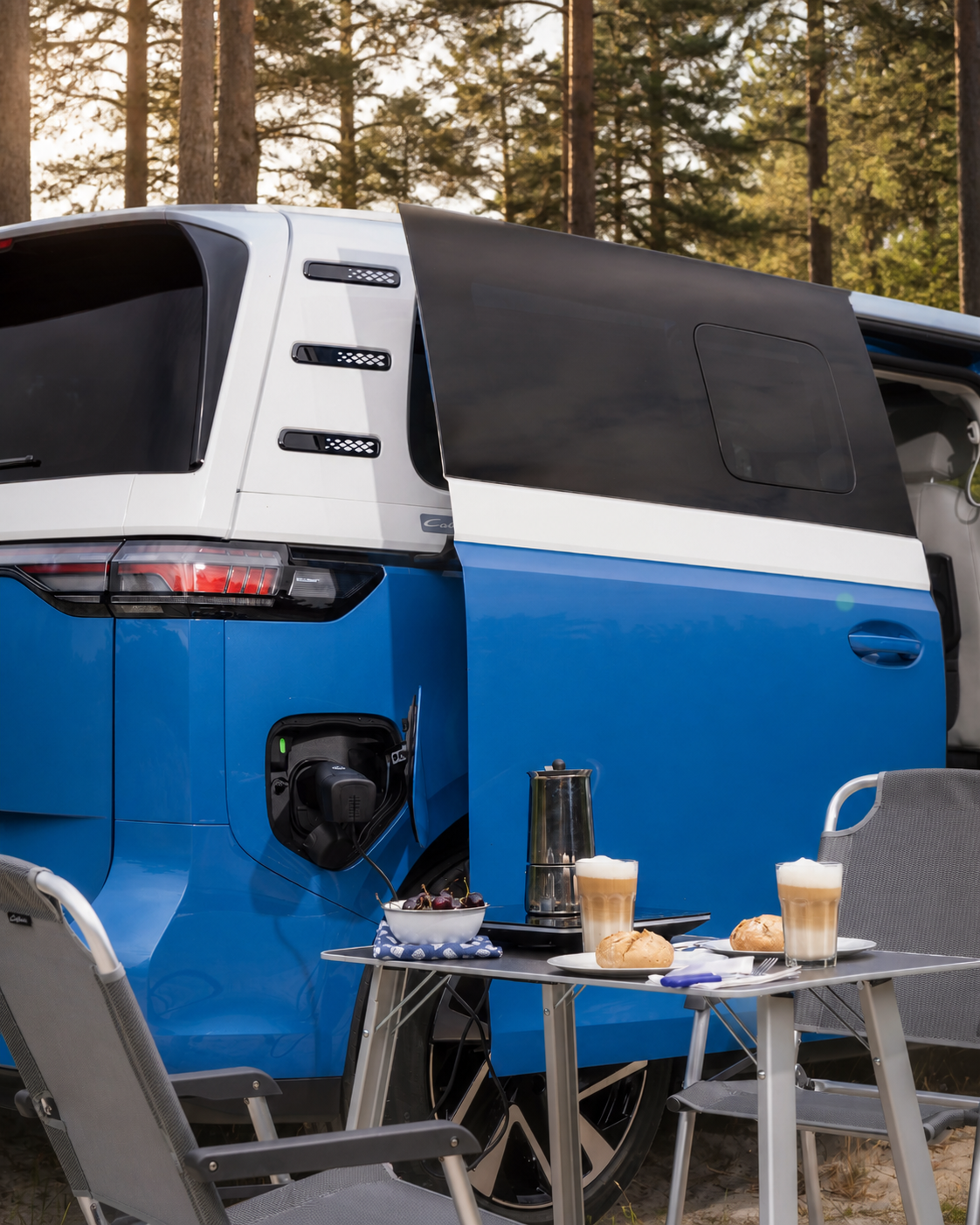
Vehicle-to-Load turns the traction battery into a power source for external equipment. For the ID. California Cruise, Volkswagen quotes up to 2 kW of continuous power and up to 3.6 kW of peak power. This can be useful for lighting, a refrigerator, a laptop, or compact kitchen equipment, but it does not remove the usual limits imposed by the available energy. The official Volkswagen bidirectional charging page states separately that V2L availability depends on the vehicle version, software, and compatible equipment.
How to Plan a Route Without False Assumptions
The new camper does not eliminate the need for planning; it makes planning more important. On a short trip, you can choose a campsite based on the scenery and route. On a multi-day journey, you will need to connect four points in advance: the overnight location, a charging station, the next day's driving distance, and the energy consumed while parked.
Volkswagen is integrating the California App into the vehicle's ecosystem. The official app description lists more than 40 000 campsites and parking locations, route planning, and, for compatible California models, status checks and remote control of selected functions. For the ID. California Cruise, combining route planning with charging will be particularly useful: a standard list of fast-charging stations does not answer the question of where you can legally and conveniently stay overnight after charging.
A Practical Scenario
Imagine stopping for the evening with a 60% charge. If the vehicle remains parked overnight with climate control on, a refrigerator connected, and devices charging, less energy will be available in the morning than a route calculation without an overnight stop would suggest. The next day's reserve should therefore be calculated not from the evening battery percentage, but after estimating overnight consumption. This consumption will be one of the main criteria for the production electric California.
What to Check Before Ordering
The WLTP range Volkswagen will quote for the short- and long-wheelbase versions of the ID. California Cruise.
How charging speed changes when the camping equipment is in use and in cold weather.
How much energy the climate system consumes overnight at real temperatures rather than in the manufacturer's test scenario.
Which V2L and California App functions will be included as standard equipment in each market.
When prices, delivery schedules, and the list of countries where the model will be available will be announced.
Who Might Be Interested in This California
The ID. California Cruise looks like a logical choice for people who take short trips, stay at official campsites, and can plan their charging stops in advance. Here, sleeping space, climate-control operation, and external power matter more than having the maximum number of cabinets or the ability to travel far from charging infrastructure.
For people who regularly spend several days in areas without charging stations, it is still too early to draw conclusions. Volkswagen has not yet published the full set of operating figures for the new version. The ID. California Cruise has a clear concept, but its real suitability for long-distance travel will become clear only after production specifications and independent measurements are available.